Does Wrestling Help With BJJ? How Cross-Training Makes You a Better Grappler
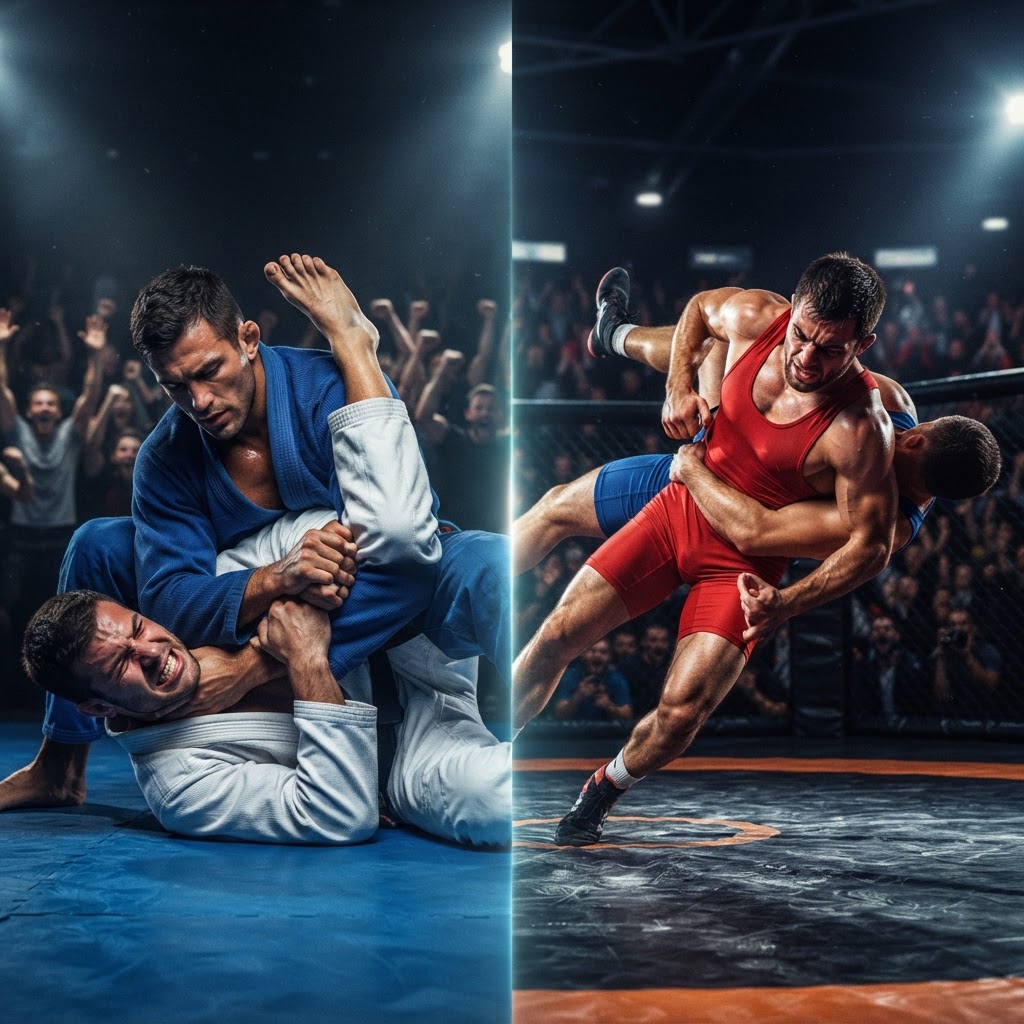
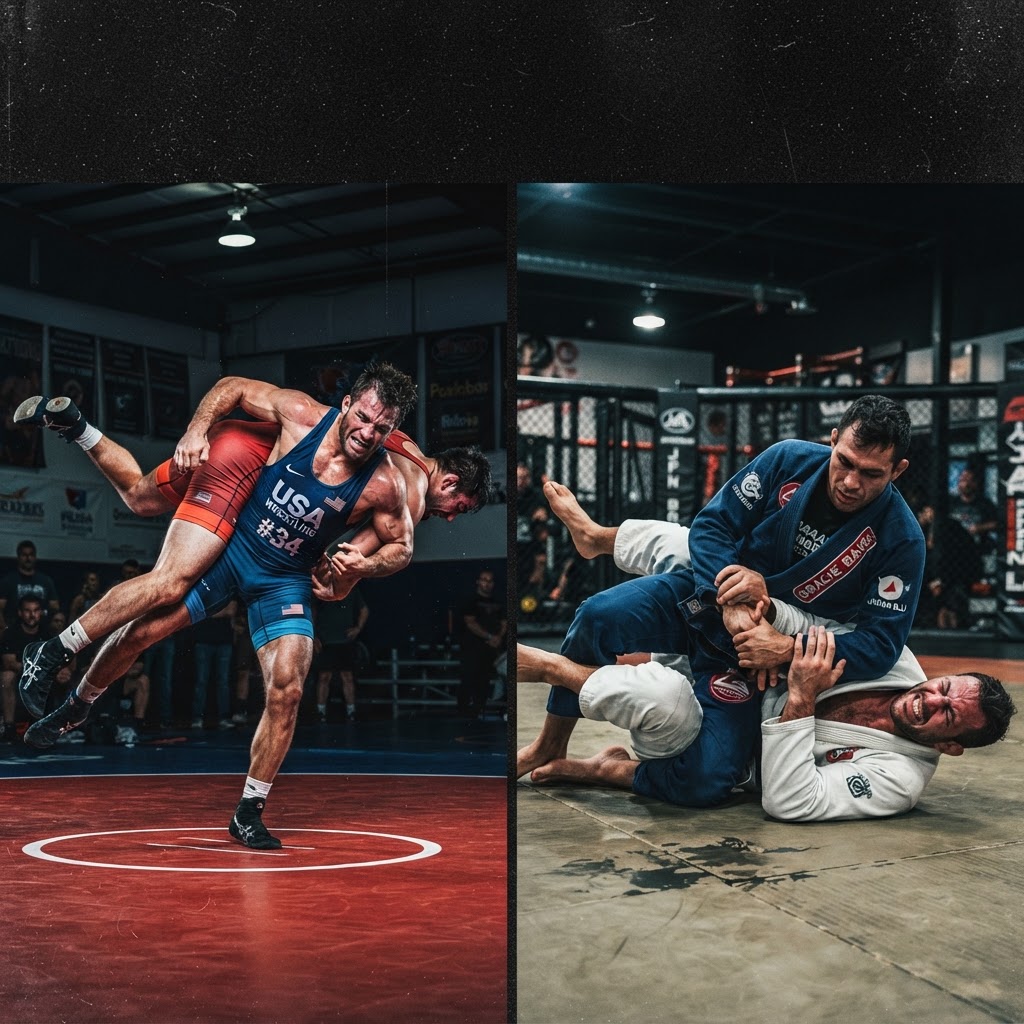
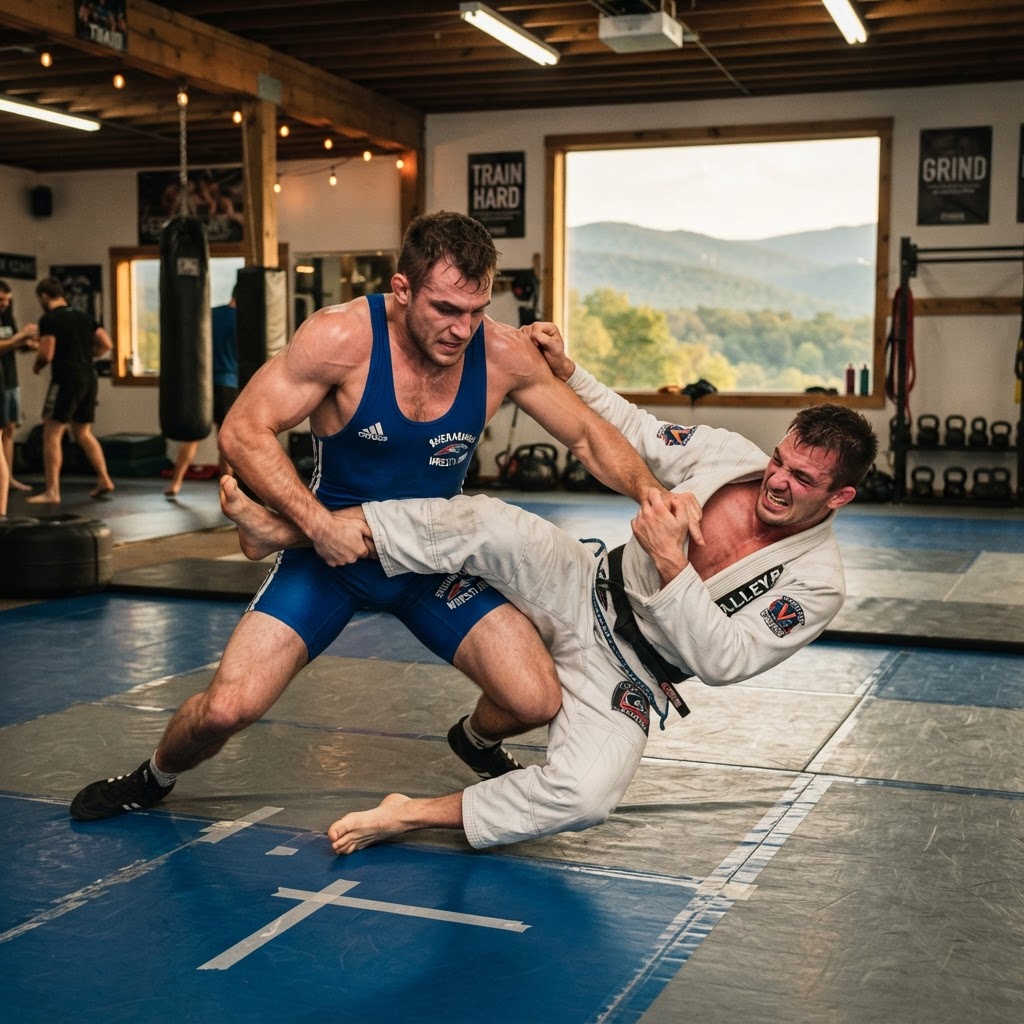
If you've ever asked yourself, "Does wrestling help with BJJ?" the short answer is an emphatic yes. Wrestling is one of the most effective foundational sports for Brazilian Jiu-Jitsu practitioners, and the skills translated from the wrestling mat to the BJJ academy can accelerate your progression, sharpen your takedown game, and give you an edge in competition. Whether you train at a gym in Waynesboro, Charlottesville, or anywhere across the Shenandoah Valley, understanding how these two grappling arts complement each other can transform your approach to training.
At Skyline Jiu-Jitsu in Waynesboro, Virginia, we frequently work with athletes who have wrestling backgrounds and those who are discovering grappling for the first time. The crossover between wrestling and BJJ is one of the most talked-about topics in the grappling community, and for good reason. Let's break down exactly how wrestling helps with BJJ, which specific skills transfer, and how you can use cross-training to become a more complete grappler.
Why Wrestlers Thrive in Brazilian Jiu-Jitsu
Wrestlers who transition into BJJ often progress faster than practitioners with no grappling background. This isn't coincidental. Wrestling develops a specific set of physical and mental attributes that map directly onto BJJ's demands. When you ask whether wrestling helps with BJJ, you need to look at the overlapping skill sets.
Wrestling builds relentless pressure, explosive power, and an intimate understanding of body mechanics. A wrestler stepping into a BJJ academy already knows how to control an opponent's weight, how to chain attacks, and how to fight for position. These are foundational skills that take BJJ beginners months or even years to develop. The wrestling background provides a head start that is hard to replicate through BJJ alone.
Fishersville and Charlottesville athletes who wrestled in high school or college often find that within a few months of BJJ training, they are already functioning at a blue-belt level of positional control. The muscle memory from years of wrestling sprawls, shots, and mat returns creates a framework that BJJ techniques fit into naturally.
5 Specific Ways Wrestling Helps With BJJ
1. Explosive Takedown Skills
The most obvious answer to "does wrestling help with BJJ" is takedowns. Most BJJ academies spend the majority of class time on ground work, which means stand-up grappling is often underdeveloped in pure BJJ practitioners. Wrestlers fill this gap immediately. A double leg or single leg shot from a wrestler is fast, technically sound, and battle-tested against resistance. In BJJ competition, matches start on the feet, and the ability to dictate whether the fight goes to the ground is a massive advantage.
At Skyline Jiu-Jitsu near Waynesboro, we incorporate wrestling takedowns into our curriculum because we recognize how critical they are. A student who can confidently shoot and finish a takedown starts every roll on their terms. This is particularly valuable for competitors in the Shenandoah Valley BJJ tournament circuit, where takedown points can make the difference in close matches.
2. Top Pressure and Control
Wrestlers are masters of top pressure. The concept of "riding" an opponent in wrestling translates directly to maintaining side control, mount, and knee-on-belly in BJJ. A wrestler's instinct to stay heavy, maintain chest-to-chest contact, and prevent the opponent from creating space is exactly what BJJ requires for dominant top positions.
When a former wrestler learns BJJ, they often find that their top game is already functional. They instinctively know how to distribute their weight to make an opponent feel trapped. This is why many BJJ instructors at academies in Charlottesville and across Virginia actively recruit wrestlers. The top pressure these athletes bring to the mat is worth years of focused BJJ training to develop from scratch.
3. Scramble Ability and Mat Awareness
One of the most underappreciated answers to "does wrestling help with BJJ" is scrambling. Wrestling produces some of the best scramblers in all of combat sports. When a position breaks down and things get chaotic, wrestlers thrive. They have an instinctive sense of where their body is in space and where their opponent's limbs are, even in the most tangled scrambles.
In BJJ, scrambling is essential for advanced guard passing, defending leg locks, and recovering from failed submissions. A grappler who can scramble effectively will rarely be stuck in a bad position for long. Wrestlers develop this skill through years of live drilling and high-intensity sparring, and it transfers immediately to BJJ.
4. Conditioning and Mental Toughness
Wrestling conditioning is legendary for a reason. The sport demands a level of cardiovascular fitness, muscular endurance, and mental toughness that few other activities can match. When wrestlers ask whether wrestling helps with BJJ, the conditioning aspect is often what they notice first. They come into BJJ with a gas tank that outlasts most of their training partners.
The mental toughness from wrestling is equally valuable. Wrestlers are conditioned to push through discomfort, maintain focus under pressure, and perform when exhausted. In BJJ, this mindset is invaluable. The ability to stay calm and technical when you are tired and under pressure is one of the biggest differentiators between intermediate and advanced grapplers. For anyone training in Waynesboro or the surrounding Shenandoah Valley, this mental edge is what separates casual practitioners from serious competitors.
5. Grip Fighting and Hand Control
Wrestlers learn early that controlling an opponent's wrists and hands controls the match. This is a skill that maps directly onto BJJ, especially in no-gi grappling. The ability to hand-fight, win grip battles, and strip your opponent's grips is a detail that many BJJ beginners overlook but that high-level practitioners consider essential.
In the gi, a wrestler's understanding of wrist control translates into better collar tie ups, stronger grip breaks, and more effective guard passing. In no-gi, the hand-fighting skills from wrestling are even more directly applicable. Every underhook battle, every wrist grab, every pummeling exchange is a wrestling skill applied to a BJJ context.
Wrestling for BJJ: What Doesn't Transfer
While there is a massive overlap between wrestling and BJJ, not every wrestling habit benefits jiu-jitsu. Being honest about the answer to "does wrestling help with BJJ" means acknowledging the gaps. A few important caveats:
Exposing your back: In wrestling, being on your back is a disaster, but wrestlers are sometimes trained to give up their back to escape bottom position. In BJJ, exposing your back means you are vulnerable to rear naked chokes and other back attacks. This is one of the biggest adjustments for wrestlers transitioning to BJJ.
READY TO TRY BRAZILIAN JIU-JITSU?
Claim a FREE trial class at Skyline Jiu-Jitsu today!
Serving Waynesboro, Charlottesville, Fishersville & the Shenandoah Valley
No submissions: Wrestling has no submissions. A wrestler's entire game is built on controlling position and pinning. BJJ adds the dimension of joint locks and chokes. A wrestler needs to learn submissions from scratch, even though their positional control provides an excellent foundation for applying them.
No guard work: Wrestling has no guard. The idea of fighting from your back with your legs is entirely foreign to wrestling. A wrestler entering BJJ needs to learn guard retention, guard recovery, and the entire offensive guard game from the ground up. This is where many wrestlers feel the most lost early on.
Different ruleset: In wrestling, exposing your back for even a moment can cost you the match. In BJJ, the point system rewards different positions and allows for a much more patient, methodical approach. Wrestlers used to the urgency of a pins-based ruleset sometimes need to slow down and let submissions develop.
How to Cross-Train Wrestling and BJJ Effectively
For grapplers in Waynesboro, Charlottesville, and the broader Shenandoah Valley who want to use wrestling to improve their BJJ, structured cross-training is the key. You don't need to compete in wrestling to benefit from wrestling for BJJ. Here is a practical approach:
Drill Takedowns Weekly
Set aside at least one session per week to focus purely on takedowns. Work on the fundamental shots: the double leg, single leg, and high crotch. Practice your penetration steps, level changes, and finishes. Even fifteen minutes of focused takedown drilling per week will dramatically improve your stand-up game in BJJ.
Study Sprawls and Go-Behinds
Takedown defense is just as important as takedown offense. A strong sprawl is one of the highest-value skills from wrestling for BJJ. When your opponent shoots, a good sprawl shuts down their takedown and sets up a guillotine, front headlock, or go-behind. At Skyline Jiu-Jitsu, we teach these wrestling defenses alongside BJJ counters because the combination is devastating in both self-defense and competition settings.
Learn to Flow Roll with Wrestling Intensity
One of the great benefits of both sports is learning to modulate intensity. Wrestling teaches you to go hard; BJJ teaches you to go slow and technical. The best grapplers can do both. Practice flow rolling with moments of wrestling-level intensity mixed with periods of BJJ-style patience. This builds a well-rounded game that is effective in any context.
Work with Wrestling Partners
If your gym has former wrestlers, seek them out as training partners. Rolling with a wrestler exposes you to the pressure, scrambling, and pacing that makes wrestlers so effective. Ask them about hand-fighting, pummeling, and chain wrestling. You will absorb skills faster by feeling them than by drilling them in isolation.
Why Kids Benefit from Both Wrestling and BJJ
For parents in Waynesboro, Fishersville, and Charlottesville considering martial arts for their children, the wrestling and BJJ combination is worth serious consideration. Kids who train in both develop a grappling foundation that is nearly impossible to build in a single sport.
Wrestling gives kids explosive takedown skills, discipline, and work ethic. BJJ gives them submission awareness, positional strategy, and self-defense skills. Together, they create a young grappler who is comfortable in every phase of a match, from the standing position to the ground. This is why many of the most successful young competitors in Virginia train in both.
For kids who participate in school wrestling programs in the Shenandoah Valley, adding BJJ at Skyline Jiu-Jitsu is a natural complement. The sports reinforce each other without conflict, and the skills transfer directly. You can learn more about our kids programs and how martial arts helps kids build confidence on the mat and in life.
The Verdict: Does Wrestling Help With BJJ?
The evidence is overwhelming. Wrestling helps with BJJ in profound, measurable ways. Takedown skills, top pressure, scrambling ability, conditioning, and hand-fighting are all areas where wrestling directly accelerates BJJ progression. The few gaps, like guard work and submission knowledge, are fillable through regular BJJ training, and the foundation wrestling provides makes learning those skills faster and easier.
If you are a wrestler in the Shenandoah Valley thinking about trying Brazilian Jiu-Jitsu, or a BJJ practitioner considering adding wrestling to your training, the answer is clear: both sports make you better at the other. Cross-training is one of the highest-return investments you can make in your grappling development.
At Skyline Jiu-Jitsu in Waynesboro, Virginia, we welcome wrestlers of all levels. Whether you are a former collegiate wrestler looking for a new challenge or a BJJ white belt who has never wrestled a day in your life, our coaching staff will help you build the skills you need to become a complete grappler. If you want to read more about how wrestling and BJJ complement each other, check out our guide on BJJ versus wrestling and our breakdown of wrestling takedowns every BJJ practitioner should know.
If you are curious about how to transition from wrestling to BJJ, read our complete transition guide for wrestlers. And if you are a parent wondering if BJJ for wrestlers is the right path for your child, explore our crossover athlete advantage article.
Related Posts
- BJJ vs Wrestling: Which Grappling Style Should You Choose?
- Wrestling vs BJJ for Self Defense: Which Grappling Art Actually Works?
- BJJ for Wrestlers: Why Crossover Athletes Have the Ultimate Advantage
- From the Mat to the Mats: How to Transition From Wrestling to BJJ
- Wrestling Takedowns for BJJ: 7 Stand-Up Skills Every Grappler Should Learn
READY TO TRY BRAZILIAN JIU-JITSU?
Claim a FREE trial class at Skyline Jiu-Jitsu today!
Serving Waynesboro, Charlottesville, Fishersville & the Shenandoah Valley