Wrestling Takedowns for BJJ: 7 Stand-Up Skills Every Grappler Should Learn
If you train Brazilian Jiu-Jitsu, learning wrestling takedowns for BJJ can change the way every round begins. Instead of sitting to guard automatically or waiting for your partner to make the first move, you can build a confident stand-up game, bring the action to the mat on your terms, and connect your takedown directly to control and submissions. For athletes in Waynesboro, Charlottesville, Fishersville, and throughout the Shenandoah Valley, wrestling is one of the most practical cross-training tools for becoming a more complete grappler.
You do not need a high school wrestling background to benefit. A few reliable entries, good posture, safe finishing habits, and disciplined defense go a long way. The goal is not to turn every BJJ student into a tournament wrestler. It is to develop useful stand-up grappling skills that fit the rules, pace, and positions of Brazilian Jiu-Jitsu.
Why wrestling and BJJ work so well together
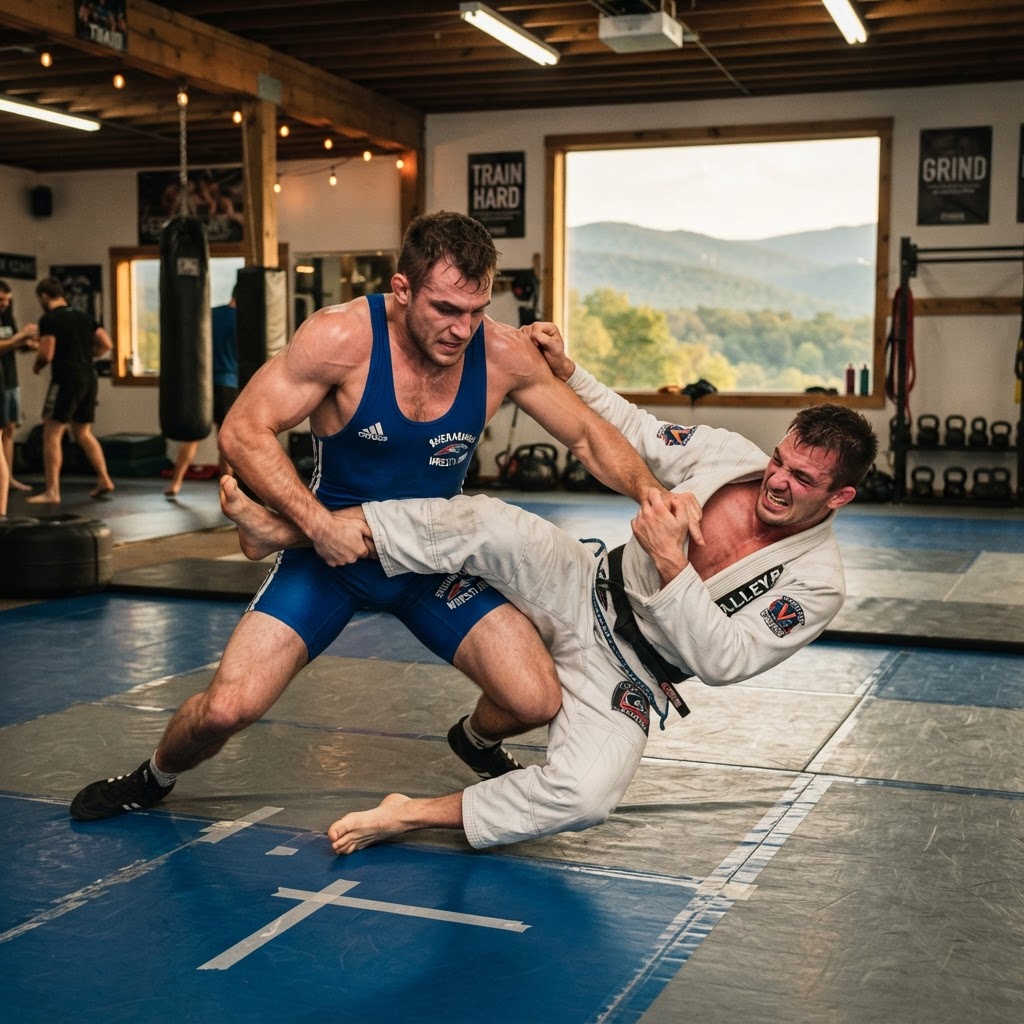
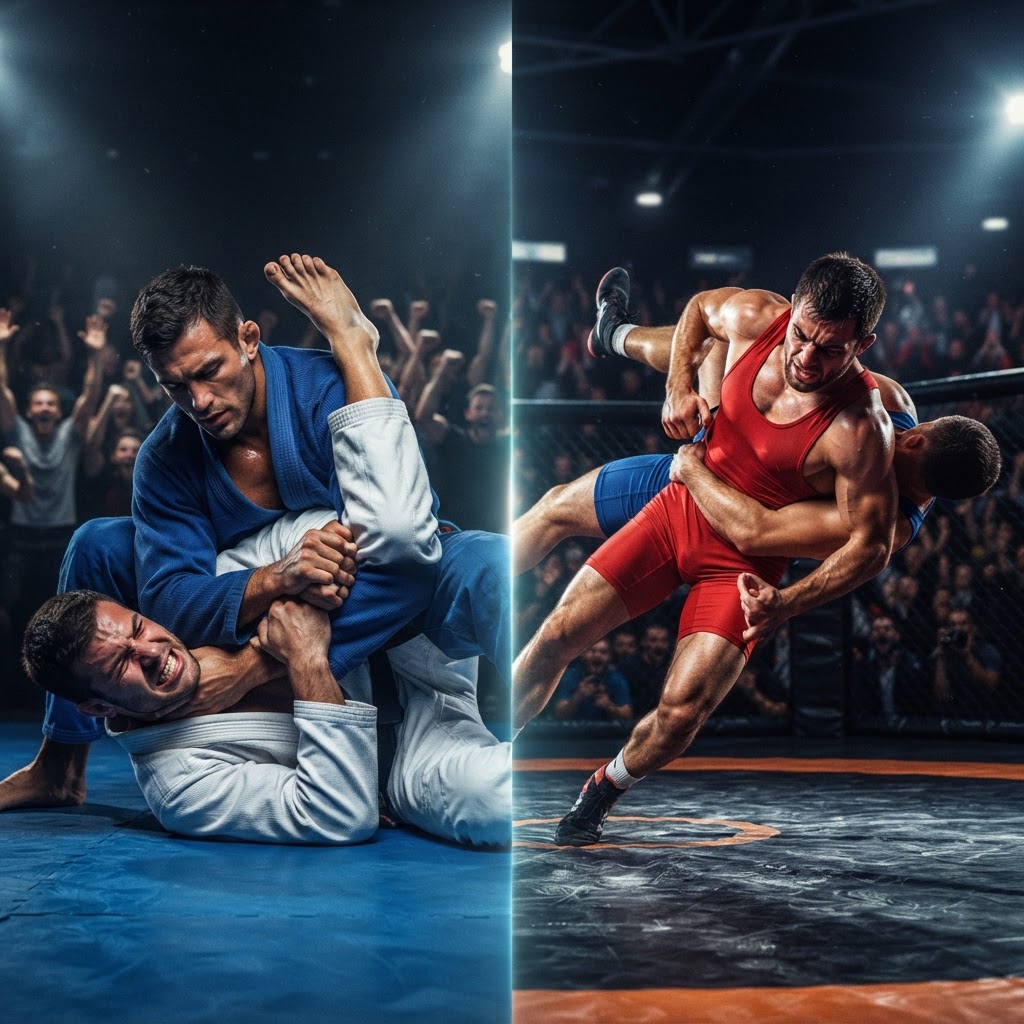
Wrestling and Brazilian Jiu-Jitsu emphasize different moments of a grappling exchange. Wrestling specializes in creating movement, breaking an opponent’s balance, finishing takedowns, scrambling, and controlling from the top. BJJ adds guard work, positional escapes, submission attacks, and the ability to stay calm in complicated ground positions.
Put together, the two arts answer a question that many beginners eventually ask: “How do I get the fight to the position where my best skills work?” A wrestler entering BJJ may already understand pressure and motion but need to learn submission awareness. A BJJ student adding wrestling often gains better entries, stronger top pressure, and more confidence when the round starts standing.
At Skyline Jiu-Jitsu in Waynesboro, wrestling concepts are taught as part of a safe grappling education—not as reckless collision. Students learn how to lower their level, protect their head and neck, finish with control, and transition immediately into a position they understand.
1. Stance, motion, and distance management
Every successful takedown begins before the actual shot. Your stance determines how quickly you can attack, defend, or change direction. Keep your feet roughly shoulder-width apart, knees bent, hips underneath you, head positioned safely, and hands ready to make contact. Avoid standing tall with your feet together or reaching forward with your chest.
Move in small steps rather than crossing your feet. Circle toward angles, stay balanced, and notice how your partner reacts when you apply light pressure. In BJJ, the best stance is not necessarily the lowest or most explosive wrestling stance; it is the stance that lets you defend submissions, protect your legs, and enter without losing posture.
For new students, stance and motion drills may feel simple. They are not wasted time. A balanced stance makes every later skill—single legs, body locks, snap downs, sprawls, and front headlocks—more reliable.
2. The single-leg takedown
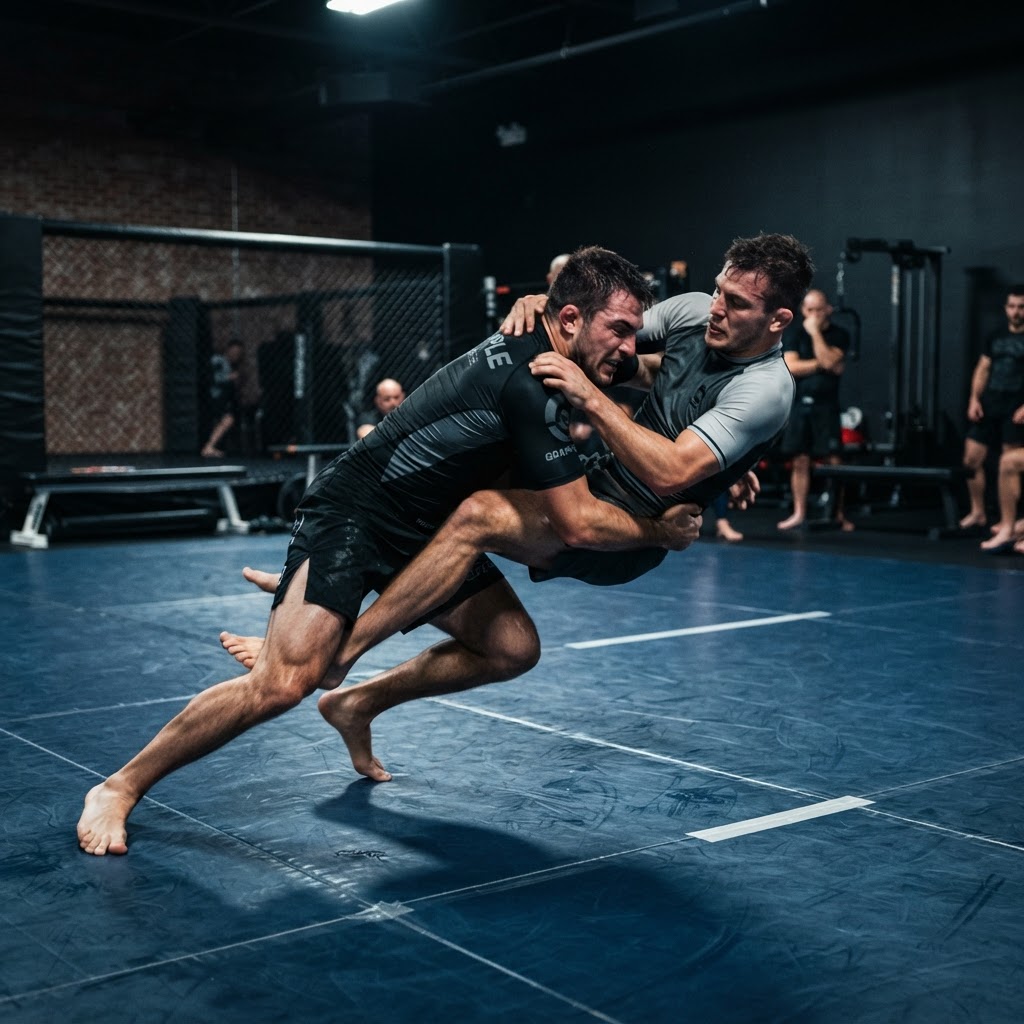
The single leg is one of the most useful BJJ takedowns because it gives you several finishing options without requiring a perfect entry. You can attack the leg after changing levels, recovering from a scramble, or combining a snap down with forward pressure.
Once you secure the leg, keep your head in a safe position, control the opponent’s upper body, and avoid standing upright while holding only the leg. Your partner’s balance matters more than lifting power. Use an angle, keep your hips close, and make them step or hop. Depending on the reaction, you might run the pipe, finish to the outside, transition to a body lock, or return to the mat with controlled pressure.
The BJJ detail is what happens next. A takedown is not the end of the exchange. Land in a position where you can stabilize—often side control, half guard top, or a safe passing position—rather than rushing into a submission before your base is secure.
3. The double-leg takedown
The double leg teaches the core mechanics of level change, penetration, connection, and finishing direction. Begin with a setup instead of shooting from too far away. Hand fighting, a collar tie, a push-pull reaction, or a snap can make your partner’s feet lighter and create the opening.
On the entry, step between the feet, keep your posture organized, and connect your arms around the legs or hips. Drive at an angle rather than straight through a stationary wall. In a BJJ class, your finish should prioritize control and training safety: guide your partner down, keep your head and neck protected, and be aware of guillotines and front-headlock attacks.
For self-defense-minded students, the double leg also teaches an important lesson: do not assume the first contact ends the situation. Learn to maintain balance, create space when needed, and recognize when disengagement is the smarter choice. Your coach can adapt the drill to sport BJJ, wrestling rounds, or practical self-defense training.
4. Snap downs and the front headlock
A snap down is a powerful bridge between wrestling and Brazilian Jiu-Jitsu. Rather than diving at the legs every time, you use your hands, timing, and level changes to make your partner’s head and shoulders move. When their posture breaks, you can circle behind, attack a front headlock, enter a go-behind, or connect to a takedown.
The front headlock is especially valuable because it appears in many BJJ scrambles. Your control should come from good positioning—not yanking the neck. Keep your chest connected, stay heavy through the shoulders, and learn the difference between legal positional pressure and unsafe neck compression. From there, students can practice safe transitions to the back, turtle control, or guard passing while remaining aware of submission opportunities.
Snap downs also help smaller grapplers. You do not have to overpower an opponent if you can disrupt posture and move around the corner. That idea—make your partner carry their weight, then attack the angle—is central to effective wrestling for Brazilian Jiu-Jitsu.
5. Body locks and inside control
A body lock gives you a close-range option when the distance for a traditional shot disappears. After hand fighting or defending an opponent’s entry, you may be able to connect your hands around the torso and use inside position to control their hips.
READY TO TRY BRAZILIAN JIU-JITSU?
Claim a FREE trial class at Skyline Jiu-Jitsu today!
Serving Waynesboro, Charlottesville, Fishersville & the Shenandoah Valley
Good body-lock wrestling is not just squeezing. Keep your head in a safe place, maintain a strong base, and use footwork to move your partner. Common finishes include outside trips, inside trips, mat returns, and controlled turns. In BJJ, body locks can flow directly into passing, back control, or takedowns against the cage in an MMA context, although sport-BJJ training should always follow the rules of the class and competition.
Practice the position slowly at first. A strong partner should be able to feel the direction of the drill and respond without being lifted or thrown unexpectedly. That is how you build timing without sacrificing training longevity.
6. Sprawl defense and the go-behind
Learning wrestling takedowns for BJJ also means learning to stop them. The sprawl is the basic answer to a shot: send your hips back and down, widen your base, control the head or shoulders, and avoid allowing your opponent to collect your legs.
Do not think of the sprawl as a single freeze-frame. Effective wrestling defense is a sequence. First, recognize the entry. Second, use your hips and hands to create pressure. Third, angle away from the attack. Finally, recover your stance or move into a counter such as a go-behind, front headlock, or re-attack.
This skill is useful even if you prefer playing guard. A good sprawl lets you choose when to sit, rather than being forced to the ground by an uncontrolled shot. It also develops the hip awareness and scrambling ability that make BJJ rounds safer and more athletic.
7. The ankle pick and low-risk finishing
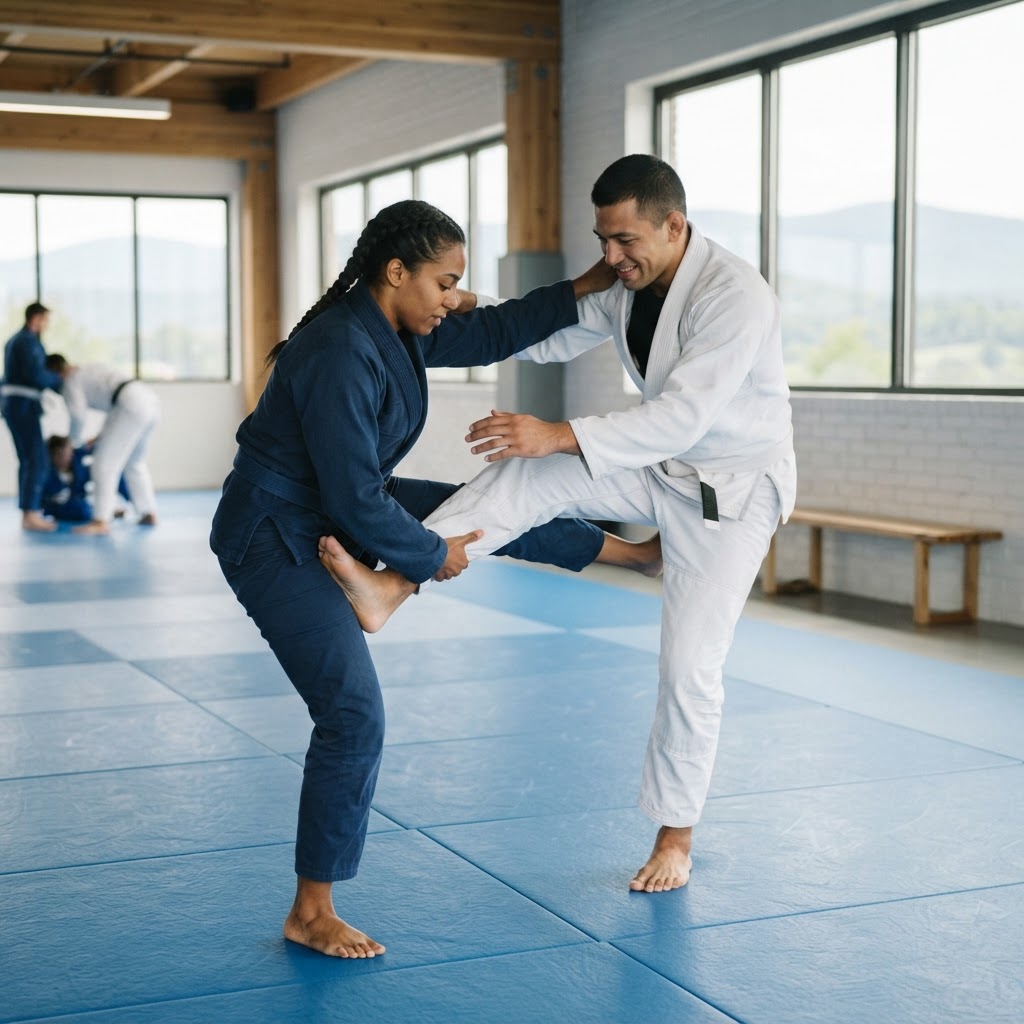
The ankle pick is a compact takedown that rewards timing, hand fighting, and attention to balance. Instead of driving through both legs, you use an upper-body connection to make your partner’s weight shift while your hand controls an ankle. A small pull, angle, and directional change can be enough to put them on the mat.
For BJJ athletes, the ankle pick is attractive because it can work from a more upright stance and often lands you in a passing position. It also teaches you to attack the feet without reaching blindly. Set it up with a collar tie, wrist control, or a reaction to your partner pushing into you.
As with every takedown, finish with your eyes open. Protect your knees, avoid twisting your partner’s leg, and be ready to disengage if the position becomes unsafe. The best technique is the one you can repeat responsibly during thousands of rounds.
How to connect a takedown to your BJJ game
The biggest mistake athletes make is treating wrestling and BJJ as two separate sports. After every takedown drill, ask three questions:
- Where did I land—side control, half guard, closed guard, turtle, or a scramble?
- What is my partner’s first defensive reaction?
- Which control lets me stabilize before I attack or pass?
If your single leg finishes into half guard, learn your preferred top-half-guard control. If your snap down leads to turtle, practice your go-behind and seat-belt connection. If your double leg is stopped, understand how to return to a front headlock or safely recover your stance. These connections turn a takedown into a complete BJJ sequence.
It also helps to train both sides. You do not need equal skill immediately, but practicing entries to your non-dominant side improves coordination and makes you harder to read. Start with cooperative drilling, add realistic resistance, and only then use short live rounds focused on one goal.
Is wrestling good for BJJ beginners?
Yes—when it is coached progressively. Beginners should learn stance, movement, hand fighting, breakfalls, sprawls, and controlled finishes before attempting high-speed takedown battles. A good coach will match partners by size and experience, teach communication, and explain how the rules change between wrestling and BJJ.
You also do not need to be young, huge, or naturally explosive. Adults starting in their 30s, 40s, or beyond can learn stand-up skills by focusing on positioning and timing. At Skyline Jiu-Jitsu, students from Waynesboro, Fishersville, Staunton, Charlottesville, and nearby Shenandoah Valley communities can build these skills at a pace that supports long-term progress.
Wear comfortable training gear, bring water, and expect to learn something new each class. If you are brand new to BJJ, our guide to what to expect at your first class can help you arrive prepared. You can also review the essential BJJ positions so the top-control portion of your takedown makes more sense.
Train wrestling for BJJ in Waynesboro, Virginia
Wrestling takedowns for BJJ are not about collecting flashy moves. They are about building a dependable beginning to every round: balanced stance, smart contact, efficient entries, safe finishes, and immediate positional control. That combination helps recreational students become more confident, competitors become more complete, and beginners understand how stand-up grappling fits into the larger BJJ game.
If you are looking for BJJ in Waynesboro or comparing martial arts programs near Charlottesville and Fishersville, Skyline Jiu-Jitsu offers a welcoming place to learn. Check the class schedule and pricing options, then come see how wrestling and Brazilian Jiu-Jitsu can work together.
Related posts
READY TO TRY BRAZILIAN JIU-JITSU?
Claim a FREE trial class at Skyline Jiu-Jitsu today!
Serving Waynesboro, Charlottesville, Fishersville & the Shenandoah Valley