Wrestling Takedowns for BJJ: 5 Techniques Every Grappler Needs to Master
If you've ever watched a BJJ match where both competitors pull guard and stare at each other from their backs, you already know why wrestling takedowns for BJJ have become one of the most talked-about topics in the grappling world. Takedowns are the difference between dictating where a fight goes and hoping your opponent makes a mistake. At Skyline Jiu-Jitsu in Waynesboro, Virginia, we believe every grappler, from white belt to black belt, should have at least a handful of reliable takedowns in their arsenal.
Whether you train in Waynesboro, Charlottesville, Fishersville, or anywhere across the Shenandoah Valley, adding wrestling-based takedown skills to your BJJ game will make you a more complete and dangerous grappler. In this guide, we'll break down five essential wrestling takedowns that translate directly to jiu-jitsu, how to drill them, and why they matter for your progression on the mat.
Why Wrestling Takedowns Matter in Brazilian Jiu-Jitsu
Brazilian jiu-jitsu is often called the gentle art, and for good reason. It emphasizes technique over brute strength, positioning over aggression, and submissions over damage. But there's a gap in many BJJ practitioners' games: the takedown phase. While BJJ teaches incredible ground skills, many academies spend minimal time on stand-up grappling. That's where wrestling for jiu jitsu fills the void.
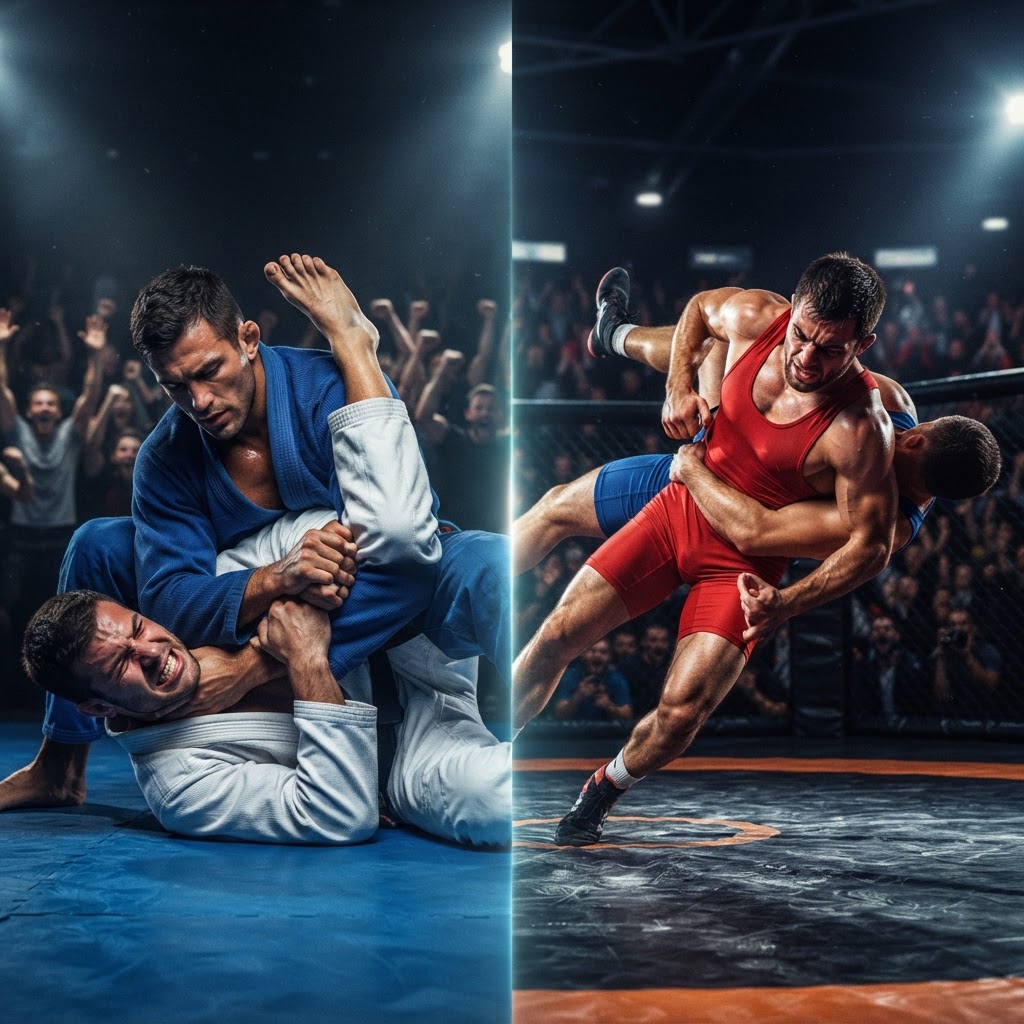
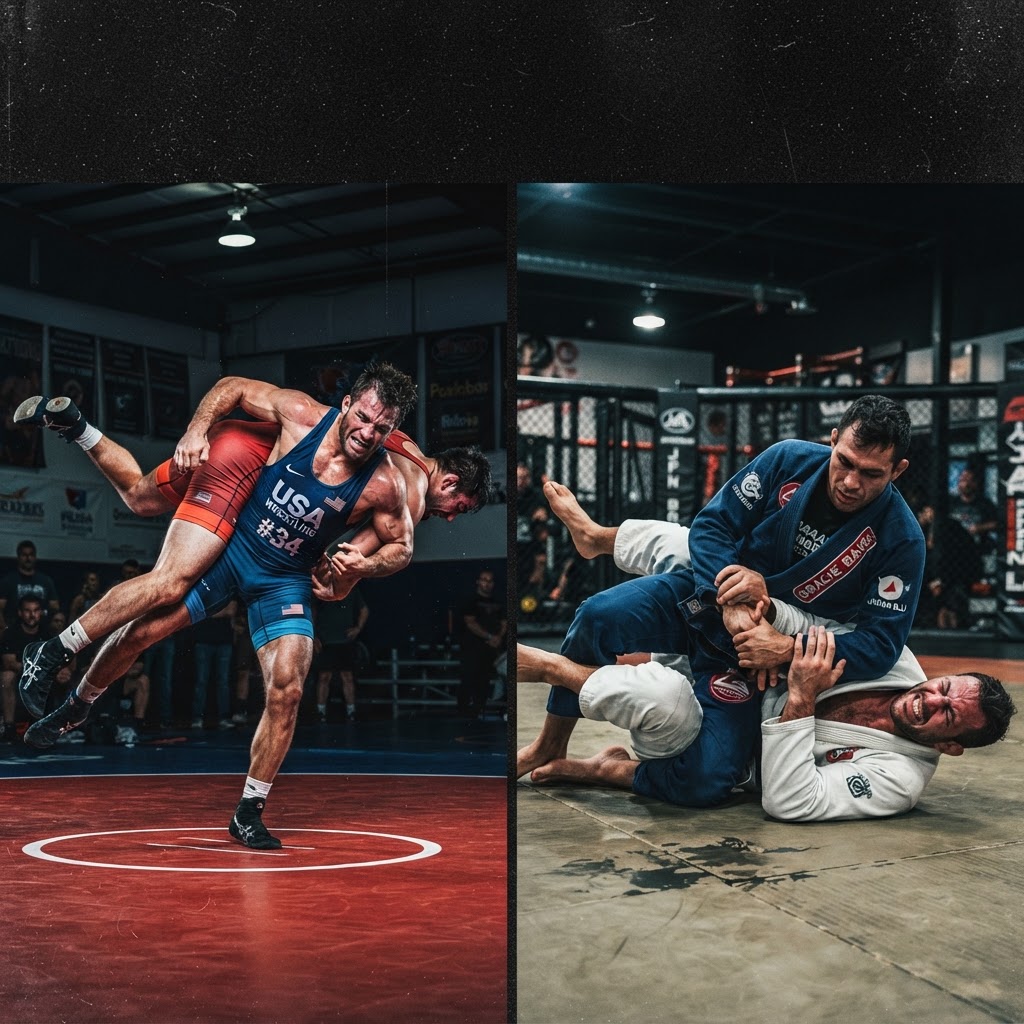
Wrestling is arguably the oldest and most refined takedown art in the world. The double leg takedown, single leg takedown, and other wrestling entries have been battle-tested for centuries. When you bring these techniques into BJJ, you gain the ability to control where the match starts. If you want to play top game, you need takedowns. If you want to pull guard strategically rather than out of necessity, you need takedown threats to keep your opponent honest.
If you're curious about the broader crossover between these two arts, check out our deep dive on whether wrestling helps with BJJ — the short answer is absolutely yes.
Technique 1: The Double Leg Takedown
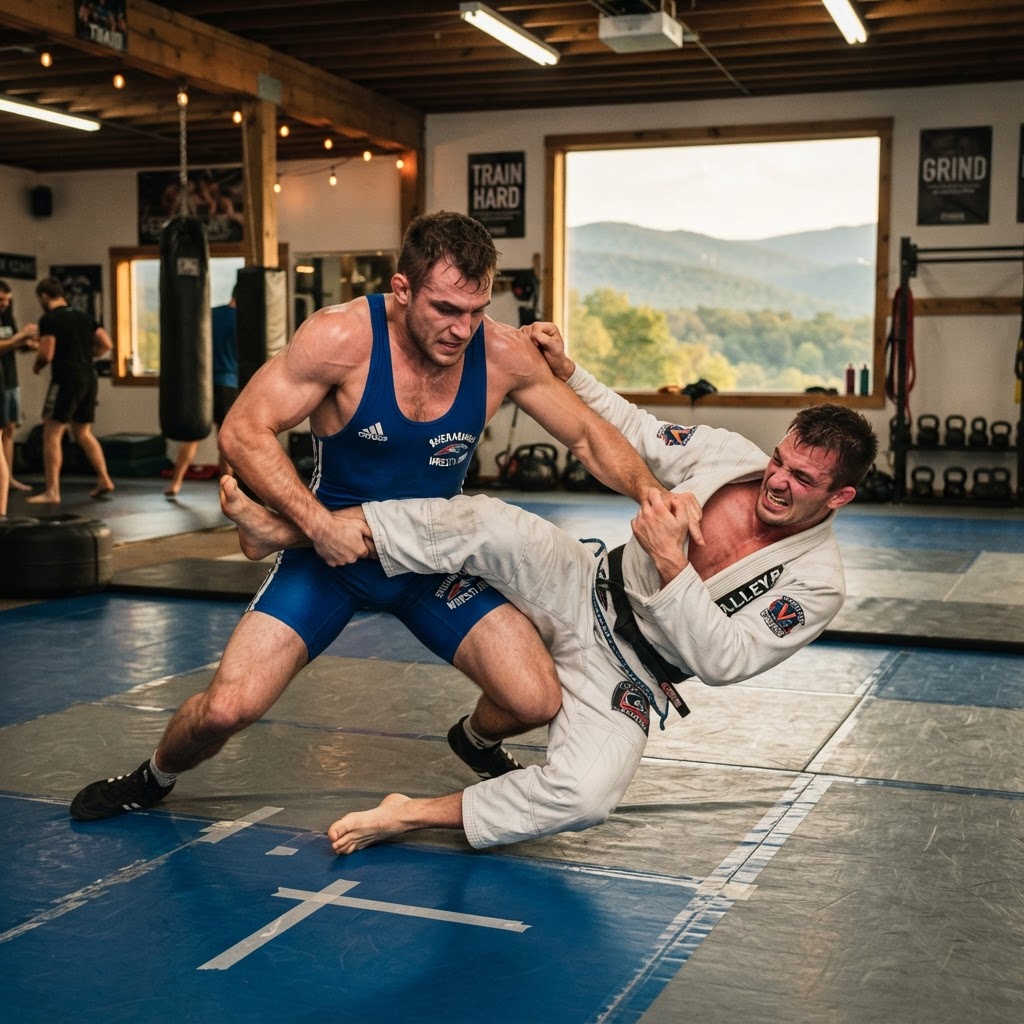
The double leg takedown is the crown jewel of wrestling takedowns for BJJ. It's the technique most people picture when they think of wrestling, and for good reason — it's powerful, reliable, and works across gi and no-gi grappling.
How to Execute the Double Leg
Start in a staggered stance with your lead foot forward and your weight distributed evenly. Lower your level by bending your knees (not your waist) and step your lead foot deep between your opponent's legs. Drive your lead shoulder into their midsection while wrapping both arms around their legs. Pull their knees toward your chest, drive forward, and bring them to the mat.
The key details: keep your back straight, your hips low, and your head up. If your head drops, your opponent can sprawl and apply a guillotine choke — a classic BJJ counter to poor double leg entries. Always finish with your head on the outside, not buried in their torso.
Why It Works in BJJ
The double leg takedown in BJJ puts you directly into top position, usually side control or knee-on-belly. From there, your jiu-jitsu skills take over. It's one of the highest-percentage BJJ takedown techniques because it works against opponents of all sizes. For grapplers in Waynesboro and the surrounding Shenandoah Valley, mastering the double leg gives you a takedown that works in competition and self-defense scenarios alike.
For a broader comparison of how wrestling and BJJ differ in approach, our guide on BJJ vs wrestling breaks down the strengths and weaknesses of each art.
Technique 2: The Single Leg Takedown
If the double leg is a sledgehammer, the single leg takedown is a surgical tool. It requires less commitment, works against larger opponents, and gives you multiple finishing options — making it perfect for BJJ practitioners who want options after the entry.
How to Execute the Single Leg
From your stance, shoot in and secure one of your opponent's legs with both arms. Keep your head on the inside of their leg and your elbows tight. From here, you have several finishes: the high crotch lift, the low single (sweeping their standing leg), or simply running the pipe by pulling their leg across your body while driving forward.
The single leg takedown for BJJ is particularly valuable because it naturally transitions into guard passes. After completing the takedown, you often end up in half guard or can immediately cut across to side control. This makes it one of the most efficient BJJ takedown techniques for competitors who want to chain their takedown directly into a ground attack.
Drilling the Single Leg
Practice the single leg against a partner who offers light resistance. Focus on the entry speed and the grip. Once you can consistently secure the leg, work on the finishing variations. At Skyline Jiu-Jitsu, we drill single leg entries from different setups: from a collar tie, from an underhook, and from a snap-down. Each entry changes the angle and the available finishes.
Technique 3: The High Crotch
The high crotch is a modified single leg that targets the upper thigh and hip area. It's an excellent takedown for BJJ because it requires less penetration depth than a traditional single or double leg, making it harder to defend with a sprawl.
How to Execute the High Crotch
From an underhook position, step your lead foot outside your opponent's lead foot. Reach your underhooking arm deep and grab the inside of their thigh near the hip crease. Pop your hips forward while lifting their leg. Finish by stepping your trail foot through and driving them to the mat.
The high crotch is especially effective in no-gi BJJ, where grip fighting is less of a factor. For grapplers who train both gi and no-gi — and if you're deciding which style fits you, our gi vs no-gi BJJ guide covers the differences in detail — the high crotch is a versatile technique that works in both formats.
Technique 4: The Ankle Pick
The ankle pick is one of the most underutilized wrestling takedowns for BJJ. It's low-risk, energy-efficient, and works beautifully against opponents who stand tall or lean forward — which is common in BJJ where practitioners aren't as wrestling-savvy.
How to Execute the Ankle Pick
From a collar tie (one hand behind your opponent's neck, the other controlling their wrist or elbow), snap their head down to break their posture. As they stand back up, your collar-tie hand slides down to grab their lead ankle while you push their shoulder backward with your other hand. The combination of pulling the ankle and pushing the upper body sends them to the mat.
The ankle pick is perfect for smaller grapplers or those who want a low-energy takedown that doesn't require explosive shooting. It's one of the best wrestling for jiu jitsu techniques for older practitioners or anyone who wants to conserve energy during a long match. If you're just starting out, this is a great technique to learn early — and our BJJ for beginners guide covers other foundational skills you'll need in your first month.
READY TO TRY BRAZILIAN JIU-JITSU?
Claim a FREE trial class at Skyline Jiu-Jitsu today!
Serving Waynesboro, Charlottesville, Fishersville & the Shenandoah Valley
Technique 5: The Body Lock Takedown
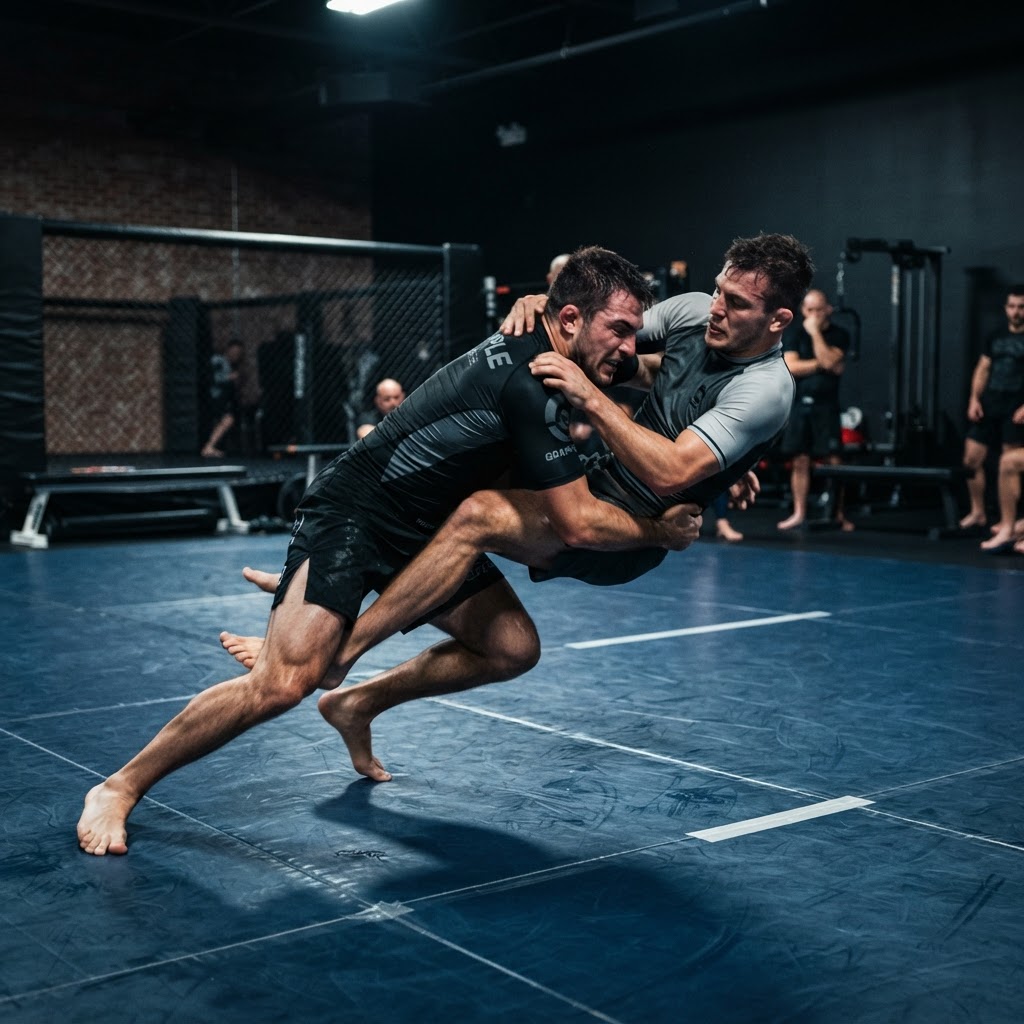
The body lock (also known as the double underhook or clinch takedown) is a powerful technique for close-range grappling. It's especially relevant in BJJ because many matches end up in the clinch, and the body lock gives you control and finishing options from that position.
How to Execute the Body Lock
Secure double underhooks around your opponent's torso, locking your hands behind their back. Pin your chest to theirs and drive forward to off-balance them. From here, you can execute a trip, a slam, or a lateral drop. The most common finish in BJJ is the outside trip: step your foot behind their lead leg and drive them sideways to the mat.
The body lock takedown transitions beautifully into top position. After the takedown, you typically land in side control or mount — prime attacking positions in BJJ. This makes it one of the most efficient BJJ takedown techniques for competitors who want to immediately start working their ground game.
Takedown Defense: Sprawling and Whizzing
Learning takedown defense for grapplers is just as important as learning the takedowns themselves. If you can't defend a takedown, you'll spend every match on your back. The two fundamental defenses every BJJ practitioner needs are the sprawl and the whizzer.
The Sprawl
When your opponent shoots for a takedown, immediately kick your legs backward and drop your hips to the mat. Your chest should land on their back or shoulders. This kills their forward momentum and leaves them in a disadvantaged position. From the sprawl, you can circle to their back, apply a front headlock, or simply stand back up.
The Whizzer
If your opponent secures a single leg, use your whizzer (an overhook on their arm that's wrapping your leg) to create leverage. Drive your weight down and rotate away from the trapped leg. This can completely shut down a single leg attempt and set up your own counter-takedown.
For wrestlers transitioning into BJJ, these defensive concepts are already second nature. If you have a wrestling background, you have a significant head start — our article on BJJ for wrestlers explains why crossover athletes have a unique advantage on the mat.
How to Train Wrestling Takedowns at a BJJ Gym
Many BJJ academies don't dedicate enough time to takedown training. If your gym is one of them, here are some strategies to build your wrestling skills:
- Arrive early: Spend 10-15 minutes before class drilling takedown entries with a partner. Repetition builds muscle memory.
- Ask your coach: Most BJJ instructors have wrestling knowledge even if they don't teach it regularly. Ask for specific takedown instruction during open mat.
- Start every roll from standing: Instead of starting on your knees, start from standing position. This forces you to practice takedowns in every live session.
- Cross-train: If there's a wrestling club in the Waynesboro or Charlottesville area, consider attending a session or two to learn from dedicated wrestling coaches.
- Watch and study: There's excellent instructional content available online. Study how high-level grapplers like Gordon Ryan and Khabib Nurmagomedov integrate wrestling into their games.
Choosing the right gym matters too. If you're looking for an academy that values well-rounded grappling, our guide to choosing a BJJ gym walks you through what to look for, including whether they teach takedowns.
Common Mistakes When Learning Wrestling Takedowns for BJJ
As you begin incorporating wrestling takedowns into your BJJ game, watch out for these common pitfalls:
1. Reaching instead of stepping. Many beginners bend at the waist and reach for their opponent's legs. This is a recipe for getting sprawled on and guillotined. Always step into your takedown — your feet get you there, not your arms.
2. Not lowering your level. If you shoot from a tall stance, your opponent will see it coming from a mile away. Drop your level by bending your knees before you enter.
3. Forgetting about submission threats. In BJJ, takedowns aren't just about getting to the ground — they're about getting to the ground safely. Always be aware of guillotine chokes, triangle setups, and kimura traps that opponents can use during your takedown entries.
4. Only practicing one takedown. Even a great double leg can be defended if it's your only option. Chain your takedowns together: if the double leg fails, transition to a single leg. If the single leg fails, switch to an ankle pick. This is what wrestlers call chain wrestling, and it's just as effective in BJJ.
If you're a white belt working through these concepts, don't get discouraged. Check out our BJJ white belt tips for more guidance on navigating your first year of training.
Why Train Wrestling-Infused BJJ at Skyline Jiu-Jitsu?
At Skyline Jiu-Jitsu in Waynesboro, VA, we believe in building complete grapplers. That means teaching takedowns alongside guard work, submissions alongside escapes, and wrestling fundamentals alongside traditional BJJ techniques. Our students from Waynesboro, Fishersville, Charlottesville, and across the Shenandoah Valley come to us because they want a well-rounded grappling education.
Whether your goal is competition, self-defense, fitness, or just becoming a better version of yourself, having strong takedown skills transforms your entire game. You stop being a passive grappler who reacts to your opponent and start being a grappler who controls the match from the moment the referee says go.
For those wondering how these skills translate to real-world situations, our article on wrestling vs BJJ for self-defense covers which techniques actually work when it matters most.
Related Posts
- Does Wrestling Help With BJJ? How Cross-Training Makes You a Better Grappler
- BJJ vs Wrestling: Which Grappling Style Should You Choose?
- BJJ for Wrestlers: Why Crossover Athletes Have the Ultimate Advantage on the Mat
- Wrestling vs BJJ for Self Defense: Which Grappling Art Actually Works in a Real Fight?
- Gi vs No Gi BJJ: Which Training Style Is Right for You?
- What to Expect at Your First BJJ Class: A Complete Beginner's Guide
READY TO TRY BRAZILIAN JIU-JITSU?
Claim a FREE trial class at Skyline Jiu-Jitsu today!
Serving Waynesboro, Charlottesville, Fishersville & the Shenandoah Valley