Brazilian Jiu-Jitsu for Weight Loss: How BJJ Builds Fitness, Confidence, and Resilience
If you are searching for Brazilian Jiu-Jitsu for weight loss, you may be looking for an exercise program that feels more engaging than another session on a treadmill. BJJ combines cardiovascular conditioning, strength work, mobility, problem-solving, and community into one challenging workout. At Skyline Jiu-Jitsu in Waynesboro, Virginia, adults of different ages and fitness levels can use consistent training to build healthier habits, improve conditioning, and feel more confident in everyday life.
Jiu-jitsu is not a magic shortcut, and no single workout replaces balanced nutrition, sleep, or medical guidance. What makes BJJ effective for many people is that it gives exercise a purpose. You are learning a skill, working with a partner, and solving a physical puzzle instead of watching the clock until a workout ends.
Can Brazilian Jiu-Jitsu Help You Lose Weight?
Yes, Brazilian Jiu-Jitsu can support weight loss because it is physically demanding and easy to make consistent when you enjoy the training environment. A typical class may include movement drills, technical instruction, repeated practice, positional exercises, and controlled rounds. Those activities can elevate your heart rate while challenging your muscles to push, pull, brace, grip, rotate, and move through different positions.
Weight loss happens when your overall energy intake is lower than your energy expenditure over time. BJJ contributes to the activity side of that equation, but results vary based on training intensity, body size, food choices, recovery, and how often you attend. The most useful goal is not to chase a specific calorie number after every class. It is to establish a sustainable routine that helps you move regularly and make better decisions outside the gym.
Why BJJ Is an Effective Full-Body Workout
Brazilian Jiu-Jitsu uses your entire body. Even a technical class that does not feel like traditional cardio can challenge several fitness qualities at once.
1. Cardiovascular conditioning
Rolling and positional drills involve repeated bursts of effort followed by short periods of recovery. Over time, this interval-style training can improve your ability to work hard, recover, and stay composed when your heart rate rises. Beginners should focus on controlled breathing and pacing rather than trying to match an experienced student’s intensity.
2. Functional strength
BJJ develops practical strength through gripping, framing, bridging, posting, standing, pulling, and controlling body position. Your core, hips, back, shoulders, forearms, and legs all contribute. Because the movements are performed against a live partner, you also learn how to apply strength with timing and leverage instead of simply moving a fixed weight.
3. Mobility and body awareness
Jiu-jitsu asks you to move from the ground, change angles, create space, and coordinate your hips and shoulders. Regular practice can improve comfort with movements such as bridging, shrimping, technical stand-ups, and controlled rotations. Mobility gains are gradual, but they can make other activities and daily movements feel easier.
4. Balance and coordination
Every position requires awareness of your base and your partner’s movement. You learn to distribute weight, keep balance, recover posture, and react to changes. That combination of coordination and resistance makes BJJ a more mentally engaging workout than repeating the same movement alone.
How Many Times a Week Should You Train for Fitness?
For most beginners, two or three BJJ classes per week is a strong starting point. That schedule provides enough repetition to learn and enough recovery time to manage soreness. If you are completely new to exercise, two classes plus walking, light strength work, or mobility sessions may be more sustainable than training hard every day.
Consistency matters more than an ambitious schedule you cannot maintain. After several weeks, you can evaluate your energy, sleep, joint comfort, and motivation. Some students eventually train four or more times per week, but more is not automatically better. Your body adapts during recovery, so rest days are part of the program rather than a sign that you are falling behind.
What Should Beginners Expect in a BJJ Fitness Class?
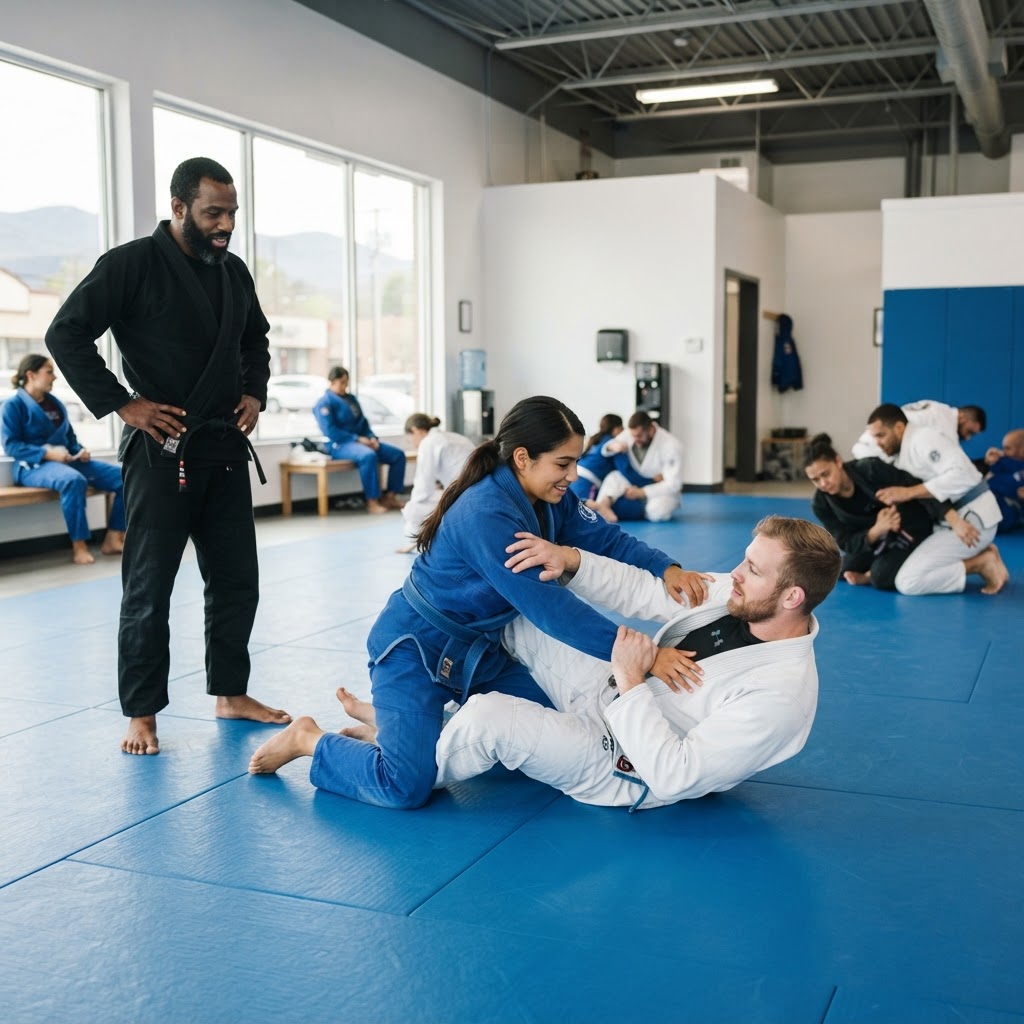
Your first class may feel unfamiliar, but you do not need to be athletic before you begin. A beginner-friendly session usually includes a warm-up, movement instruction, a technique lesson, partner drilling, and sometimes light positional practice. The instructor can modify movements and help choose a partner who matches your experience and comfort level.
Do not judge your fitness by how you perform on day one. New students often tire quickly because they are learning unfamiliar movements and may hold their breath under pressure. As you become more relaxed, your technique improves and your energy becomes easier to manage. Progress may show up as better breathing, quicker recovery, improved movement, or the ability to train without feeling overwhelmed.
Wear comfortable athletic clothing without zippers, pockets, or hard pieces for an introductory class. Bring water, trim your fingernails, remove jewelry, and tell the coach about injuries or limitations before training. If you want to understand the first visit in more detail, read our guide to your first beginner jiu-jitsu class.
BJJ for Weight Loss Without the “All or Nothing” Mindset
A common mistake is treating exercise as punishment for eating or as a short-term challenge. A better approach is to make training one dependable part of your week. You do not have to dominate every round to benefit from BJJ. Technical drilling, warm-ups, positional work, and controlled sparring all contribute to movement and skill development.
READY TO TRY BRAZILIAN JIU-JITSU?
Claim a FREE trial class at Skyline Jiu-Jitsu today!
Serving Waynesboro, Charlottesville, Fishersville & the Shenandoah Valley
Track behaviors you can control: how often you attend, whether you hydrate, how you recover, and whether your meals support your goals. Body weight can fluctuate because of water, sodium, stress, and training-related inflammation, so a single weigh-in does not tell the whole story. Notice other markers too, such as waist measurements, energy, sleep, strength, conditioning, and how your clothes fit.
If you have a medical condition, are returning after a long break, or have a history of injury, speak with a qualified healthcare professional before starting a demanding exercise program. Let your coach know what movements need modification. Safe, repeatable training will take you farther than trying to prove something in your first week.
The Mental Health and Confidence Benefits of Jiu-Jitsu
Health is more than body composition. Many students continue training because BJJ improves their mood, focus, and confidence. The class requires you to pay attention to the moment: where your hips are, how your partner is moving, and which decision comes next. That focus can create a useful break from work stress and constant notifications.
Jiu-jitsu also builds confidence through evidence. You learn a movement, struggle with it, practice it, and eventually use it successfully against resistance. That process teaches patience and resilience without requiring perfection. A difficult round becomes feedback rather than a verdict about your ability.
Research and current sports-health discussions frequently connect BJJ with stress relief, self-efficacy, resilience, and supportive community. Those benefits should not be presented as a replacement for professional mental-health care, but they can complement a healthy routine. If you are having a difficult time emotionally, seek support from a qualified professional while using exercise as one part of your overall care.
How to Support Your Training Outside the Academy
Build meals around recovery
Choose regular meals with protein, vegetables or fruit, carbohydrates that support activity, and enough fluids. You do not need an extreme diet to train effectively. If weight loss is your goal, a registered dietitian can help you create a realistic calorie deficit while preserving energy for practice.
Prioritize sleep
Sleep supports recovery, mood, learning, and appetite regulation. A consistent bedtime routine can be just as valuable as adding another workout. If you are exhausted, a lighter technical session or rest day may be the smarter choice.
Add simple strength and walking
Walking is low-impact movement that can increase your weekly activity without exhausting you. Basic strength training can also complement BJJ, especially when it emphasizes good form and gradual progression. You do not need to fill every day with intense exercise.
Keep showing up
The best fitness plan is one you can repeat. Put classes on your calendar, arrive a few minutes early, and measure progress over months rather than days. Training with a community makes accountability easier because people notice when you return and support your effort.
Starting BJJ in Waynesboro, Fishersville, and Charlottesville
Skyline Jiu-Jitsu welcomes adults from Waynesboro, Fishersville, Charlottesville, and throughout the Shenandoah Valley. Whether your goal is jiu-jitsu for fitness, weight management, self-defense, stress relief, or a new community, the right starting point is a class that meets you where you are.
Review the class schedule to find a training time and visit the pricing page for current options. If you are nervous, remember that experienced students were once beginners too. You do not need to know the positions, vocabulary, or techniques before your first class. You only need to be willing to learn.
Frequently Asked Questions
How many calories does BJJ burn?
The number depends on body size, pace, class format, conditioning, and how much live training you do. Online estimates vary widely, so use your actual energy, performance, and long-term progress rather than relying on a precise calorie number.
Is BJJ good for someone who is overweight or out of shape?
Many beginners start at different fitness levels. A good coach can adjust drills, pace, and partner selection. Tell the instructor about your goals and limitations so the class can be scaled safely.
Will BJJ make me bulky?
BJJ can build functional strength and muscular endurance, but changes in muscle size depend on training, nutrition, genetics, and additional strength work. Most students notice improved conditioning and body control first.
Can I lose weight by training BJJ twice a week?
Two classes per week can contribute to weight loss when combined with sustainable nutrition, daily activity, and recovery. The key is your overall routine and energy balance over time.
Related Posts
READY TO TRY BRAZILIAN JIU-JITSU?
Claim a FREE trial class at Skyline Jiu-Jitsu today!
Serving Waynesboro, Charlottesville, Fishersville & the Shenandoah Valley