Gi vs No-Gi BJJ: Key Differences and Which Style Is Right for You
If you are comparing gi vs no-gi BJJ, you are looking at two training styles built on the same Brazilian Jiu-Jitsu foundation but shaped by different grips, pacing, rules, and strategies. One is not automatically better than the other. For students in Waynesboro, Charlottesville, Fishersville, and throughout the Shenandoah Valley, the best choice usually depends on your goals, schedule, comfort level, and what kind of grappling you enjoy.
At Skyline Jiu-Jitsu, students can learn the principles that make both styles effective: balance, leverage, posture, pressure, escapes, positional control, and submissions. Understanding the differences between gi and no-gi jiu jitsu can help you walk into your first class with a clearer idea of what to expect—and why training both can make you a more adaptable grappler.
What Is Gi Jiu-Jitsu?
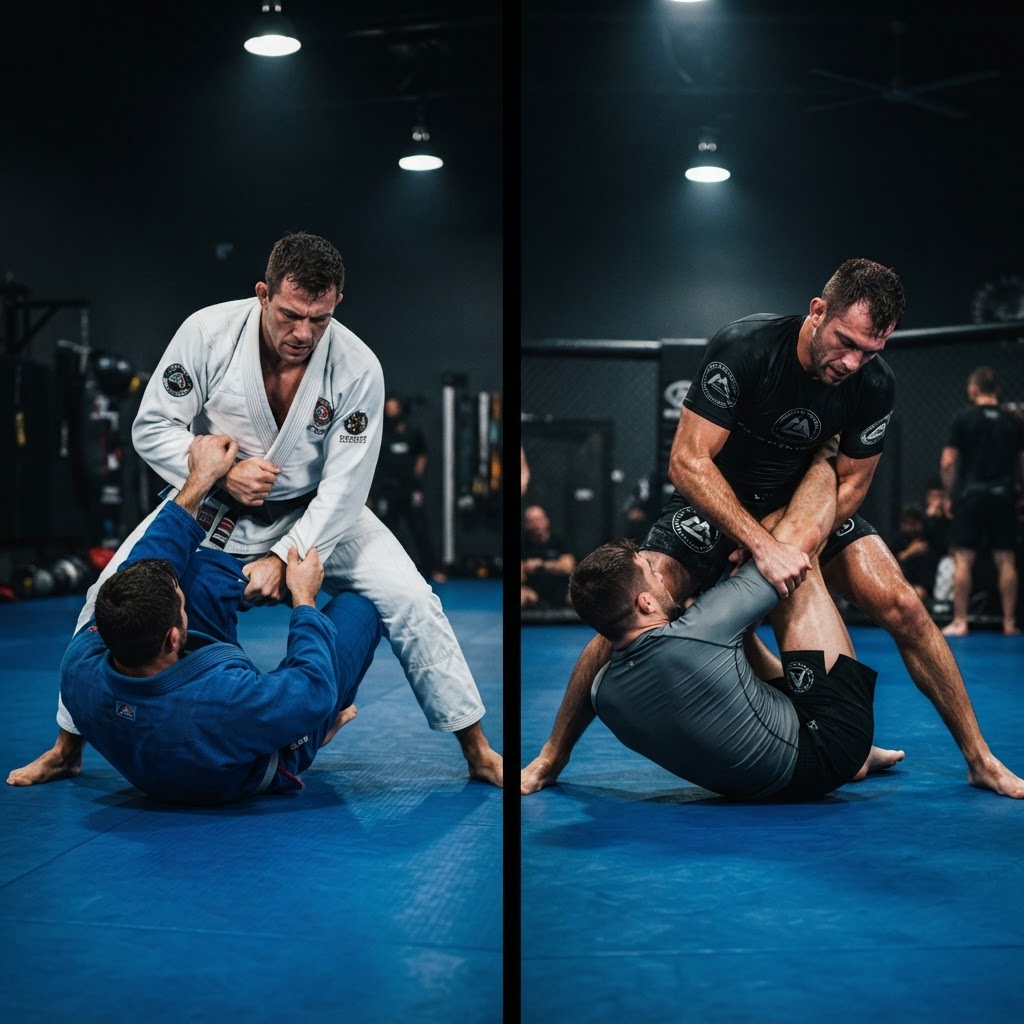
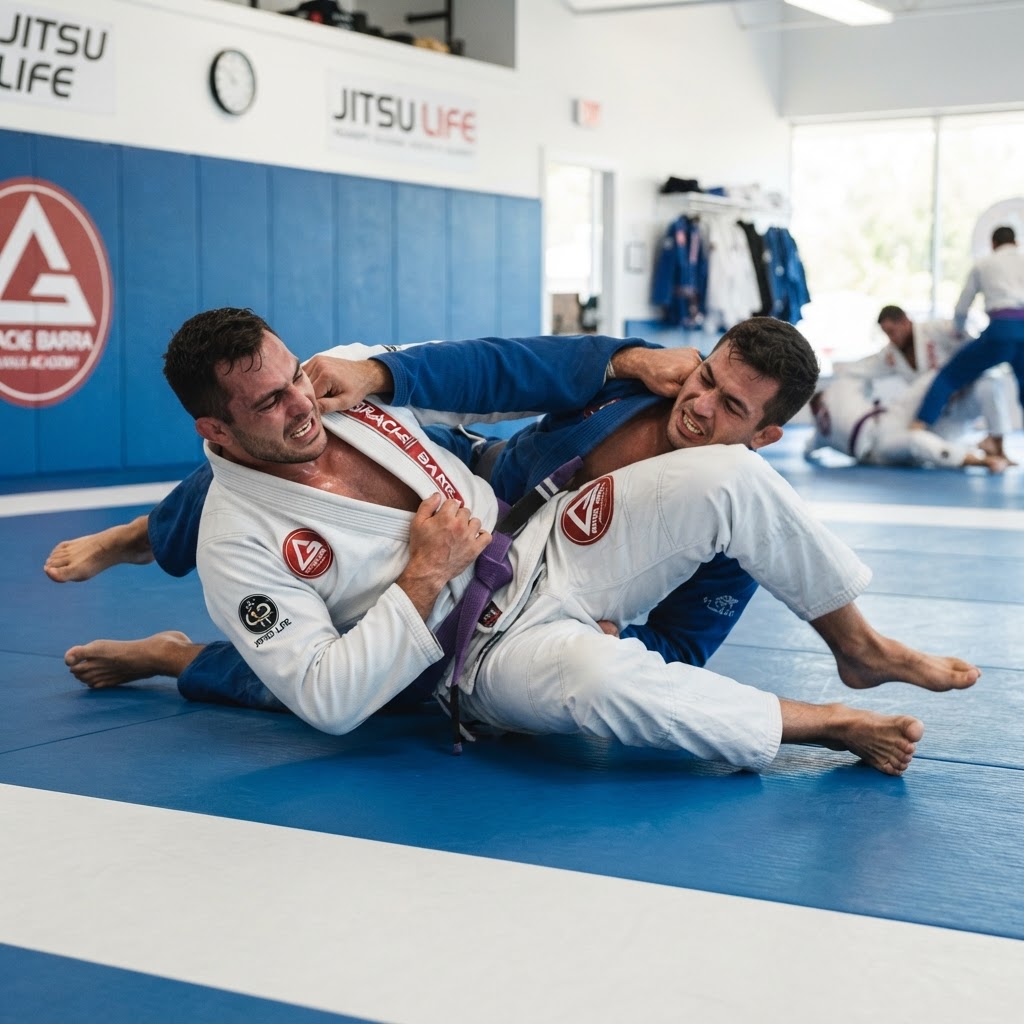
Gi jiu-jitsu is practiced in a traditional uniform made up of a sturdy jacket, pants, and belt. The jacket gives both athletes additional gripping surfaces. You can control sleeves, lapels, pant legs, and the collar, and your training partner can use the same parts of your uniform to control your movement.
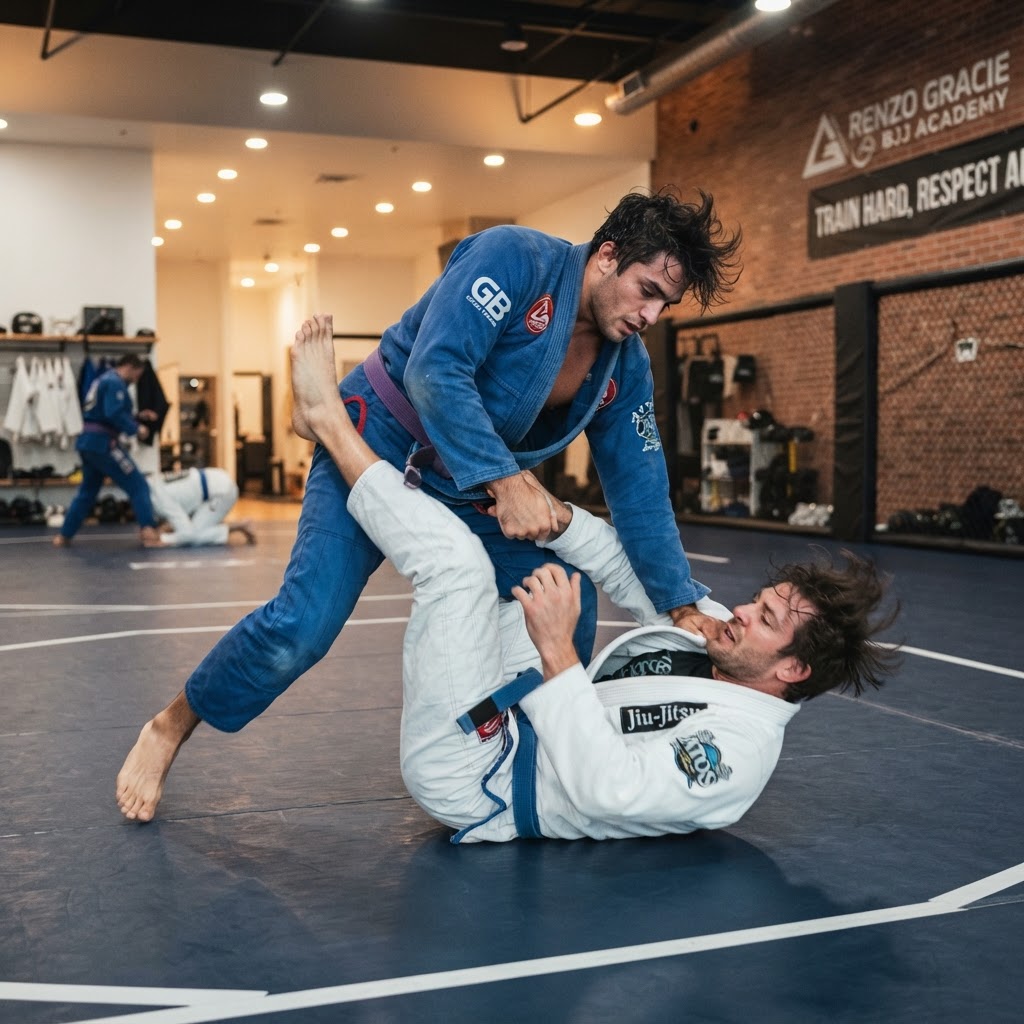
Those grips create a style that often rewards deliberate control and detailed problem-solving. A collar grip can slow an opponent down, change their posture, or help set up a sweep or submission. A sleeve grip can limit an arm, manage distance, or keep someone from posting during a guard pass. Because the uniform adds friction and handles, gi rounds can feel more methodical even when the action is intense.
What Is No-Gi Jiu-Jitsu?
No-gi jiu-jitsu is trained in a rash guard and grappling shorts or other approved athletic clothing. Since there is no jacket or pant material to grab, athletes rely more on underhooks, overhooks, wrist control, head position, body locks, and pressure through the hips and shoulders.
No-gi rounds often move at a faster pace because opponents can slip out of certain grips more easily. Scrambles, wrestling exchanges, leg positioning, and transitions can become especially important. No-gi is also a natural choice for people interested in submission grappling, mixed martial arts, or a training style that resembles grappling in everyday athletic clothing.
Gi vs No-Gi BJJ: The Main Differences
1. Grips and control
The most obvious difference in gi vs no-gi BJJ is the way you control your training partner. In the gi, fabric grips let you manage distance and create friction. You can hold a collar, secure a sleeve, or use a pant grip to prevent movement.
In no-gi, your grips must connect directly to the body. That means hand fighting, inside position, underhooks, wrist control, and head control become central skills. You cannot simply grab a sleeve when your partner starts to escape. You have to keep your structure connected and adjust as the body moves.
2. Pace and scrambles
Gi training is often described as slower, but “slower” does not mean easier. The extra grips can make positions more stable and give both athletes more ways to build a layered attack. A round may involve long sequences of grip fighting, guard retention, passing, and incremental pressure.
No-gi is commonly faster and more fluid. Without fabric grips, positions can change quickly, especially during takedowns, guard passes, wrestle-ups, and escapes. This can be exciting for athletes who enjoy movement and reaction speed. It can also feel chaotic to a new student until they learn to prioritize balance, frames, and inside position.
3. Techniques and strategies
The core techniques carry over between gi and no-gi jiu jitsu, but the setups can look different. A gi player may use a collar and sleeve combination to create a triangle opportunity. A no-gi player may use a wrist control, arm drag, or front-headlock connection to create a similar angle.
Leg-lock systems are prominent in many no-gi competition settings, although leg attacks are also trained in the gi. Conversely, collar chokes and some lapel-based controls are unique to gi training. The best athletes understand that a technique is more than a memorized move: it is a response to posture, pressure, distance, and timing.
4. Rules and competition
Competition rules vary by organization, age division, belt level, and event. Some tournaments allow certain leg locks or grips that others restrict. Some events separate gi and no-gi divisions, while submission-only competitions may use a different scoring or overtime format.
If you plan to compete, ask your coach which ruleset applies before building your game around a particular technique. Training in both styles can help you understand what remains consistent across rulesets while also showing you which details are specific to the uniform.
5. Clothing, hygiene, and preparation
Gi classes require a clean, properly fitted uniform. The gi should be washed after every class and inspected for tears or rough seams. No-gi classes require clean training clothes, and rash guards help reduce friction and keep fabric from catching on fingers.
Both styles demand the same basic hygiene habits: shower before training when possible, keep fingernails and toenails trimmed, cover cuts, wash equipment, and stay off the mat when you have a contagious skin condition or illness. Clean training gear is part of respecting your teammates.
Which Is Better for Beginners: Gi or No-Gi?
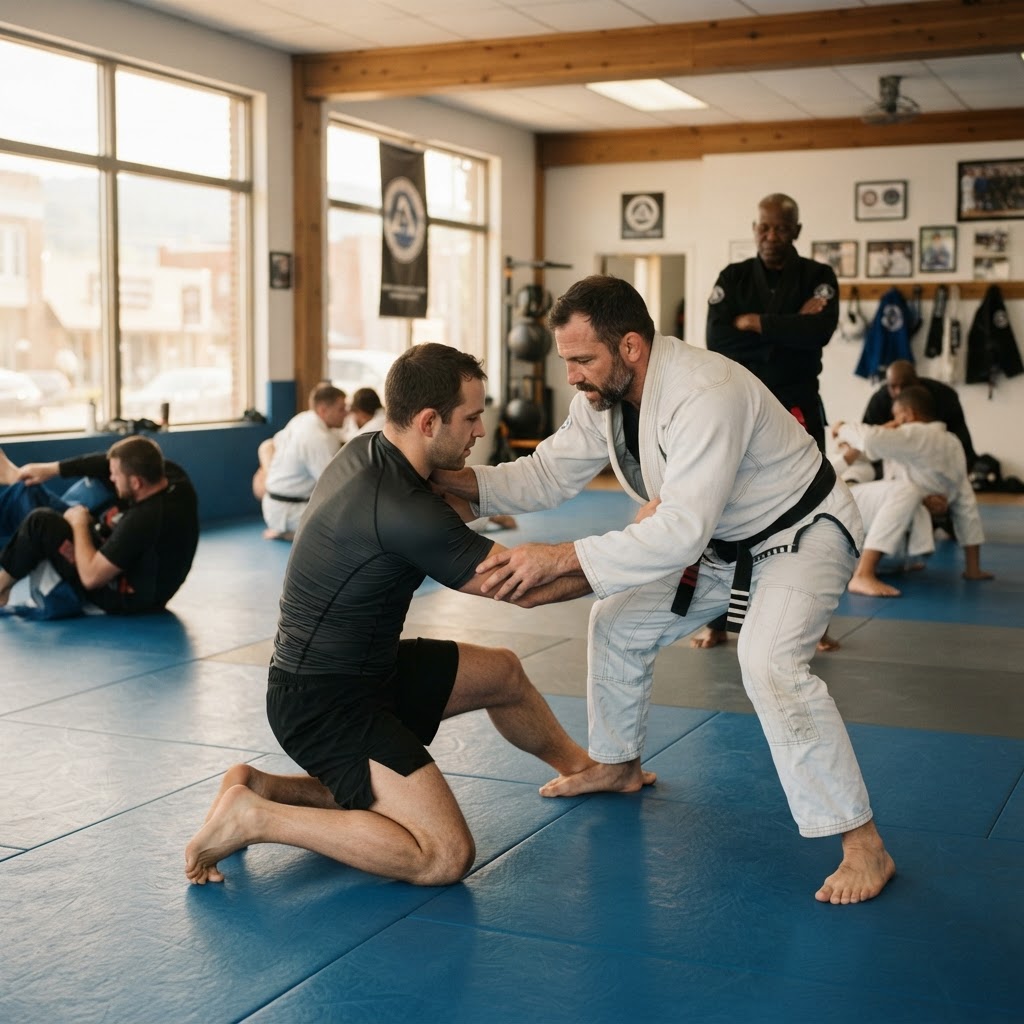
There is no universal answer to whether gi or no-gi is better for beginners. Many new students find the gi helpful because the grips slow down movement enough to make positions easier to understand. The uniform also gives instructors clear handles for teaching posture, frames, guard control, and passing concepts.
READY TO TRY BRAZILIAN JIU-JITSU?
Claim a FREE trial class at Skyline Jiu-Jitsu today!
Serving Waynesboro, Charlottesville, Fishersville & the Shenandoah Valley
Other beginners prefer no-gi because the clothing is simple and the pace feels more athletic. If you dislike wearing a heavy uniform or are primarily interested in wrestling, MMA, or submission grappling, no-gi may feel more intuitive.
The most important factor is not choosing the perfect style on day one. It is finding a clean academy with patient coaching and training partners who help you learn safely. A consistent student in either class will progress faster than someone who keeps switching gyms while searching for the “ideal” format.
Is Gi or No-Gi Better for Self-Defense?
Self-defense does not happen inside a tournament ruleset, so both gi and no-gi training offer useful lessons. No-gi practice can help you manage body-to-body grips, underhooks, balance, and movement when an attacker is wearing a T-shirt or athletic clothing. It may feel more directly connected to common grappling situations.
Gi training teaches strong posture, grip fighting, pressure management, and control against clothing grips. In a real situation, jackets, hoodies, and shirts can create handles just as a gi does. The deeper lesson is learning how to stay calm, protect yourself, create space, stand up safely, and move toward help.
Brazilian Jiu-Jitsu should be one part of a complete self-defense mindset that includes awareness, de-escalation, boundaries, and leaving danger whenever possible. Ask your instructor how your academy separates sport training from practical self-defense instruction.
Can You Train Both Gi and No-Gi?
Yes, and many students benefit from doing exactly that. Training both styles exposes you to different problems. The gi can sharpen your patience, grip awareness, and positional details. No-gi can improve your hand fighting, scrambling, mobility, and ability to maintain control without fabric.
Skills transfer in both directions. A student who learns to control distance with a sleeve may become better at controlling wrists in no-gi. A student who develops strong no-gi underhooks may become harder to move in the gi. The two formats are not separate martial arts; they are different laboratories for the same principles.
If you are new, start with the class that fits your schedule and attend consistently. After a few weeks, try the other format when your coach says you are ready. You may discover that the style you expected to dislike becomes the class you look forward to most.
Gi vs No-Gi BJJ for Fitness and Training Goals
Both formats can provide a challenging full-body workout. You will use your legs, hips, core, back, grip, and cardiovascular system while drilling and sparring. No-gi may feel more explosive because of its frequent scrambles, while gi training can produce intense muscular fatigue through gripping and isometric control.
For weight loss, the most effective style is the one you will attend regularly. For confidence, both styles teach you to solve problems while tired and under pressure. For competition, choose the format you plan to enter but keep cross-training when possible. For general fitness, sample both and decide which environment keeps you engaged.
Starting Gi or No-Gi Jiu-Jitsu in Waynesboro, VA
Skyline Jiu-Jitsu welcomes adults, teens, and kids from Waynesboro, Fishersville, Charlottesville, and nearby Shenandoah Valley communities. If you are unsure whether gi or no-gi is right for you, a coach can explain the class format, clothing requirements, and beginner options before you step on the mat.
New students do not need to buy an expensive uniform before asking questions. For an introductory class, clean athletic clothing may be acceptable depending on the session. Check the Skyline class schedule and review pricing options so you can choose a convenient starting point.
Frequently Asked Questions
Do I need a gi for my first jiu-jitsu class?
Not always. Contact the academy before attending and ask what clothing is appropriate for the specific class. Clean athletic clothing is often enough for an introductory visit.
Is no-gi jiu-jitsu easier than gi?
No. No-gi can feel faster because there are fewer fabric grips, while gi training can demand detailed grip fighting and patience. Each style presents different challenges.
Which style should I train for MMA?
No-gi is often more directly relevant to MMA because there are no jacket grips, but gi training still develops valuable positional control, timing, and submission mechanics. Speak with your coach about your overall goals.
Can children train in gi and no-gi classes?
That depends on the academy’s age groups and curriculum. Kids should train in a closely supervised class with age-appropriate techniques and clear safety rules. Ask Skyline about the best option for your child.
Related Posts
READY TO TRY BRAZILIAN JIU-JITSU?
Claim a FREE trial class at Skyline Jiu-Jitsu today!
Serving Waynesboro, Charlottesville, Fishersville & the Shenandoah Valley