Beginner Jiu Jitsu Near Me: What to Expect at Your First Class in Waynesboro, VA
If you are searching for beginner jiu jitsu near me, you are probably asking a few very normal questions: Do I need experience? What should I wear? Will everyone be more skilled than me? Is Brazilian Jiu-Jitsu safe for a complete beginner? The short answer is yes—you can start exactly where you are.
At Skyline Jiu-Jitsu in Waynesboro, Virginia, new students regularly walk through the door with no martial arts background at all. Some are looking for a new way to get in shape, some want practical self-defense skills, and others simply want a challenging activity with a welcoming community. Your first class is not a test. It is an introduction to the training environment and the fundamentals of the gentle art.
What Is Brazilian Jiu-Jitsu?
Brazilian Jiu-Jitsu, often shortened to BJJ or jiu jitsu, is a grappling martial art focused on leverage, control, position, and submissions. Instead of relying on punches or kicks, students learn how to manage distance, improve their position, escape from bad spots, and apply controlled techniques such as joint locks and chokes.
That makes BJJ accessible to a wide range of people. You do not need to be the strongest, fastest, or most flexible person in the room. The goal is to learn how technique, timing, and body mechanics can help you solve problems against resistance. For beginners, every class is a chance to learn one small piece of that puzzle.
What to Expect at Your First BJJ Class
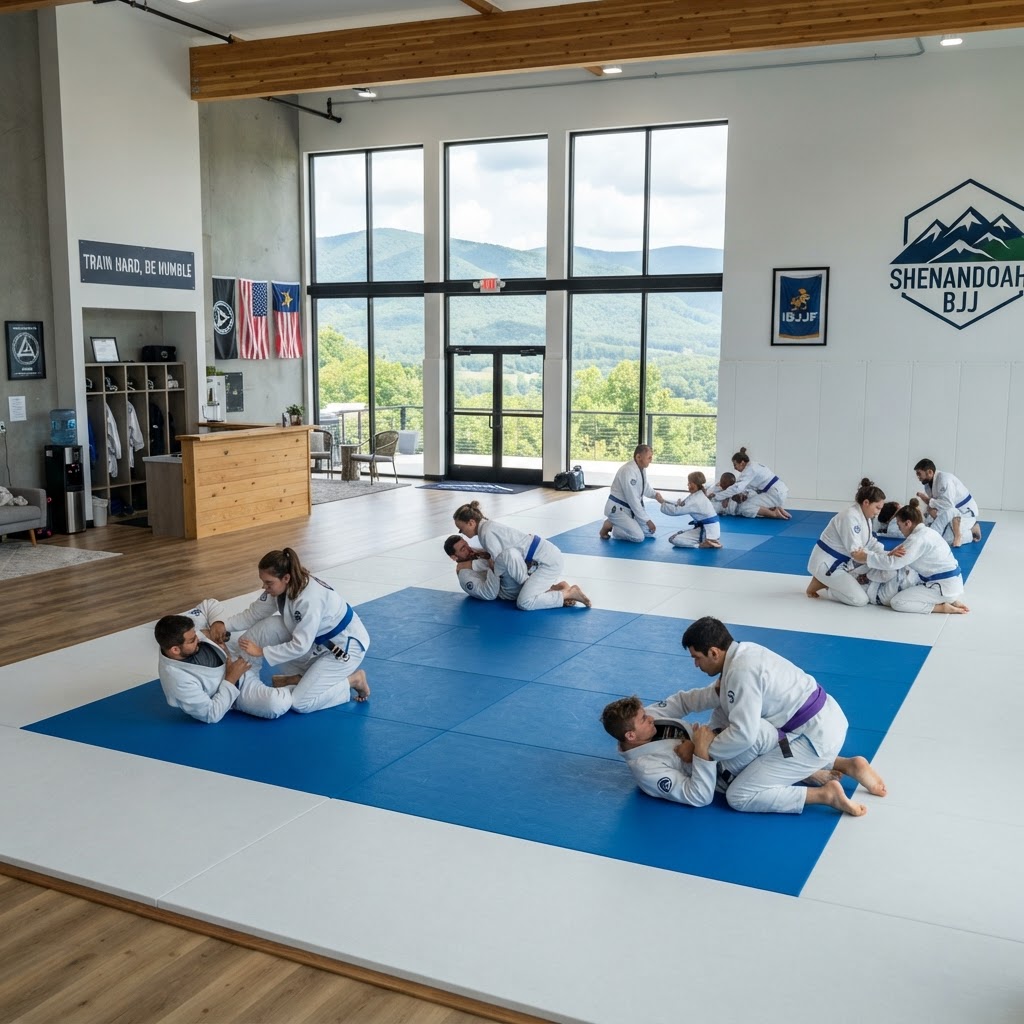
A beginner jiu jitsu class should feel structured, instructional, and encouraging. At Skyline Jiu-Jitsu, your first visit generally includes several parts:
1. A welcome and quick orientation
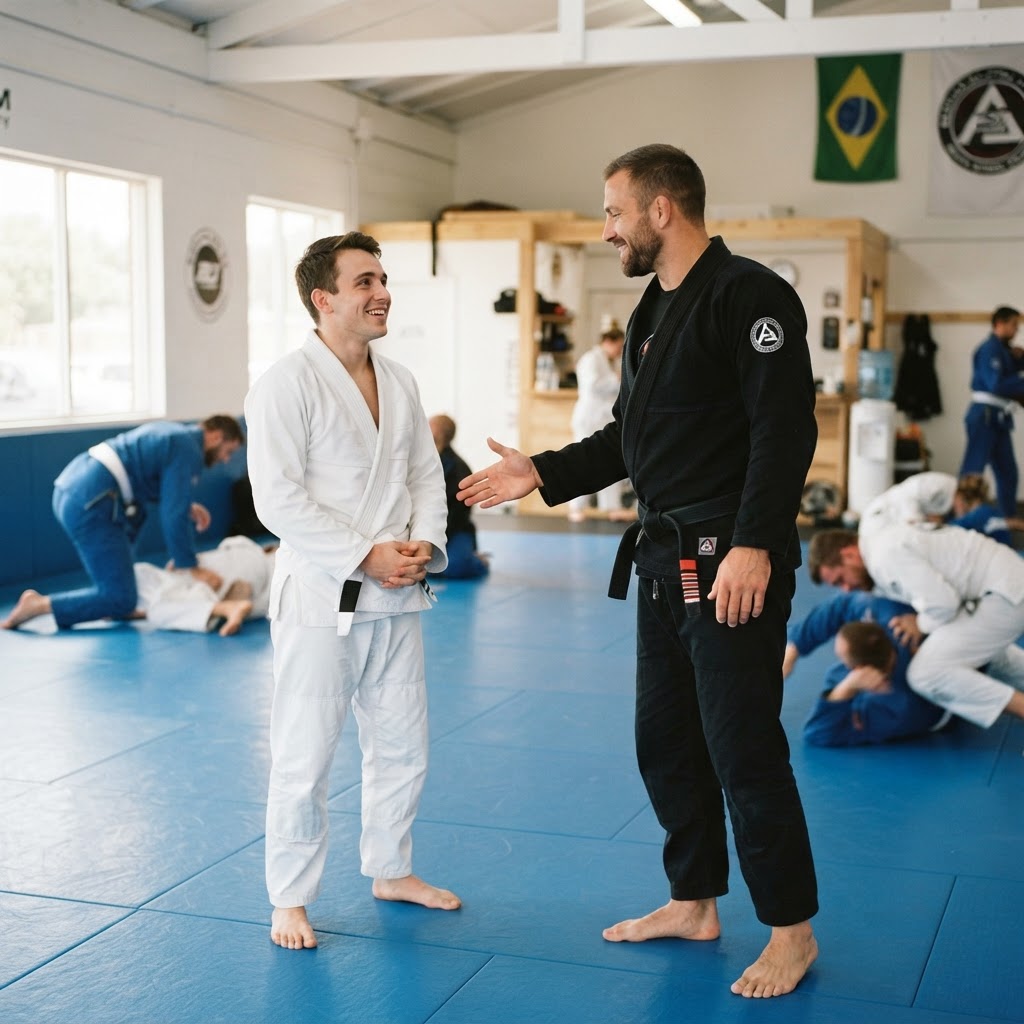
Your instructor or a training partner will show you where to put your things, explain basic academy etiquette, and introduce you to the class. You will learn simple expectations such as keeping your fingernails trimmed, listening during instruction, and tapping immediately when a position or submission becomes uncomfortable.
2. A movement-based warm-up
The warm-up usually includes light mobility, stretching, and movements that are useful on the mat. You may practice shrimping, bridging, technical stand-ups, or safe ways to sit and move from the ground. These exercises can feel unfamiliar at first, but they become second nature with repetition.
3. A technique lesson
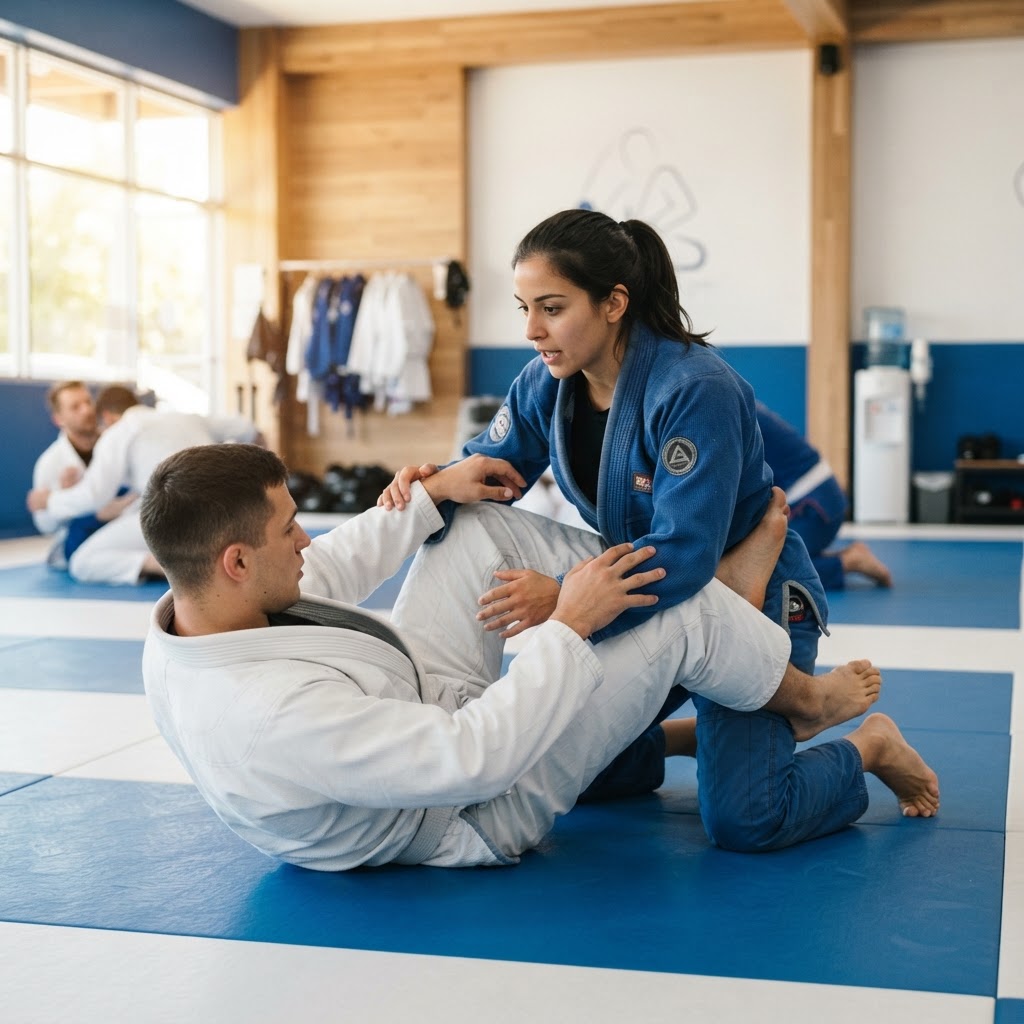
The instructor will demonstrate one or more basic techniques, often from a common position such as closed guard, side control, or mount. You will then practice the movement with a partner at a controlled pace. Do not worry about remembering every detail immediately. Your job is to listen, try, ask questions, and repeat.
4. Drilling with a partner
Drilling means practicing a technique several times so your body begins to understand the movement. Your partner should help you learn rather than try to overwhelm you. A good beginner jiu jitsu class pairs new students with experienced, respectful people who know how to train safely.
5. Positional practice or light rolling
Depending on your comfort level and the academy's approach, you may do a short positional exercise or light sparring. You will not be expected to win. The purpose is to experience movement against reasonable resistance while staying relaxed and safe. It is completely fine to observe or skip this part during your first class.
What Should You Wear to a Beginner Jiu Jitsu Class?
If you are attending a first class before buying a uniform, wear comfortable athletic clothing. Choose a T-shirt or athletic top and shorts or athletic pants without zippers, pockets, buttons, or exposed hard pieces. Avoid jewelry, watches, and anything that could scratch a training partner.
If the academy has a gi class, Skyline Jiu-Jitsu can explain what uniform options are available. For no-gi training, students typically wear a rash guard and grappling shorts. Bring water, a towel, and clean flip-flops or sandals for walking off the mat. Most importantly, arrive in clean clothes and shower before training whenever possible.
Do I Need to Be in Shape Before Starting BJJ?
No. Waiting until you are "in shape enough" is one of the most common reasons people delay trying jiu jitsu. Brazilian Jiu-Jitsu training will improve your conditioning over time, but your first class is designed for learning—not proving your fitness level.
You can control your pace, take breaks, and tell your instructor about injuries or limitations. A good coach can help you modify movements and choose a training partner who matches your experience and energy. Students in Waynesboro, Fishersville, and Charlottesville begin at many different fitness levels, and they improve by attending consistently rather than by being perfect on day one.
READY TO TRY BRAZILIAN JIU-JITSU?
Claim a FREE trial class at Skyline Jiu-Jitsu today!
Serving Waynesboro, Charlottesville, Fishersville & the Shenandoah Valley
Is Brazilian Jiu-Jitsu Safe for Beginners?
Like any contact sport, BJJ has some risk of soreness and injury. However, responsible training emphasizes control, communication, and respect. There are no punches or kicks in a standard BJJ class. Students learn to tap when a technique is uncomfortable, and training partners are expected to release immediately when someone taps.
You can make your first classes safer by following a few simple rules:
- Tap early and often—never try to "tough out" pain.
- Use controlled movement instead of explosive strength.
- Tell your partner and instructor if something feels wrong.
- Keep your uniform and body clean, and cover open cuts or skin issues.
- Rest when you need to and avoid training through sharp pain.
What Should a White Belt Focus On?
As a white belt, your first goal is not to collect submissions. Your first goal is to become comfortable surviving, moving, and making good decisions under pressure. Focus on these fundamentals:
Learn the major positions
Become familiar with guard, side control, mount, back control, and turtle. Knowing where you are gives you a starting point when everything feels fast.
Prioritize escapes
Escaping mount and side control teaches you how to stay calm in difficult positions. These movements are useful for sport, self-defense, and building confidence.
Protect your posture and space
Good posture, frames, and hip movement make it harder for a partner to control you. These basics often matter more than complicated techniques.
Practice breathing
Many new students hold their breath when they feel tired or stuck. Slow, steady breathing helps you think clearly and conserve energy.
Show up consistently
Training two or three times a week is more valuable than one exhausting session followed by a month away. Consistency is the real shortcut in BJJ.
For a broader overview of what Brazilian Jiu-Jitsu is and how the belt system works, read our complete beginner's guide to BJJ and our BJJ belt system explanation.
How to Choose the Right Beginner Jiu Jitsu Gym Near You
Search results can show you many options, but the best gym is one where you feel safe, respected, and motivated to return. When comparing a jiu jitsu academy near Waynesboro, ask whether the gym offers beginner-friendly instruction, clean training areas, clear class times, and coaches who explain techniques patiently.
Pay attention to the atmosphere during a visit. Do experienced students welcome new people? Does the instructor correct students without humiliating them? Are beginners encouraged to ask questions? A positive, ego-free culture is especially important if you are starting as an adult or bringing your child to a martial arts program.
Starting Brazilian Jiu-Jitsu in Waynesboro, VA
Skyline Jiu-Jitsu serves students from Waynesboro, Fishersville, Charlottesville, and throughout the Shenandoah Valley. Our classes are built for people who want to learn Brazilian Jiu-Jitsu in a supportive environment, whether their goals are fitness, self-defense, competition, confidence, or personal growth.
Before you visit, review our class schedule and pricing options. If you are nervous, remember that every experienced student was once a beginner who did not know the positions, the vocabulary, or what to do with their hands. You only need to take the first step.
Frequently Asked Questions
Can I try BJJ without owning a gi?
Yes. Ask about the best clothing for your trial class. Clean athletic clothes are usually enough to get started.
What if I am nervous about training with strangers?
That is normal. Instructors can introduce you to a respectful partner and explain each exercise before you begin.
How often should a beginner train?
Two to three times per week is a great starting point for most adults.
Related Posts
READY TO TRY BRAZILIAN JIU-JITSU?
Claim a FREE trial class at Skyline Jiu-Jitsu today!
Serving Waynesboro, Charlottesville, Fishersville & the Shenandoah Valley