The History of Brazilian Jiu-Jitsu: From Ancient Japan to Global Phenomenon
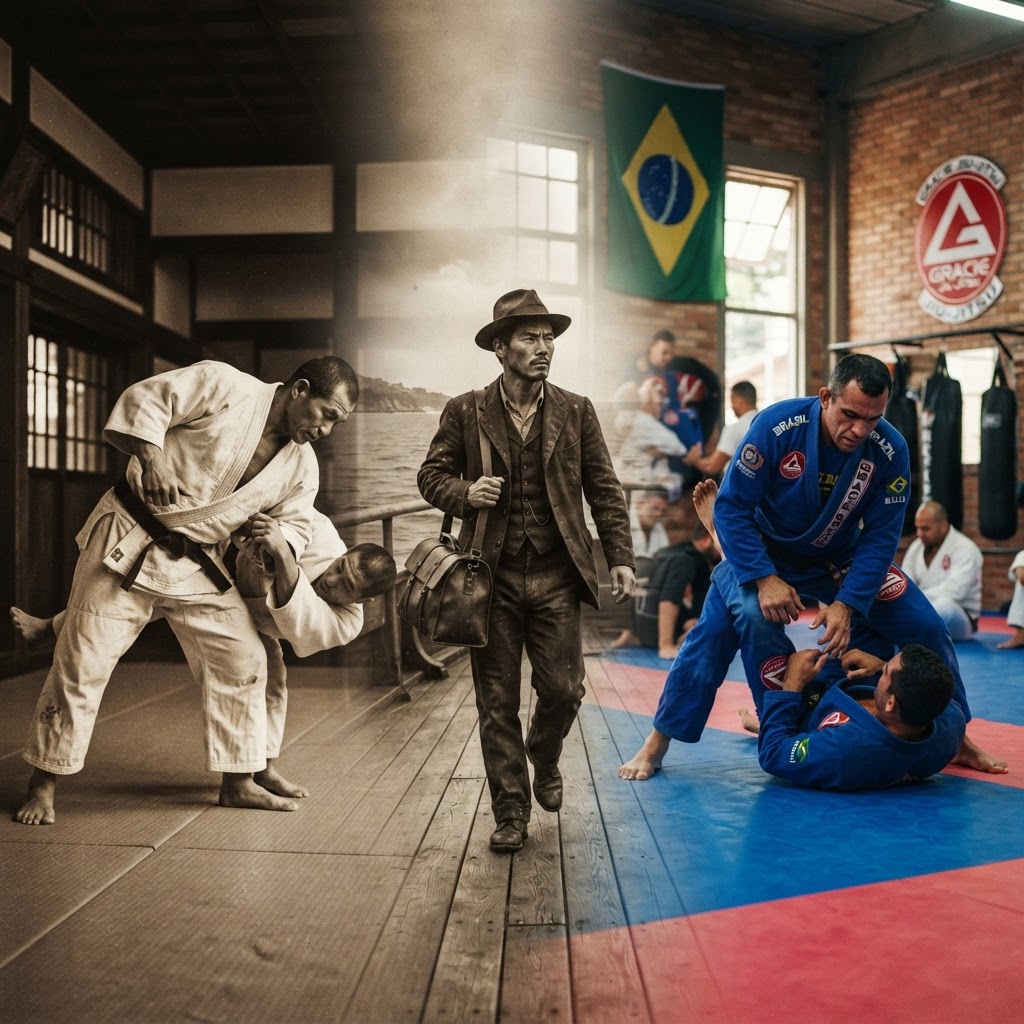
The history of Brazilian Jiu-Jitsu is one of the most fascinating stories in martial arts. It's a tale that spans continents, cultures, and nearly a century of innovation — beginning in the judo dojo of Japan, traveling across the world with a single immigrant, and evolving in Brazil into the art that now serves as the foundation of mixed martial arts and self-defense systems everywhere. Whether you're a white belt just starting out in Waynesboro or a seasoned practitioner in Charlottesville, understanding where BJJ came from gives you a deeper appreciation for every technique you learn on the mat.
The Japanese Roots: Where It All Began
To understand the history of Brazilian Jiu-Jitsu, you have to start in Japan. The word "jiu-jitsu" (also spelled "jujutsu") translates roughly to the "gentle art" or "yielding technique." Japanese jujutsu was developed by samurai warriors as a method of unarmed combat for use on the battlefield when they lost their weapons. These techniques included throws, joint locks, chokes, and strikes — the building blocks of what would eventually become modern grappling.
In 1882, a man named Jigoro Kano founded Kodokan Judo, a refined system that stripped away the most dangerous elements of traditional jujutsu and focused on safe, repeatable training methods. Kano's judo emphasized throws and ground fighting (called newaza), and it became Japan's premier martial art. Kano was also a visionary educator who wanted to spread judo worldwide — and he dispatched his best students across the globe as ambassadors of the art.
One of those students would change martial arts history forever.
Mitsuyo Maeda: The Man Who Brought Jiu-Jitsu to Brazil
Mitsuyo Maeda (1878–1941) was one of Kano's most accomplished students and a ferocious competitor. Standing just 5'5" and weighing around 165 pounds, Maeda was renowned for his devastating newaza (ground fighting) style. He traveled the world as a prizefighter, competing in over 1,000 matches across the United States, Europe, and South America. He fought wrestlers, boxers, and practitioners of every style — and he almost always won.
In 1915, Maeda arrived in Belém, northern Brazil, where he began teaching jiu-jitsu at the Teatro Novo. He settled in Brazil and started sharing his knowledge with anyone willing to learn. Among his students was a young man named Carlos Gracie, who walked into Maeda's academy in 1917.
The Mitsuyo Maeda BJJ origins story is the single most important moment in Brazilian Jiu-Jitsu history. Without Maeda's willingness to travel, fight, and teach, there would be no BJJ as we know it today. His emphasis on ground fighting and real combat application — as opposed to the sport-focused judo that would later dominate in Japan — set the template for everything the Gracie family would build.
The Gracie Family: Building an Empire on the Mat
Carlos Gracie (1902–1994) learned from Maeda for several years and opened the first Gracie academy in Rio de Janeiro in 1925. But it was Carlos's younger brother, Hélio Gracie (1913–2009), who would become the transformative figure in Gracie jiu-jitsu history.
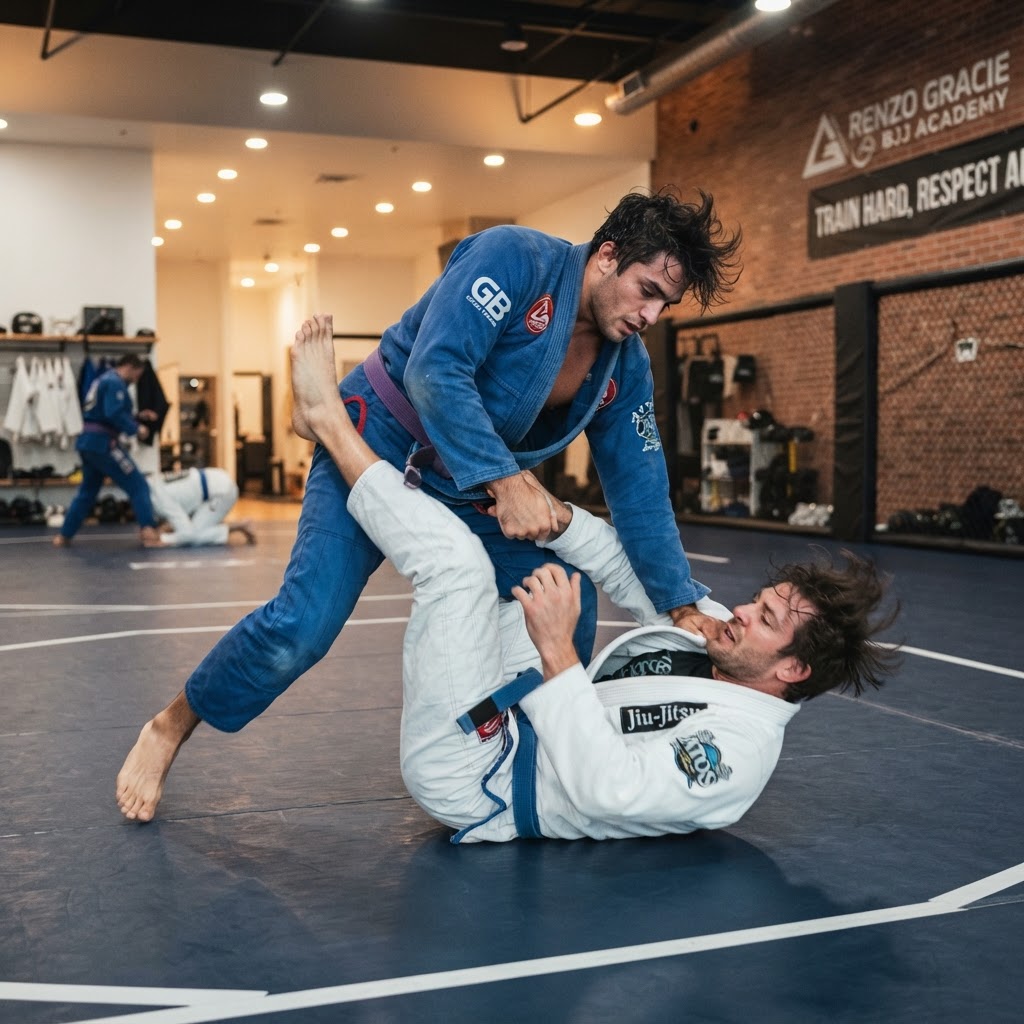
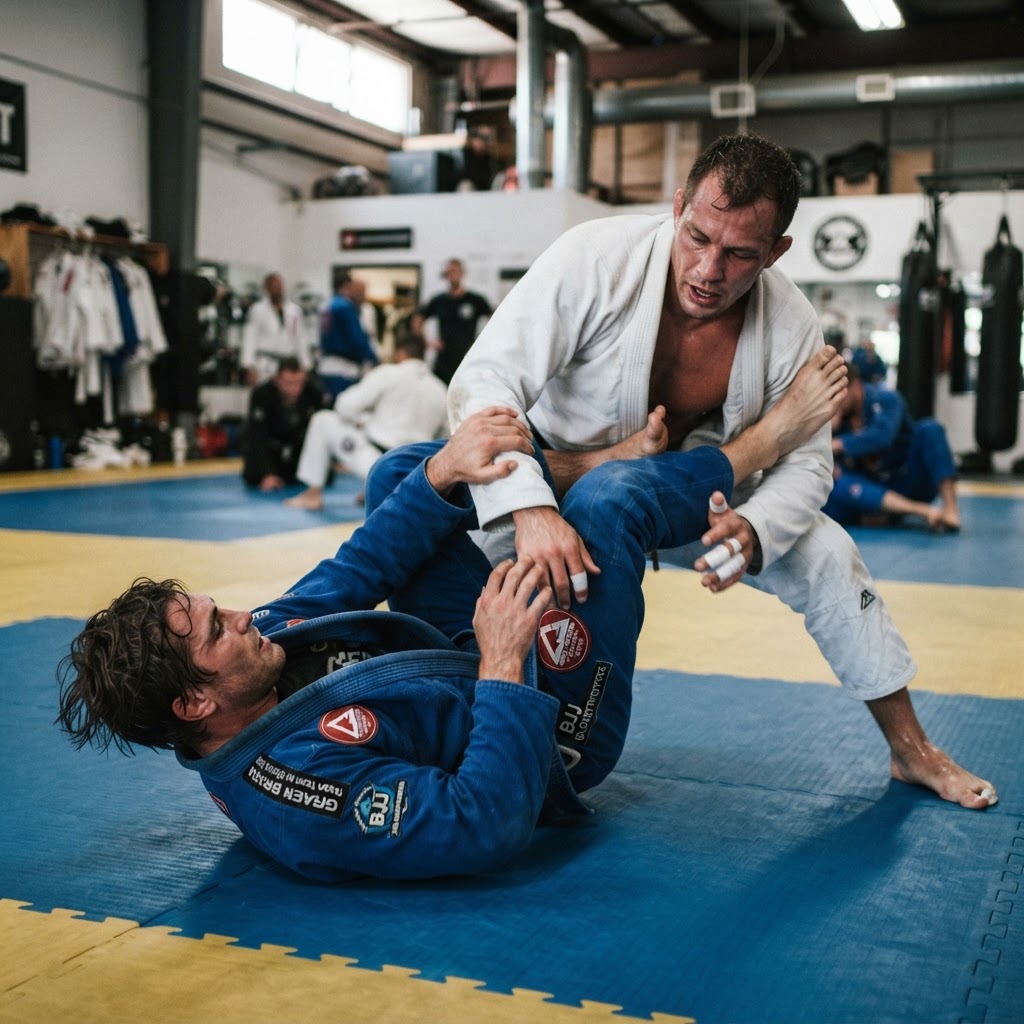
Hélio was a frail, sickly young man — doctors had told him not to participate in sports. He couldn't perform many of the techniques Carlos taught because they relied on strength and athleticism Hélio simply didn't have. So he began adapting everything. He modified throws, developed leverage-based submissions, and created a system where technique and positioning mattered more than raw power. This was the birth of what we now recognize as the defining characteristic of Brazilian Jiu-Jitsu: a smaller, weaker person can successfully defend against a bigger, stronger attacker.
Hélio Gracie jiu-jitsu innovations weren't just about self-defense. The Gracies famously issued open challenges to fighters of all styles — a tradition known as the "Gracie Challenge." They fought boxers, wrestlers, capoeiristas, and practitioners of every martial art in Brazil. These no-rules matches, later known as vale tudo ("anything goes") fights, proved that Gracie jiu-jitsu was effective in real combat. The family's reputation grew, and their academy became a Brazilian institution.
Vale Tudo: The Crucible of BJJ
In the mid-20th century, vale tudo fighting became a cultural phenomenon in Brazil. These were brutal, near-no-holds-barred events where fighters from different styles clashed to prove which art was superior. The Gracies — particularly Hélio, Carlson Gracie, and later Rickson Gracie — dominated these events, cementing BJJ's reputation as the most effective fighting system in the world.
Rickson Gracie, Hélio's son, became legendary in this era. He reportedly competed in over 400 vale tudo fights without a single loss. His combination of technical mastery and physical conditioning made him the ultimate embodiment of Gracie jiu-jitsu, and his story would later inspire practitioners worldwide.
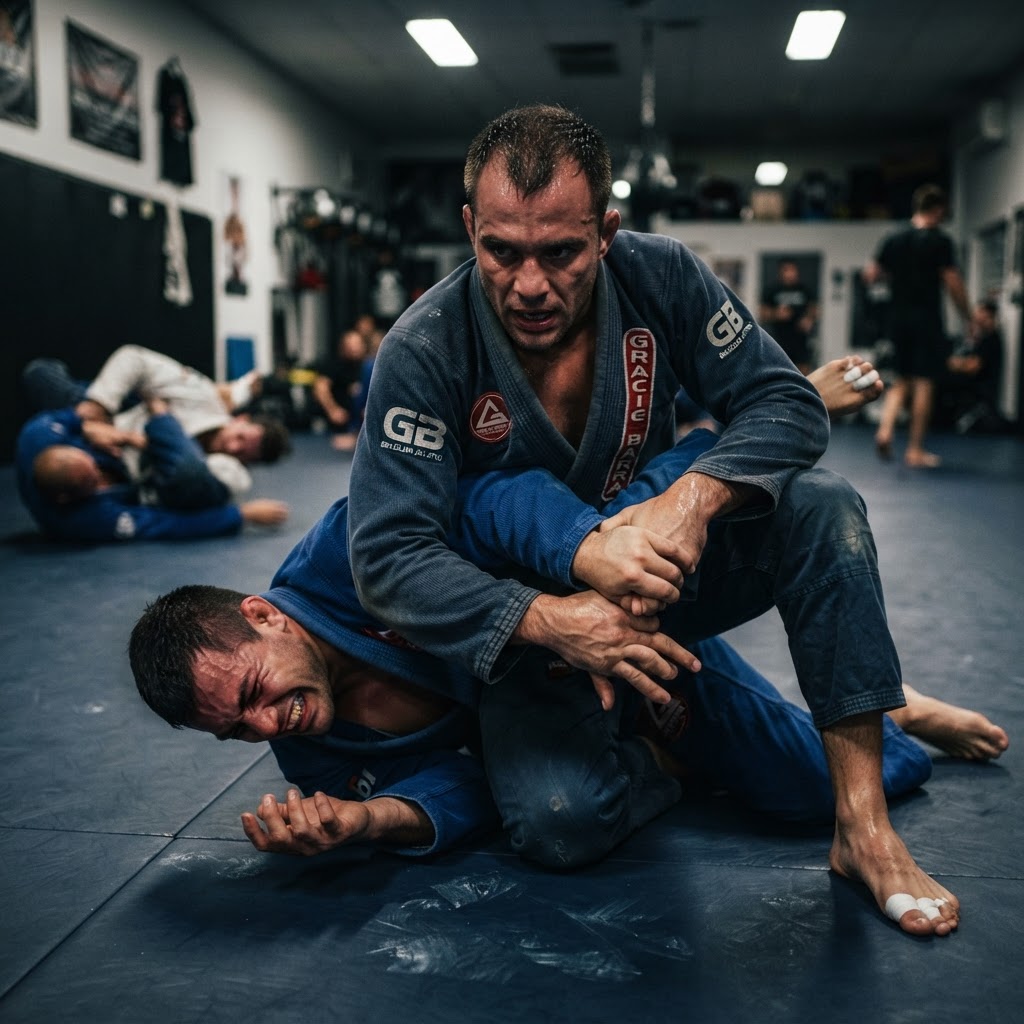
This era of BJJ evolution was critical because it forced the art to constantly prove itself. Techniques that didn't work in live combat were discarded. Positions that gave a smaller fighter an advantage were refined. The result was a martial art that had been pressure-tested in real fighting — not just in theory or forms practice.
The UFC: Brazilian Jiu-Jitsu Goes Global
The history of Brazilian Jiu-Jitsu took its biggest turn in 1993, when Rorion Gracie (Hélio's eldest son, who had moved to the United States) co-founded the Ultimate Fighting Championship (UFC). The concept was simple: put fighters from different martial arts in a cage with minimal rules and see who wins.
Rorion chose his younger brother Royce Gracie to represent the family. At 6'1" and 178 pounds, Royce was deliberately small compared to his opponents — he wanted to demonstrate that Gracie jiu-jitsu allowed a smaller person to defeat larger, stronger fighters. At UFC 1 in Denver, Colorado, Royce submitted boxer Art Jimmerson, wrestler Ken Shamrock, and kickboxer Gerard Gordeau — all in a single night — to win the tournament.
The martial arts world was stunned. Traditional striking arts that had been considered dominant for decades were exposed as incomplete. Karate practitioners, boxers, and wrestlers suddenly realized that if a fight went to the ground — which most real fights do — they had no tools to defend themselves. The UFC explosion of the 1990s triggered a massive wave of interest in BJJ. Academies opened across the United States and Europe, and the art that had been a Brazilian secret was now a global phenomenon.
READY TO TRY BRAZILIAN JIU-JITSU?
Claim a FREE trial class at Skyline Jiu-Jitsu today!
Serving Waynesboro, Charlottesville, Fishersville & the Shenandoah Valley
If you've ever wondered why Brazilian Jiu-Jitsu is considered the foundation of MMA, Royce Gracie's UFC performance is the answer.
The Sport BJJ Era: Competition and Innovation
As BJJ spread globally, it also evolved as a sport. In 1996, the Confederação Brasileira de Jiu-Jitsu (CBJJ) established standardized rules for sport competition, and the World Jiu-Jitsu Championship (Mundials) became the premier tournament. This competitive environment drove rapid technical innovation.
The BJJ evolution from self-defense to sport brought new positions, guards, and submissions. The BJJ positions we know today — spider guard, de la Riva guard, 50/50 guard, berimbolo, and countless others — were developed in this competitive era. Athletes like Marcelo Garcia, Roger Gracie, and modern stars like Gordon Ryan pushed the art into territory the Gracie founders could never have imagined.
The rise of no-gi grappling also changed the landscape. Submission-only events like ADCC (Abu Dhabi Combat Club) and professional grappling leagues created a parallel competitive world. To understand the differences between these styles, check out our guide on gi vs no-gi BJJ.
BJJ Today: A Global Community
Today, Brazilian Jiu-Jitsu is practiced by millions of people worldwide. It's not just for fighters anymore — it's for kids, adults, law enforcement professionals, and everyday people who want to get fit, learn self-defense, and be part of a community. The BJJ belt system gives students a clear path of progression, from white belt all the way to black belt and beyond.
Here in the Shenandoah Valley, BJJ is growing rapidly. Practitioners in Waynesboro, Fishersville, Charlottesville, and Staunton are discovering what the Gracie family figured out nearly a century ago: that jiu-jitsu is for everyone, regardless of size, age, or athletic ability. It builds confidence, improves fitness, and teaches skills that could one day save your life.
The art has also diversified. While traditional Gracie jiu-jitsu still exists, many academies now blend gi and no-gi training, self-defense and sport techniques, and even incorporate elements from wrestling and judo. Our wrestling for BJJ guide covers how these arts complement each other.
Key Milestones in BJJ History
Here's a quick timeline of the most important moments in the history of Brazilian Jiu-Jitsu:
- 1882 — Jigoro Kano founds Kodokan Judo in Japan
- 1904–1914 — Mitsuyo Maeda travels the world as a prizefighter
- 1915 — Maeda arrives in Belém, Brazil and begins teaching
- 1917 — Carlos Gracie begins training under Maeda
- 1925 — Carlos Gracie opens the first academy in Rio de Janeiro
- 1930s–1960s — Hélio Gracie refines techniques; Gracie Challenge matches dominate
- 1980s — Rickson Gracie becomes the family's top vale tudo fighter
- 1993 — UFC 1: Royce Gracie shocks the martial arts world
- 1996 — First World Jiu-Jitsu Championship (Mundials)
- 2000s — Sport BJJ explodes globally; new guards and positions developed
- 2010s–2020s — Professional grappling leagues, no-gi specialization, BJJ goes mainstream
Why BJJ History Matters for Your Training
Understanding the history of Brazilian Jiu-Jitsu isn't just trivia — it directly impacts how you train. When you know that Hélio Gracie developed leverage-based techniques because he couldn't rely on strength, you understand why your instructor keeps telling you to use technique over power. When you learn that vale tudo tested every technique under real combat pressure, you appreciate why certain moves are emphasized and others are not.
For beginners in Waynesboro and the surrounding Shenandoah Valley, knowing this history also connects you to something bigger than yourself. Every time you step on the mat, you're participating in a tradition that stretches from Japanese samurai to Brazilian fighters to the global community of today. That's something worth being proud of.
If you're new to the art, start with our guide on what to wear to your first BJJ class and avoid the common mistakes beginners make. And if you're wondering whether BJJ can help with stress and mental health — another part of why the art has become so popular — read about the mental health benefits of BJJ.
Related Posts
- What Is Brazilian Jiu-Jitsu? A Complete Beginner's Guide to the Gentle Art
- The Complete BJJ Belt System Explained: Timeline, Stripes, and What to Expect
- Gi vs No-Gi BJJ: Key Differences and Which Style Is Right for You
- BJJ Positions Explained: The Essential Positions Every Student Should Know
- BJJ vs Wrestling: Key Differences, Rules, and Which Martial Art Is Right for You
READY TO TRY BRAZILIAN JIU-JITSU?
Claim a FREE trial class at Skyline Jiu-Jitsu today!
Serving Waynesboro, Charlottesville, Fishersville & the Shenandoah Valley