# BJJ Guard Passing: The Complete Guide to Breaking Through Any Defense
If you've spent any time on the mats, you already know that **BJJ guard passing** is one of the most critical skills you can develop. Whether you're a white belt struggling to get past someone's closed guard or a purple belt refining your pressure passing game, the ability to systematically break through your opponent's legs and establish dominant position separates good grapplers from great ones.
At Skyline Jiu-Jitsu in Waynesboro, Virginia, we teach guard passing as a foundational pillar of our curriculum. Students from Waynesboro, Charlottesville, Fishersville, and across the Shenandoah Valley come to our academy to learn the technical details that make guard passing work against opponents of any size. In this guide, we'll break down everything you need to know about BJJ guard passing — from the fundamental concepts to the most effective techniques you can start using today.
## Why BJJ Guard Passing Matters
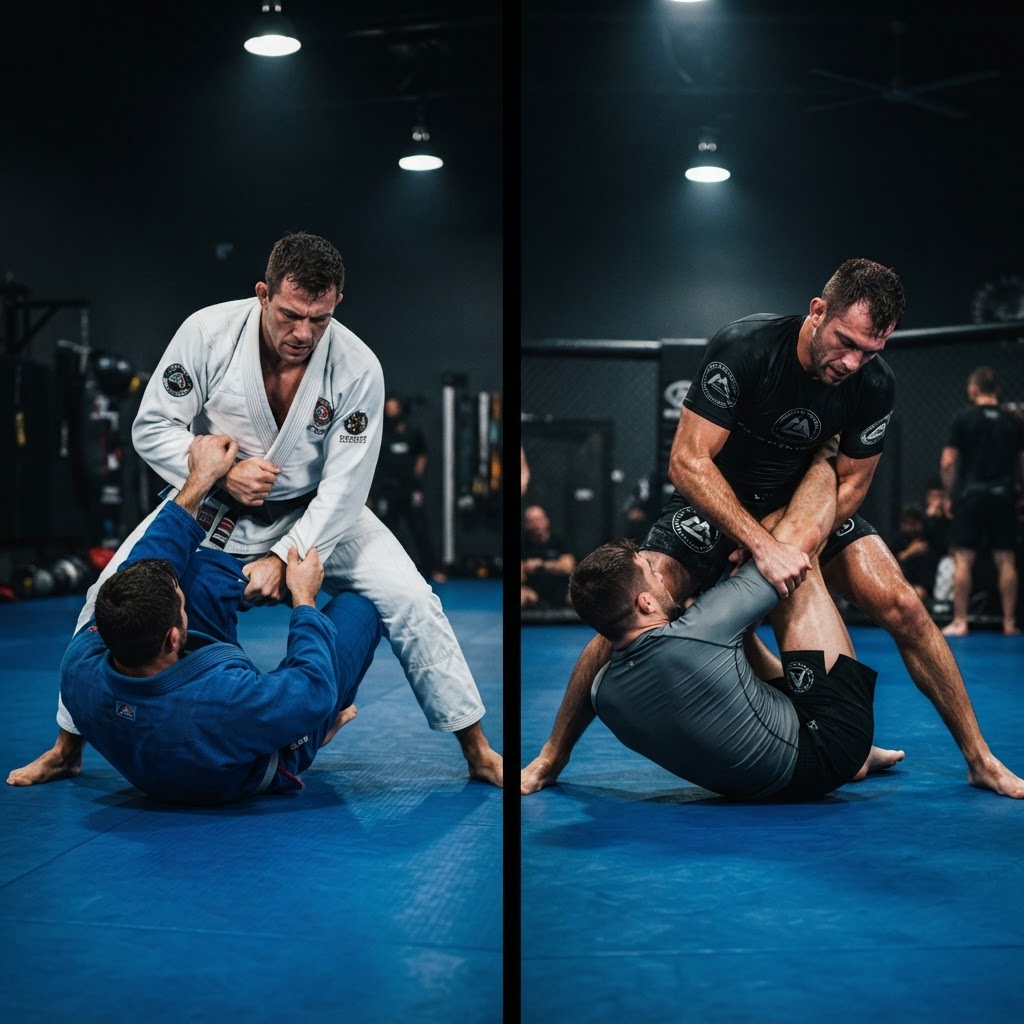
Guard passing is the bridge between neutral positions and dominant ones. When your opponent pulls you into their guard, they're controlling your hips and posture, threatening with sweeps and submissions. Until you pass that guard, you're playing their game.
Understanding **how to pass guard in jiu jitsu** gives you the ability to dictate where the fight goes. A strong guard passing game allows you to:
- **Establish top control**, where you can apply pressure and work toward submissions
- **Neutralize your opponent's attacks** by removing their ability to sweep or submit you
- **Control the pace** of the match by forcing your opponent to react to your movement
- **Build confidence** in your ability to handle larger, stronger opponents
In competition, guard passing scores points and often determines the outcome of close matches. In self-defense situations, getting past someone's guard means you can control them from a dominant position rather than getting caught in a sweep or submission.
## The Core Concepts Behind Every Guard Pass
Before diving into specific **guard passing techniques**, it's essential to understand the principles that make all guard passes work. These concepts apply whether you're doing a knee cut, a torreando, or a pressure pass.
### Posture and Base
Your posture is your first line of defense inside someone's guard. If your posture is broken, your opponent can easily attack with sweeps, armbars, and collar chokes. Keep your spine straight, your hips heavy, and your hands positioned to control your opponent's hips and sleeves.
Your base refers to how stable you are. A wide, low base makes you harder to sweep and gives you the leverage you need to initiate your pass. Think of your base as the foundation of a house — if it's weak, everything above it collapses.
### Grips and Grip Fighting
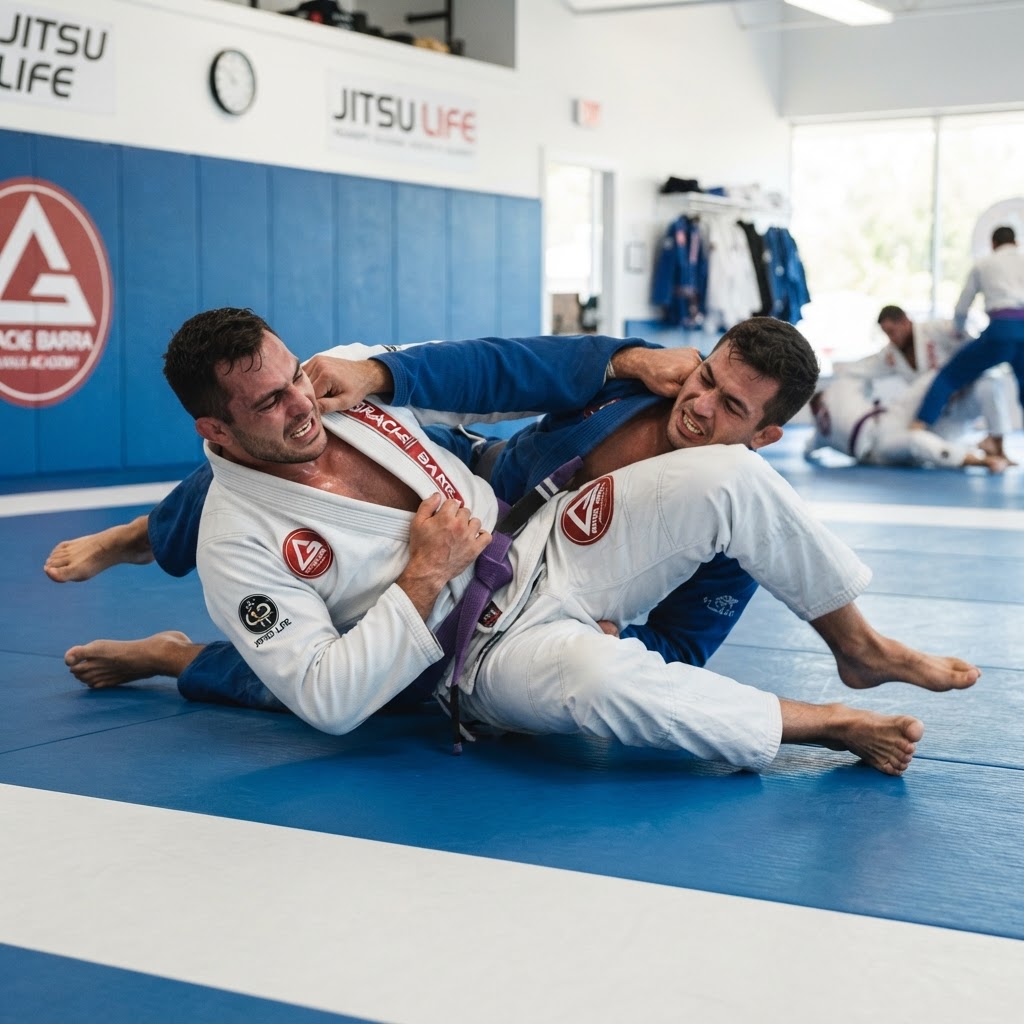
Grips control the match. Whoever has better grips usually controls the position. When passing guard, you need to establish grips that help you while breaking your opponent's grips that are keeping you trapped.
Common passing grips include:
- **Pant grips** on the knees to control leg movement
- **Collar/sleeve grips** to control posture and arm movement
- **Hip grips** to control your opponent's ability to rotate
If you've read our guide on [BJJ positions explained](https://www.skylinejiujitsu.com/blog/bjj-positions-explained), you know that position determines everything in jiu jitsu. Grips are how you win the battle for position before the pass even begins.
### Pinning the Hips
The single most important concept in guard passing is hip control. Your opponent's hips are their engine — if their hips can move, they can recompose guard, escape, or counter your pass. If you pin their hips, they're stuck.
Every successful guard pass involves some form of hip immobilization. Pressure passing does this through body weight. Speed passes do it through rapid angle changes before the opponent can react. Understanding this principle will transform your passing game.
## The 5 Essential BJJ Guard Passing Techniques
Now let's break down five fundamental guard passes that every grappler should know. These techniques form the backbone of a well-rounded passing game.
### 1. The Knee Cut Pass
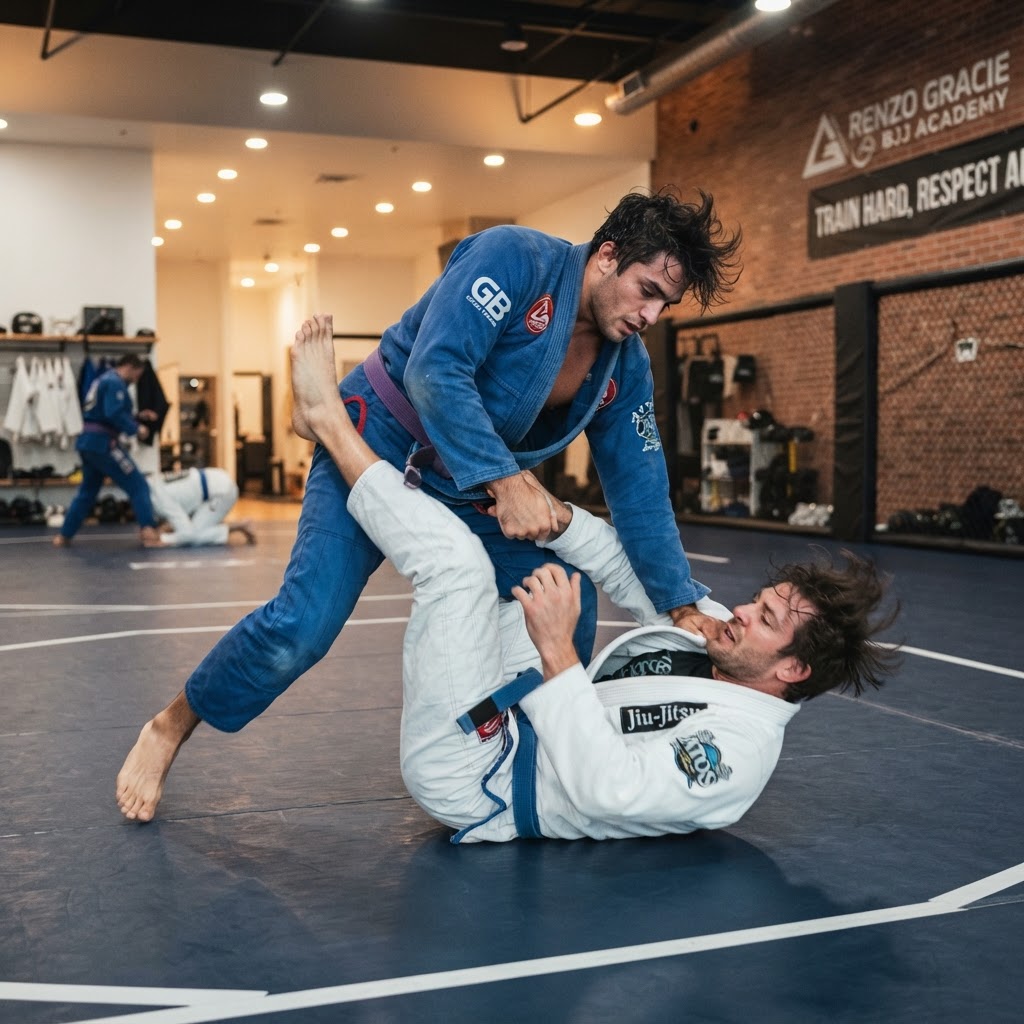
The knee cut is arguably the most fundamental guard pass in BJJ. It's fast, efficient, and works against almost any open guard.
**How to execute it:**
1. Control your opponent's legs with grips on both pant legs near the knees
2. Push one leg to the floor while stepping your lead foot to the outside of their hip
3. Drive your knee across their thigh, cutting through their guard
4. Drop your hips heavy to the mat, securing side control
The knee cut is perfect for beginners because it teaches the importance of angle and pressure. When you cut the knee at the right angle, your opponent's legs become ineffective.
### 2. The Torreando Pass
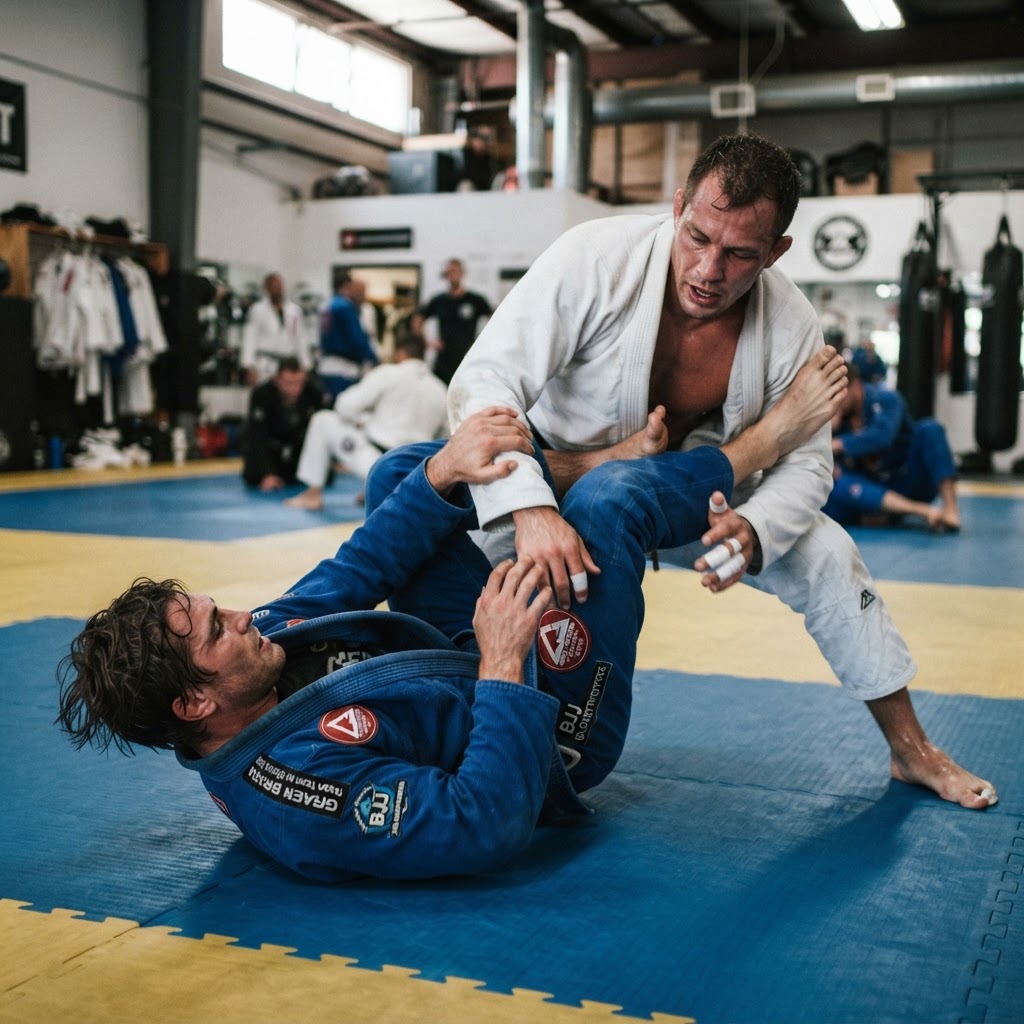
The torreando (bullfighter) pass is a speed-based pass that works exceptionally well against open guards and seated opponents.
**How to execute it:**
1. Grab both pant legs near the knees
2. Push the legs hard to one side
3. Rapidly step around to the opposite side
4. Establish side control before your opponent can recover
The torreando is one of the most exciting **guard passing techniques** to watch in competition because it's explosive and dynamic. It teaches you to capitalize on the moment your opponent's legs are out of position.
### 3. The Closed Guard Break and Pass
Breaking closed guard is a skill every grappler needs. The **closed guard break** is a prerequisite for passing from within the closed guard, and it's often the first hurdle beginners face.
**How to execute it:**
1. Get good posture — sit up straight with your elbows tight
2. Place one hand on your opponent's hip and the other on their bicep
3. Stand up in base, keeping your posture upright
4. Pinch your knees together to break their ankles apart
5. Once the guard opens, immediately begin your pass (knee cut or torreando)
This technique is taught early at our academy because it addresses one of the most frustrating positions for new students. If you're just starting out, check out our [beginner's guide to surviving your first month of training](https://www.skylinejiujitsu.com/blog/bjj-for-beginners-first-month) for more on fundamental positions like this.
### 4. The Pressure Pass (Smash Pass)
**BJJ pressure passing** is the art of using your body weight to slowly and methodically grind through your opponent's guard. It's especially effective against flexible opponents and larger training partners.
**How to execute it:**
1. Control your opponent's hips and one arm
2. Drive your shoulder into their chest or hip
3. Walk your legs forward, applying heavy downward pressure
4. Slowly work your way around their legs to side control
Pressure passing is less about speed and more about making your opponent uncomfortable enough that they can't maintain their guard. It's a chess game on the mats — you're applying constant, suffocating pressure until the defense cracks.
### 5. The Leg Drag
The leg drag is a modern passing technique popularized by competitors at the highest levels. It's precise, technical, and incredibly effective.
**How to execute it:**
1. Control one of your opponent's legs with a pant grip
2. Drag their shin across your body to the opposite hip
3. Pin their knee to the mat
4. Step over and establish side control
The leg drag is a perfect example of how **BJJ guard passing** has evolved. It combines elements of the torreando and pressure passing into a single, devastating technique.
## Common Guard Passing Mistakes to Avoid
Even experienced grapplers make these mistakes. Being aware of them will accelerate your progress.
### Rushing the Pass
The most common mistake is trying to pass too quickly without controlling the hips first. If you try to blow through someone's guard without pinning their hips or establishing proper grips, you'll get swept or submitted. Patience is a virtue in guard passing — set up your control, then execute the pass.
### Forgetting About Posture
When you're focused on passing, it's easy to forget about your posture. A broken posture inside the guard invites armbars, triangle chokes, and sweeps. Always maintain your posture first, then work on your pass.
### Passing to the Wrong Side
Sometimes the side you're trying to pass to isn't the best option. Your opponent may be defending heavily on one side, leaving the other side vulnerable. Learn to read your opponent's defense and adapt your passing direction accordingly.
For more on avoiding common errors, our guide on [common BJJ beginner mistakes](https://www.skylinejiujitsu.com/blog/bjj-beginner-mistakes) covers this in depth.
## Guard Passing for Different Body Types
One of the beautiful things about Brazilian Jiu-Jitsu is that it works for every body type. However, your build should influence your passing style.
### Taller Grapplers
Long-limbed practitioners often excel at pressure passing and using their length to create frames. The over-under pass and smash pass are natural fits because long arms can wrap around the legs easily.
### Shorter Grapplers
Shorter grapplers tend to shine with speed-based passes like the torreando and knee cut. A lower center of gravity makes it harder for opponents to sweep you, and quick direction changes play to your strengths.
### Heavier Grapplers
If you're on the heavier side, pressure passing is your best friend. Your natural body weight makes pressure passes extremely effective. Focus on the over-under pass and smash pass.
This adaptability is a core principle of BJJ. As we discuss in our [history of Brazilian Jiu-Jitsu guide](https://www.skylinejiujitsu.com/blog/history-of-brazilian-jiu-jitsu), the art was developed specifically to allow smaller practitioners to defeat larger ones through technique and leverage.
## How to Drill Guard Passing Effectively
Technique doesn't develop in a vacuum. Here's how to structure your training to improve your guard passing:
### Start With Specific Training
Begin with positional sparring where you start in someone's guard and your only goal is to pass. This focused approach accelerates learning because you get hundreds of reps in the specific scenario you're trying to improve.
### Drill Both Sides
Most grapplers have a dominant passing side. Make sure you drill both sides equally. Being able to pass in both directions makes you unpredictable and much harder to defend against.
### Train Against Different Guard Styles
Don't just practice against closed guard. Test your passing against half guard, spider guard, De La Riva guard, and seated open guard. Each guard type requires different passing strategies, and being well-rounded is essential.
## Guard Passing in Competition
If you're interested in competing, guard passing is one of the most important skills to develop. In IBJJF rulesets, passing the guard scores 3 points, and dominant top position often decides close matches.
Key competition passing tips:
- **Manage the clock** — don't rush, but don't stall either
- **Have a Plan B** — if your primary pass gets shut down, immediately transition to your secondary pass
- **Don't get caught in submission attempts** — stay aware of your opponent's attacking options while passing
Many of our students from Waynesboro and Charlottesville have successfully used their guard passing game in local and regional tournaments. If you're interested in competing, our coaches can help you develop a competition-specific passing strategy.
## Building Your Guard Passing Game at Skyline Jiu-Jitsu
At Skyline Jiu-Jitsu, we believe guard passing is a skill that every student should develop from day one. Our structured curriculum takes students from the fundamentals of posture and base through advanced passing systems used at the world championship level.
Whether you're in Waynesboro, Fishersville, Charlottesville, or anywhere in the Shenandoah Valley, our academy provides the coaching, drilling partners, and environment you need to develop a guard passing game that works. Our instructors break down each technique into digestible steps, ensuring that even complete beginners can understand and apply these concepts.
We also emphasize the connection between guard passing and other aspects of BJJ. For example, understanding [essential BJJ submissions](https://www.skylinejiujitsu.com/blog/essential-bjj-submissions-guide) becomes much more meaningful when you know how to pass the guard to reach the positions where those submissions are applied.
## Related Posts
- [BJJ Positions Explained: The Essential Positions Every Student Should Know](https://www.skylinejiujitsu.com/blog/bjj-positions-explained)
- [Essential BJJ Submissions Every Grappler Should Know: A Complete Guide](https://www.skylinejiujitsu.com/blog/essential-bjj-submissions-guide)
- [The Complete BJJ Belt System Explained: Timeline, Stripes, and What to Expect](https://www.skylinejiujitsu.com/blog/bjj-belt-system-explained)
- [Gi vs No-Gi BJJ: Key Differences and Which Style Is Right for You](https://www.skylinejiujitsu.com/blog/gi-vs-no-gi-bjj-differences)
- [BJJ for Beginners: How to Survive Your First Month of Training](https://www.skylinejiujitsu.com/blog/bjj-for-beginners-first-month)
START TRAINING TODAY
READY TO TRY BRAZILIAN JIU-JITSU?
Claim a FREE trial class at Skyline Jiu-Jitsu today!
Serving Waynesboro, Charlottesville, Fishersville & the Shenandoah Valley
Start Training Today
READY TO TRY BRAZILIAN JIU-JITSU?
Claim a FREE trial class at Skyline Jiu-Jitsu today!
Serving Waynesboro, Charlottesville, Fishersville & the Shenandoah Valley