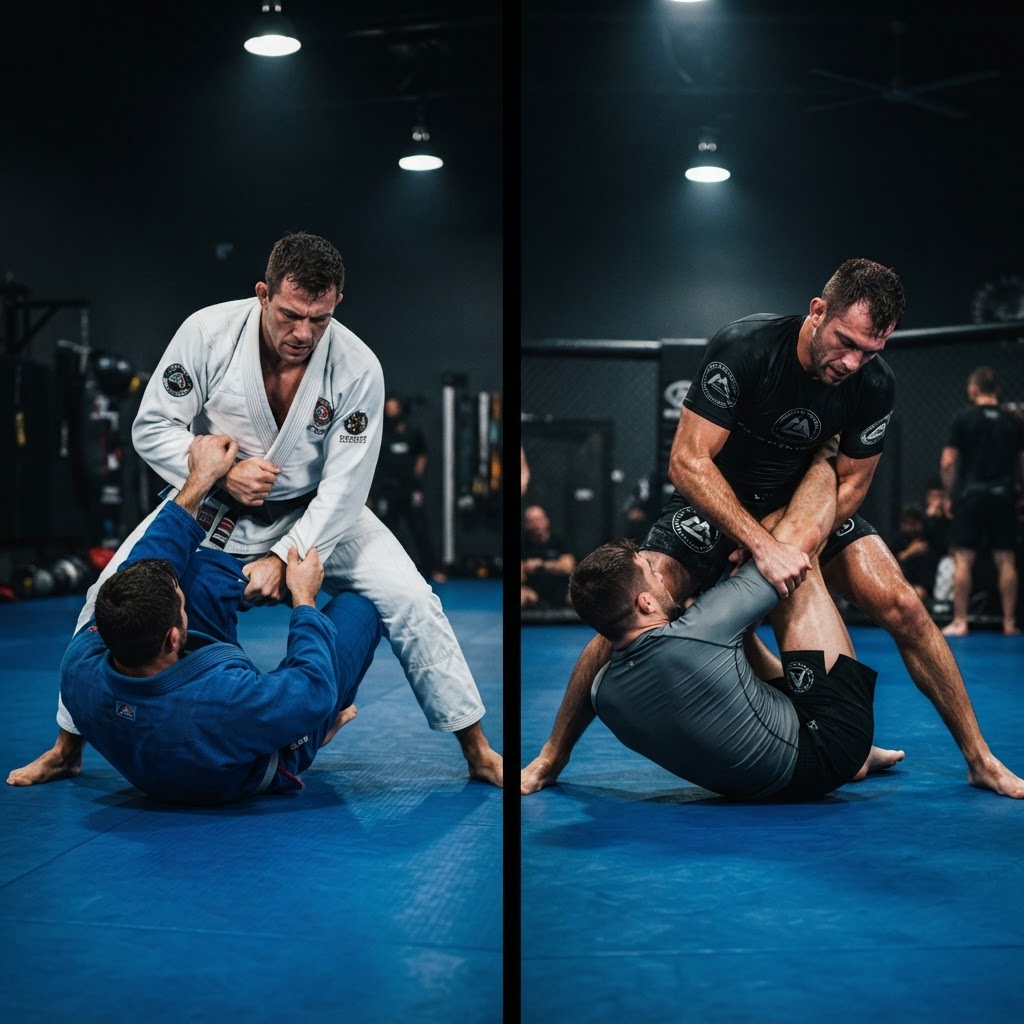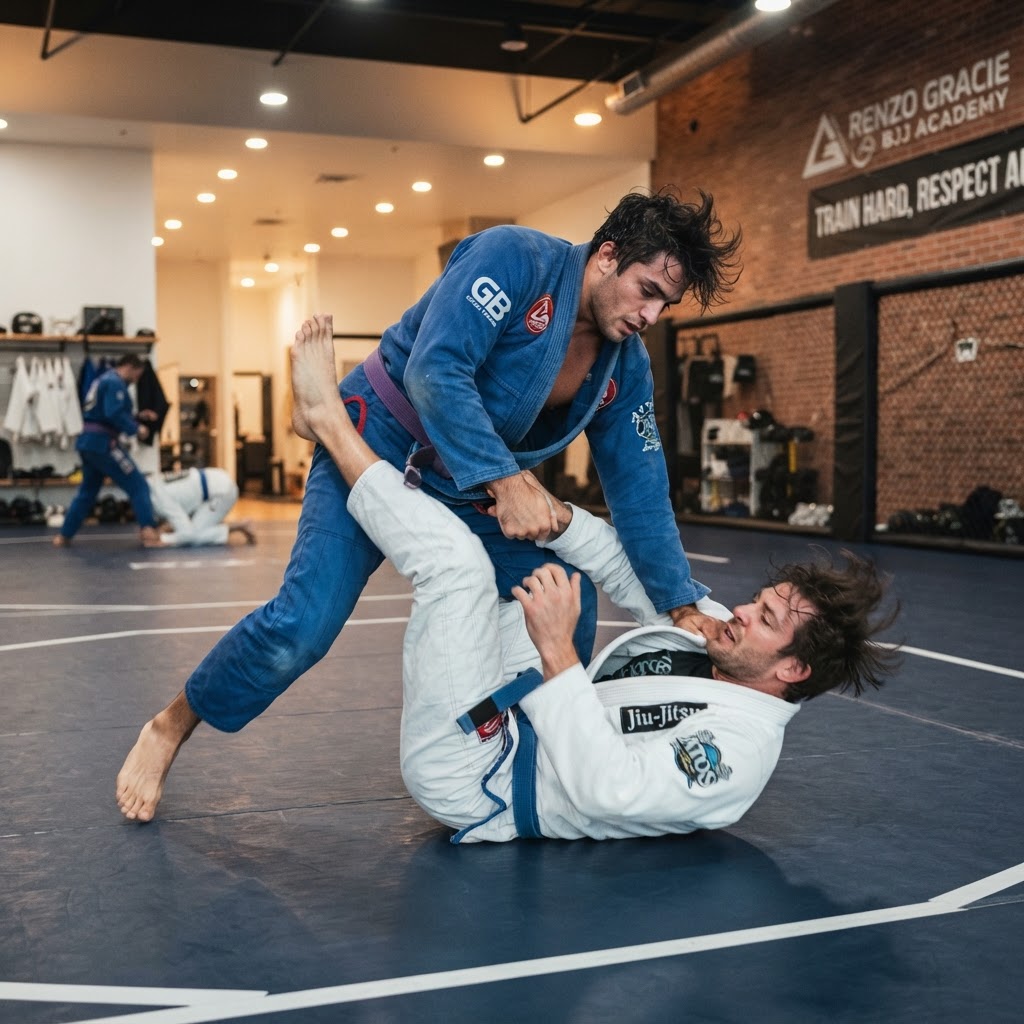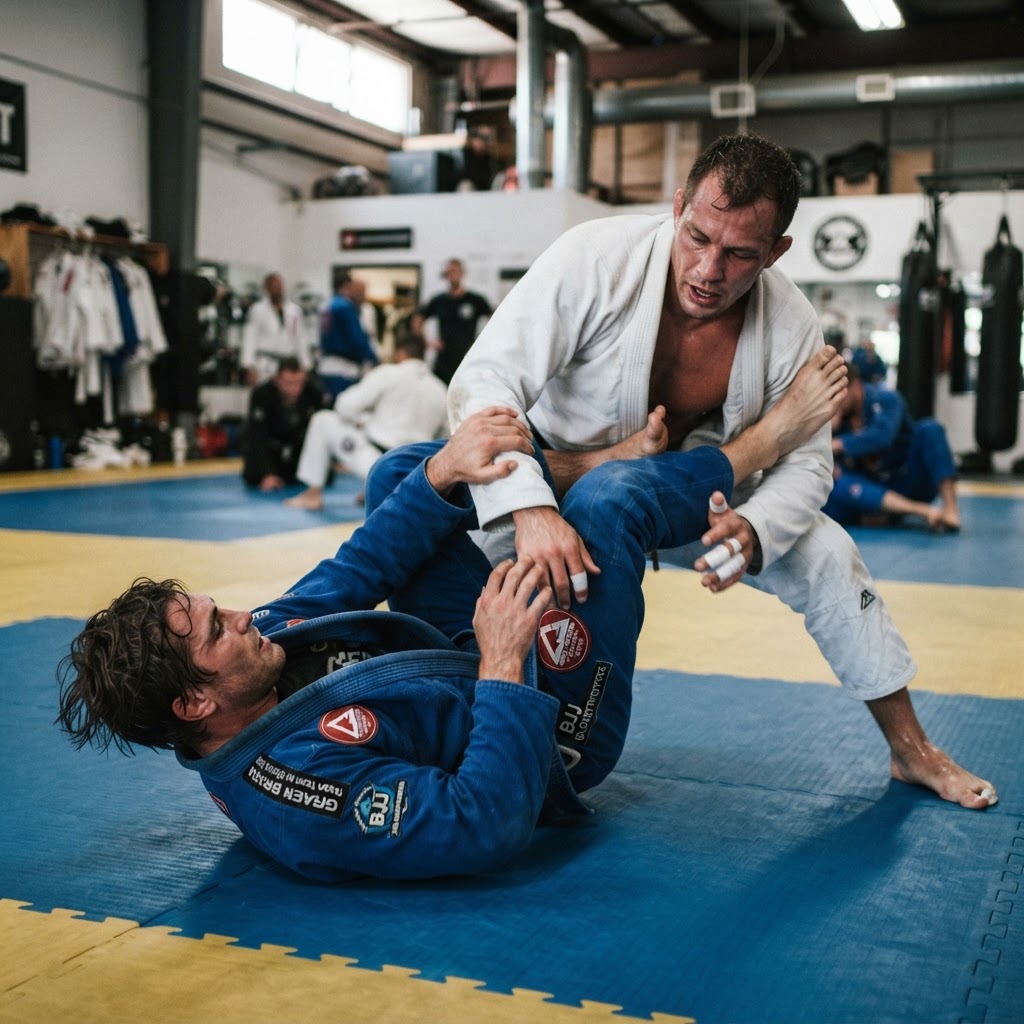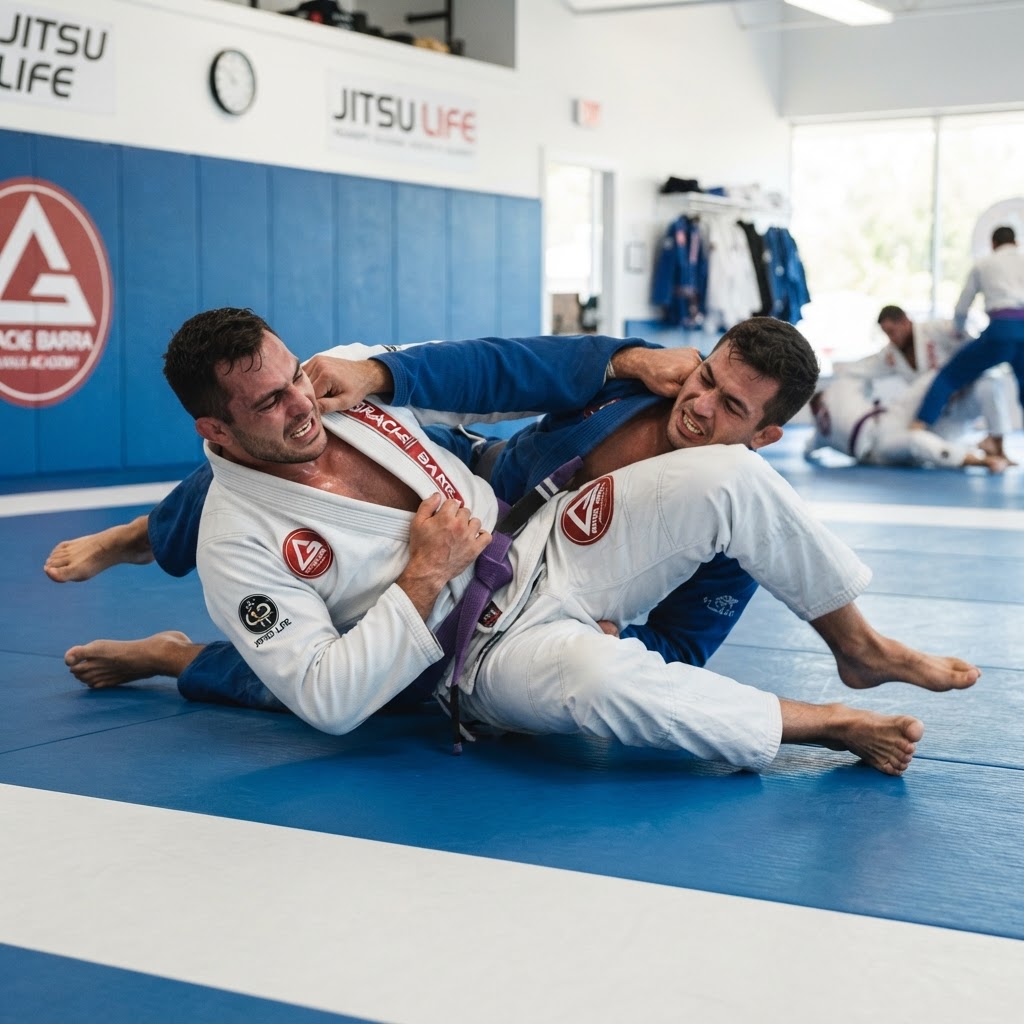
BJJ Side Control Escapes: The Complete Guide to Escaping the Toughest Position in Jiu-Jitsu
If you've spent any time training Brazilian Jiu-Jitsu, you know the feeling: someone pins you in side control, drops their weight, and suddenly you can barely breathe. Learning BJJ side control escapes is one of the most important skills you'll develop on the mats, and it's often the difference between surviving a roll and getting submitted.
At Skyline Jiu-Jitsu in Waynesboro, Virginia, we teach side control escapes to every new student in their first month. Whether you train in Waynesboro, Charlottesville, Fishersville, or anywhere across the Shenandoah Valley, understanding how to escape side control will transform your BJJ game and give you the confidence to stay calm under pressure.
In this complete guide, we'll break down everything you need to know about BJJ side control escapes: why the position is so punishing, the fundamental frames and concepts, step-by-step escape techniques, common mistakes to avoid, and how to drill these escapes effectively.
Why Side Control Is So Difficult to Escape
Before diving into BJJ side control escapes, it helps to understand why side control is one of the most dominant positions in Brazilian Jiu-Jitsu. Sometimes called "100 kilos" or "side mount," this position allows the top player to apply massive downward pressure while maintaining complete control of your upper body and hips.
The top player can attack with arm triangles, kimuras, Americanas, and paper cutter chokes. They can transition to mount or take your back. And if you panic and expend all your energy fighting from the bottom, you'll exhaust yourself long before you escape.
That's exactly why mastering side control escapes is non-negotiable. If you can't escape side control, you can't play your game. Every BJJ student in the Shenandoah Valley, from Waynesboro to Charlottesville, needs a reliable escape toolkit.
For a broader overview of where side control fits in the BJJ positional hierarchy, check out our guide to BJJ positions explained.
The Core Concepts Behind Every BJJ Side Control Escape
Every effective BJJ side control escape relies on a handful of core principles. Once you internalize these concepts, you'll be able to escape from almost any side control variation.
1. Frames Before Moves
The single most important concept in side control escapes is framing. Your arms and legs create structural barriers that prevent your opponent from collapsing their weight onto you. Without frames, no escape will work.
You need two frames:
- Neck frame: Your forearm braces against the opponent's collarbone, neck, or jaw to prevent the crossface from turning your head away.
- Hip frame: Your other forearm or hand blocks the opponent's near hip to prevent them from sliding to mount or knee-on-belly.
If you lose your frames, you lose the position. It's that simple.
2. Bridge and Shrimp
The bridge (upa) and the shrimp (hip escape) are the two fundamental movements that create space in BJJ. You bridge to lift the opponent's weight momentarily, then shrimp to create horizontal space. Almost every escape sequence uses some combination of these two movements.
- Bridge: Drive your hips upward explosively to lift the top player's weight for a split second.
- Shrimp: Push your hips away along the mat to create space between you and your opponent.
In side control, you typically bridge first to create a moment of weightlessness, then shrimp to exploit the gap before they settle back down.
3. Create Space, Then Fill It
Escaping side control is not about one explosive movement. It's a process of creating small windows of space and then filling that space with a knee, an elbow, or your entire body before your opponent closes the gap.
Think of it like a chess game. You make a move, they respond, and you capitalize on their reaction.
4. Stay Calm and Breathe
Panic is the enemy of technique. When someone is crushing you in side control, your instinct is to push with everything you have. That burns energy and makes you weaker over time. Instead, focus on your breathing, check your frames, and work methodically.
For more on the mindset side of BJJ, read our guide on how jiu-jitsu builds confidence.
The 5 Best BJJ Side Control Escapes
Now let's break down the five most reliable escapes you should have in your arsenal. Each one works against different types of side control pressure and different opponents.
Escape 1: The Bridge and Roll (Elbow-Knee Escape)
This is the fundamental escape taught to white belts on day one, and it remains effective at every belt level.
- Establish your frames. Get your forearm against the opponent's neck or collarbone and your other hand against their near hip.
- Bridge explosively. Drive your hips up to lift the opponent's weight for a moment.
- Insert your near elbow. As you bridge, slide your near-side elbow underneath the opponent's torso, planting it on the mat.
- Shrimp and bring your knee through. As you come down from the bridge, shrimp your hips away and slide your near knee into the space you've created, recovering guard.
- Regain full or half guard. Once your knee is through, you can re-establish closed guard or settle into half guard.
This escape works against opponents who don't control your near-side hip aggressively. If you're struggling with half guard recovery, check out our BJJ half guard complete guide for more detail on what to do once you get there.
Escape 2: The Underhook Escape (Dogfight Position)
The underhook escape is one of the most powerful escapes in BJJ, especially against opponents who focus heavily on the crossface and neglect their underhook-side control.
- Swim for the underhook. If the opponent's near-side arm is loose, swim your far-side arm underneath their armpit and secure a deep underhook.
- Get onto your side. Use the underhook to turn onto your side, facing the opponent.
- Post your free hand on the mat. Your other hand posts on the mat to support your base.
- Come up to your knees (dogfight). Drive forward into a kneeling position, with your underhooked arm controlling their torso.
- Attack or recover. From dogfight, you can hit a single-leg takedown, take the back, or simply stand up and reset.
This escape is particularly popular among wrestlers transitioning to BJJ because it naturally leads to takedown opportunities.
Escape 3: The Knee-In Escape
When the opponent's weight is centered on your chest and you can't get an underhook, the knee-in escape gives you a path out through the bottom.
- Frame the hip. Block the opponent's near hip with your forearm.
- Bridge slightly. Create just enough space to begin inserting your near knee.
- Slide your knee inside. Work your near knee between your body and the opponent's, targeting their far hip.
- Use your knee as a wedge. Push with your knee to create space and turn onto your side.
- Recover guard. As the space opens, bring your other leg through and establish guard.
READY TO TRY BRAZILIAN JIU-JITSU?
Claim a FREE trial class at Skyline Jiu-Jitsu today!
Serving Waynesboro, Charlottesville, Fishersville & the Shenandoah Valley
This escape requires patience and feel. You're not trying to explode out. You're methodically wedging your knee in until there's enough space to recover.
Escape 4: The Ghost Escape
The ghost escape is a moreadvanced technique that has become increasingly popular in modern BJJ. It uses the opponent's weight and momentum against them.
- Frame the neck and hip. Same initial frames as every escape.
- Shrimp away and turn to your side. Create space and rotate your body to face the mat.
- Dive your inside arm under. Your framing arm dives underneath the opponent's torso as you spin.
- Roll through. Use the momentum to roll over your shoulder and come out the back door, ending up behind the opponent or in a neutral position.
The ghost escape is highly effective against opponents who apply heavy forward pressure, but it requires good timing and comfort with rolling movements. Practice this one slowly with a cooperative partner before trying it in live rolling.
Escape 5: The Frame and Stand-Up Escape
Sometimes the best escape is simply getting to your feet. This works well in no-gi or self-defense scenarios.
- Frame aggressively. Use both arms to create a strong frame against the opponent's upper body.
- Bridge and shrimp. Create a burst of space.
- Post and stand. Post your hand on the mat and push yourself up to a standing position, using your frames to keep the opponent at bay.
- Reset. Once standing, you're back to a neutral position where you can re-engage on your terms.
While this escape gives up the positional battle, it's practical and effective. In a self-defense scenario, getting back to your feet is often the smartest move you can make.
Common Mistakes in BJJ Side Control Escapes
Even experienced grapplers fall into bad habits when trapped under side control. Here are the most common mistakes and how to fix them.
Mistake 1: Pushing Instead of Framing
The instinct is to bench-press the opponent off you. This burns energy, extends your arms (making them vulnerable to armbars and kimuras), and rarely works. Instead, focus on creating skeletal frames that hold their shape without muscular effort.
Mistake 2: Forgetting the Hip Frame
Many beginners focus on the neck frame and forget about the hip frame. Without controlling the opponent's near hip, they can easily transition to mount as soon as you create space. Always maintain both frames simultaneously.
Mistake 3: Bridging Without Shrimping
A bridge alone just lifts the opponent temporarily. If you don't shrimp away during that moment of weightlessness, the opponent settles right back down on you. The bridge creates the space. The shrimp exploits it.
Mistake 4: Trying to Escape Before Surviving
Before you can escape, you need to survive. That means establishing frames, protecting your arms and neck, and making sure your opponent can't submit you. Once you're safe, then you work on escaping. Rash, impatient escapes lead to giving up submissions.
For more common errors that hold back your progress, see our BJJ beginner mistakes guide.
Mistake 5: Not Drilling Escapes with Progressive Resistance
Many students drill side control escapes with a cooperative partner who lets them escape easily, then get frustrated when the same escape fails in live rolling. The fix is progressive resistance drilling: start with your partner applying 25% pressure and gradually increase it as you refine your technique.
How to Drill BJJ Side Control Escapes Effectively
Drilling is where escapes are built. Here's how to structure your training for maximum improvement.
Positional sparring from side control. Start every round from bottom side control. Your goal is to escape. Your partner's goal is to maintain and advance. Time each round for 2-3 minutes and focus on one specific escape per round.
Isolate the frames. Have your partner settle into side control and simply try to maintain your frames for 30 seconds without attempting to escape. This builds frame awareness and strength.
Progressive resistance. Start with light pressure, then increase. This bridges the gap between drilling and live rolling. Your partner applies the amount of resistance that challenges you but still allows your technique to work.
Chain your escapes. In real rolling, your opponent will shut down your first attempt and you'll need to transition to a different escape. Practice chaining two or three escapes together so you always have a backup plan.
BJJ Side Control Escapes and Your Overall Game
Side control escapes don't exist in isolation. They connect to every other part of your BJJ game.
Guard recovery. Most escapes end with you recovering guard, so strong guard retention is essential. If you recover guard but immediately get passed again, the escape was wasted effort.
Guard passing from the top. Understanding what makes side control escapes work makes you a better top player too. When you know how people escape, you can shut those escapes down.
Submission awareness. Many side control submission attacks start when the bottom player makes framing mistakes during escape attempts. Knowing the submissions helps you avoid them.
Training BJJ Side Control Escapes at Skyline Jiu-Jitsu in Waynesboro
At Skyline Jiu-Jitsu, we believe that escaping bad positions is just as important as attacking from good ones. Our instructors in Waynesboro, VA, break down side control escapes step by step, with drilling and live positional sparring so you can develop the technique under realistic pressure.
Whether you're a white belt who just started training or a more experienced grappler looking to sharpen your escapes, our classes in the Shenandoah Valley provide the structure and coaching you need. Students from Waynesboro, Charlottesville, and Fishersville all make the trip to train with us because our curriculum is built on fundamentals that actually work.
We offer both gi and no-gi classes, so you can practice side control escapes in both contexts and develop a complete game. Our beginner-friendly environment means you'll never feel pressured to perform beyond your level, and our structured curriculum ensures you're always building on solid fundamentals.
Related Posts
- BJJ Positions Explained: The Essential Positions Every Student Should Know
- BJJ Half Guard: The Complete Guide to Mastering This Essential Position
- BJJ Guard Passing: The Complete Guide to Breaking Through Any Defense
- 10 Common BJJ Beginner Mistakes and How to Fix Them Fast
- How Jiu Jitsu Builds Confidence: The Science-Backed Guide to Self-Esteem Through BJJ
- Essential BJJ Submissions Every Grappler Should Know
READY TO TRY BRAZILIAN JIU-JITSU?
Claim a FREE trial class at Skyline Jiu-Jitsu today!
Serving Waynesboro, Charlottesville, Fishersville & the Shenandoah Valley