Gi vs No Gi BJJ: Which Training Style Is Right for You?
If you've been thinking about starting gi vs no gi BJJ training in Waynesboro, you've probably wondered which style is right for you. Walk into any Brazilian Jiu-Jitsu academy in the Shenandoah Valley, and you'll see two types of practitioners on the mat: some wearing the traditional cotton uniform known as the gi, and others in fitted rashguards and athletic shorts. Both are practicing jiu-jitsu, but the experience feels remarkably different. Understanding the gi vs no gi differences is one of the most important decisions you'll make early in your training journey, and it can shape everything from your grip strategy to your submission game.
At Skyline Jiu-Jitsu in Waynesboro, VA, we train both gi and no gi because we believe a complete grappler needs both. But if you're just getting started, or if you're trying to decide where to focus your energy, this guide breaks down everything you need to know about gi vs no gi jiu jitsu, from the rules and techniques to the physical demands and competition pathways.
What Is the Gi in Brazilian Jiu-Jitsu?
The gi (sometimes spelled kimono) is the traditional uniform worn in Brazilian Jiu-Jitsu. It consists of three pieces: a heavy cotton jacket, reinforced pants, and a cotton belt that indicates your rank. The gi was adapted from Japanese judo and jiu-jitsu traditions and has been part of BJJ since its earliest days. If you want to dive deeper into the roots of the art, check out our post on the history of Brazilian Jiu-Jitsu.
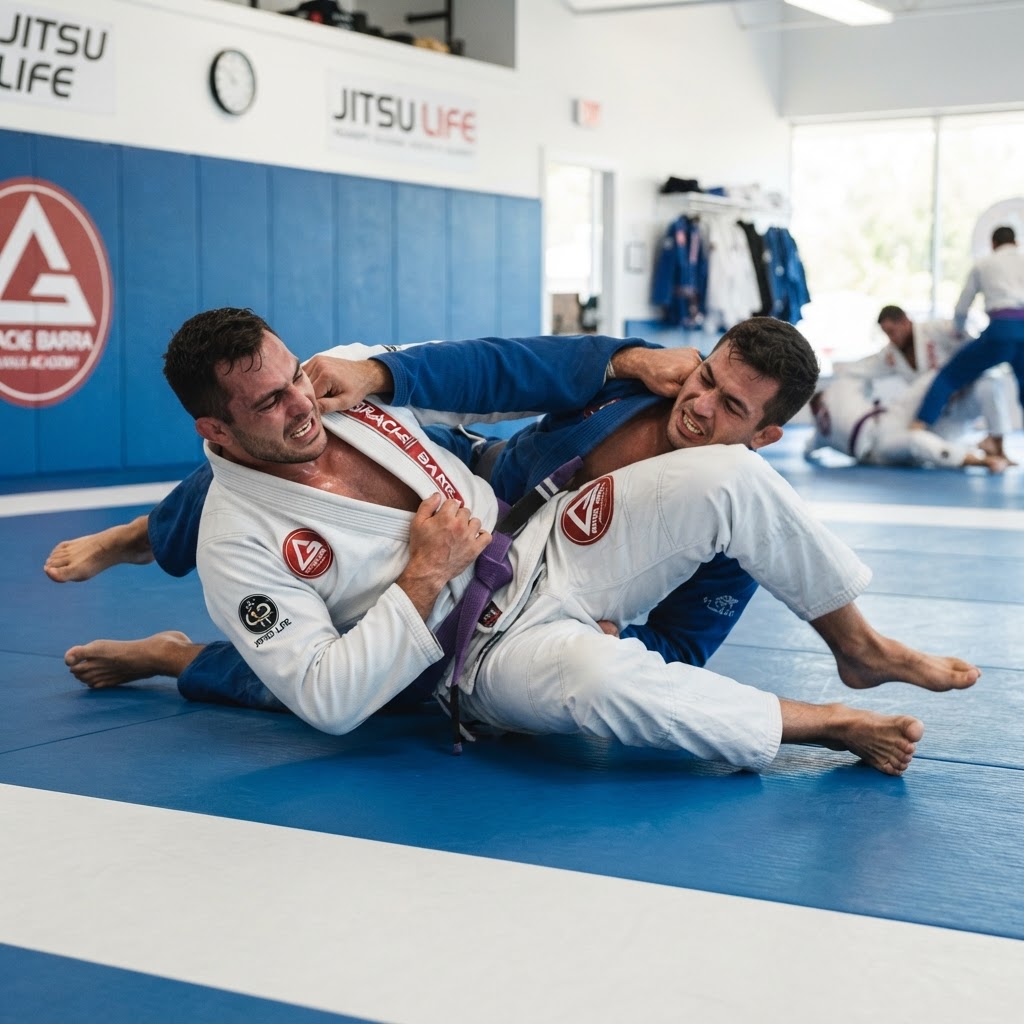
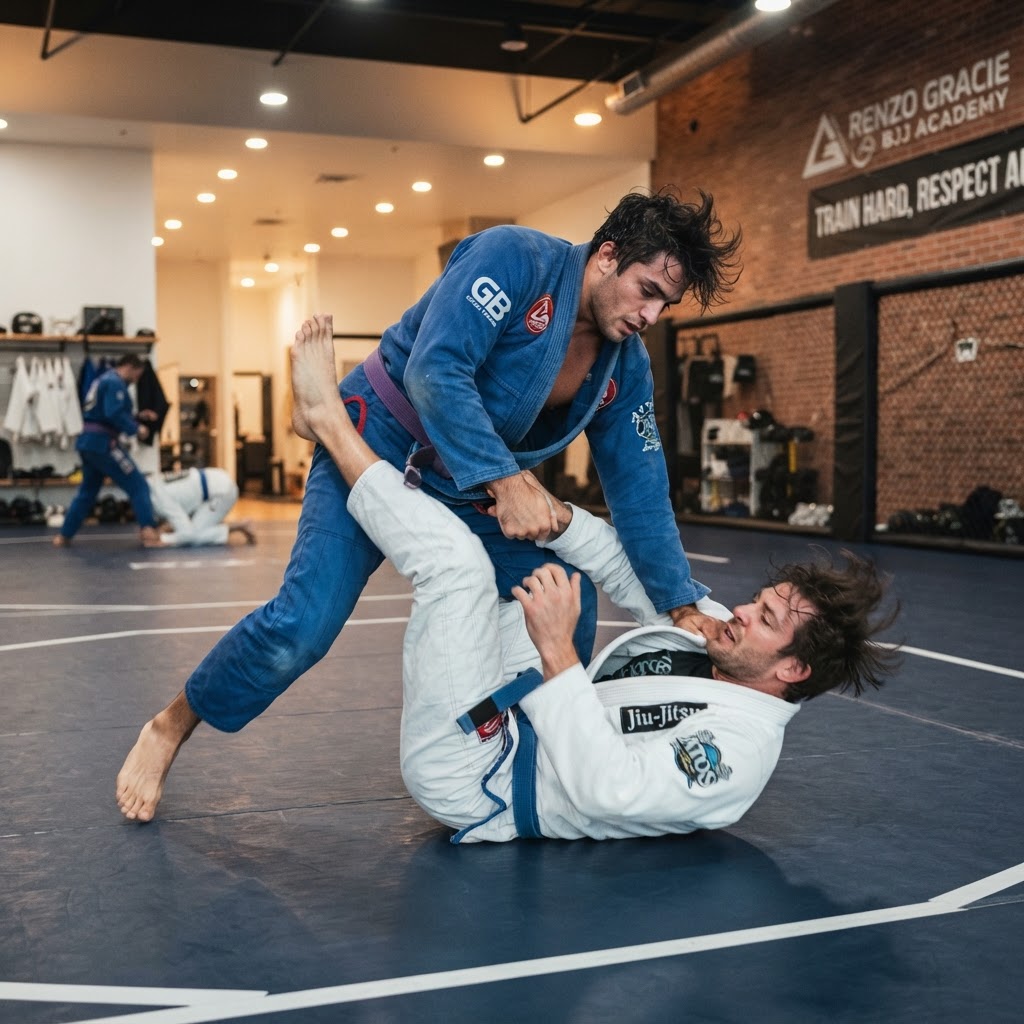
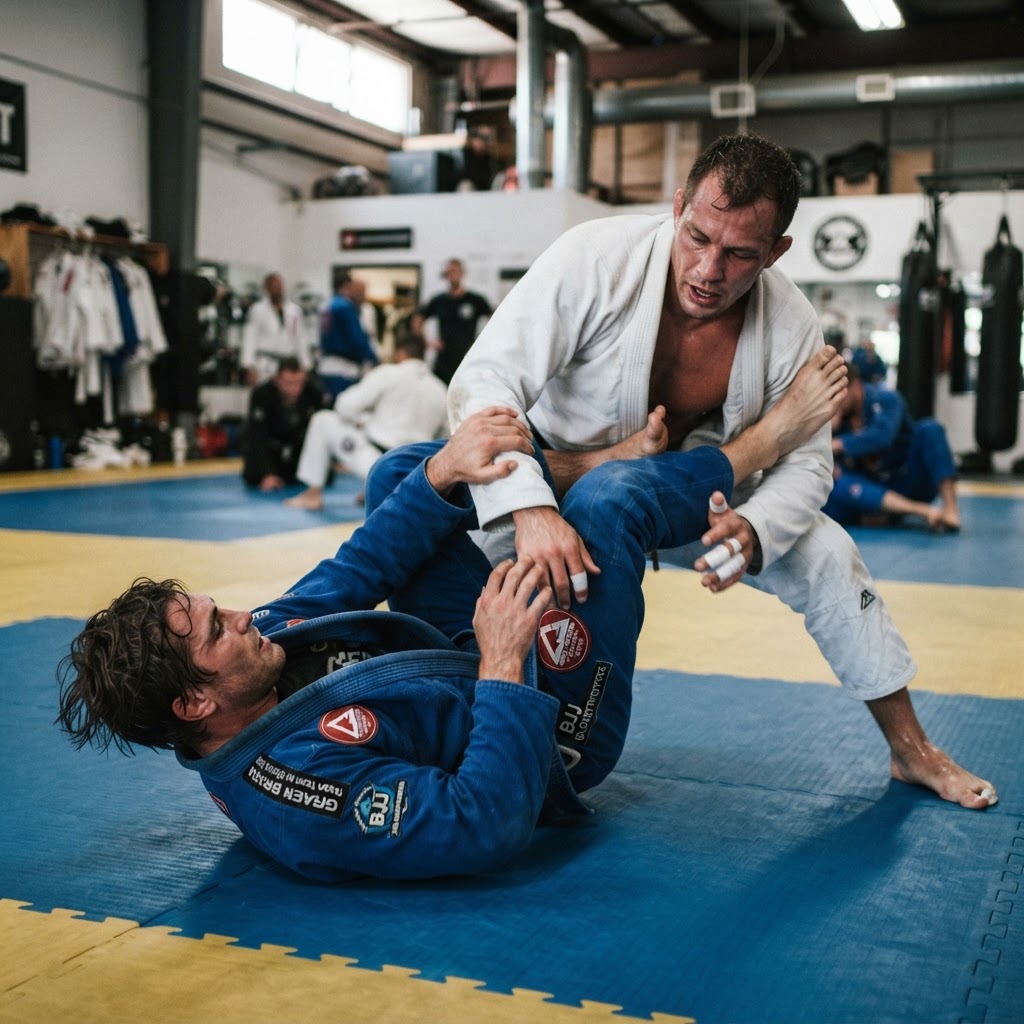
What makes gi training unique is that you're allowed to grip the fabric. You can grab your opponent's sleeves, collar, pants, and belt to control their movement, set up sweeps, and apply submissions. This creates a slower, more methodical game where grip fighting and positional control take center stage. The gi essentially gives you extra handles on your opponent, and learning to use those handles effectively is a core skill in BJJ gi training.
For beginners in Waynesboro and the surrounding Shenandoah Valley, the gi provides a structured learning environment. The friction of the heavy cotton fabric slows things down, which gives you more time to think through positions and understand the mechanics of each technique. Many instructors recommend starting in the gi for exactly this reason: it builds fundamental habits that transfer to any grappling scenario.
What Is No Gi BJJ?
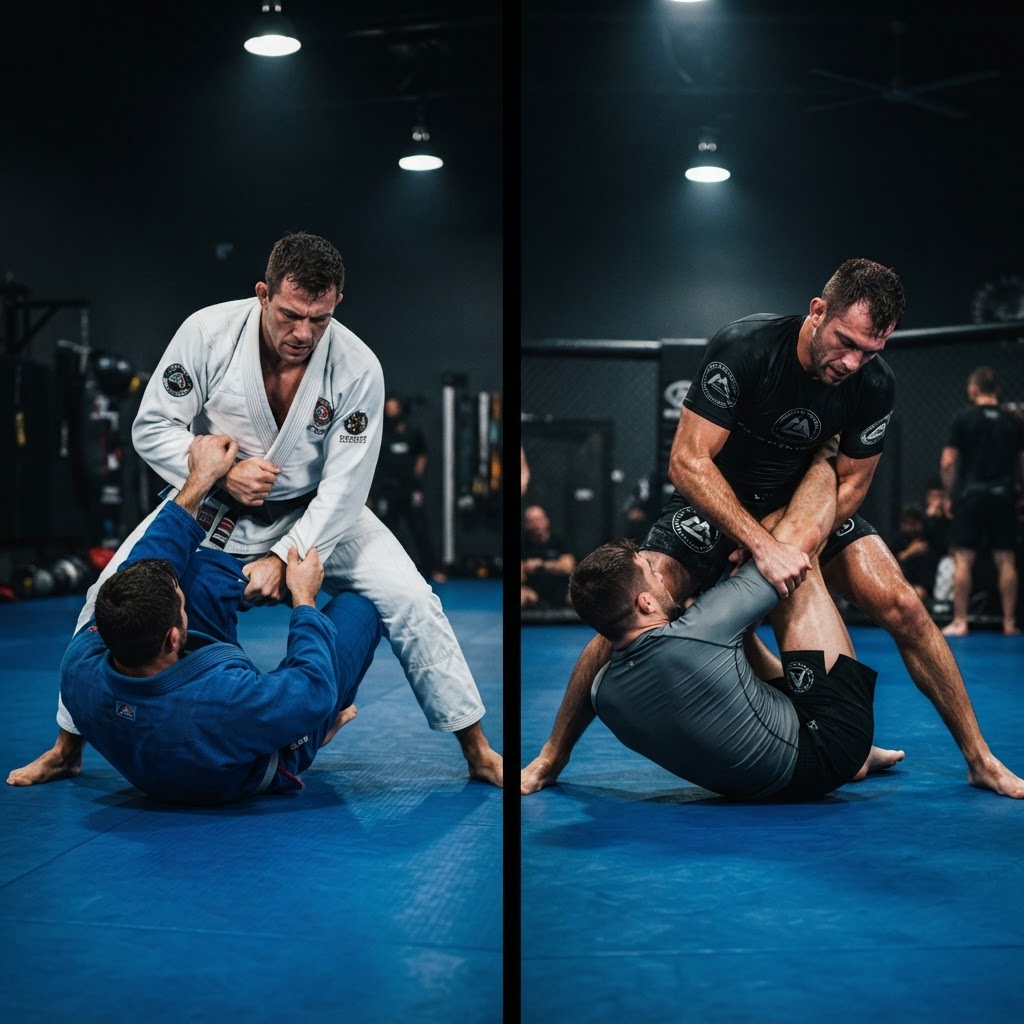
No gi BJJ is exactly what it sounds like: Brazilian Jiu-Jitsu practiced without the traditional uniform. Instead of a gi, practitioners wear a rashguard (a tight-fitting athletic shirt) and shorts, often spats (compression leggings) underneath. Without the gi's fabric to grab, the entire grappling dynamic changes.
In no gi grappling, you can't grip clothing. Control comes from underhooks, overhooks, wrist control, body locks, and head positioning. The pace is generally faster because there's less friction to slow things down, and opponents can slip out of positions more easily. This speed and fluidity makes no gi feel more like wrestling, which is why many crossover athletes from wrestling backgrounds tend to gravitate toward it. If you're curious about how wrestling skills transfer, our article on whether wrestling helps with BJJ covers this in detail.
No gi has surged in popularity over the past decade, largely thanks to the rise of submission-only grappling events like ADCC (Abu Dhabi Combat Club) and the explosive growth of professional grappling promotions. Many practitioners in Charlottesville, Fishersville, and across Virginia now train no gi exclusively, drawn by its fast pace and modern competition scene.
Gi vs No Gi Differences: The Key Comparisons
Grip Fighting
The most obvious difference between gi and no gi is grip strategy. In the gi, grip fighting is a fundamental battle. Collar grips, sleeve grips, and pant grips are weapons you use to control and submit your opponent. Breaking grips is a skill in itself, and a single well-placed collar grip can shut down an opponent's entire game.
In no gi, there are no fabric grips. Instead, you rely on body control: underhooks, overhooks, wrist locks (in some rule sets), and head control. The lack of grips means positions are more slippery and dynamic. You have to use your body more actively to maintain control, which demands different mechanics and athleticism.
Pace and Speed
Gi matches tend to be slower and more strategic. The friction of the heavy cotton fabric creates resistance, making it harder to explosively escape or scramble. This slower pace allows for more setup-heavy, methodical attacks. You might spend several minutes working a single grip sequence before launching your attack.
No gi is faster. Without the gi's friction, scrambles happen in the blink of an eye. Positions transition quickly, and athleticism plays a bigger role. If you enjoy a high-tempo, action-packed roll, no gi might be your preferred style. Many grapplers in Waynesboro find that no gi rounds leave them more winded but also more exhilarated.
Submissions and Attacks
Gi and no gi each favor different submission chains. In the gi, collar chokes are a massive part of the game. Cross-collar chokes, bow and arrow chokes, and Ezekiel chokes all rely on gripping the gi fabric to create strangling pressure. You'll also see more lapel-based attacks, where the gi's lapel is fed through limbs to create unique control positions and submissions.
In no gi, collar chokes disappear entirely. Instead, you see more arm triangles, darce chokes, anaconda chokes, guillotines, and leg locks. The no gi submission game tends to favor front-headlock attacks and compression-based chokes that don't require fabric grips. If you're working on your submission arsenal, our guide to essential BJJ submissions covers techniques relevant to both styles.
Sweeps and Guard Play
Guard play changes dramatically between the two styles. In the gi, sweeps often rely on sleeve and collar grips to off-balance your opponent. The spider guard, lapel guard, and collar-sleeve guard are all gi-specific positions that use fabric grips to control and sweep. These guards can be incredibly effective but require specific gi grips to function.
No gi guard play centers around entanglements and control without fabric. Guards like the DLR (De La Riva) guard, half guard, and seated open guard are still used, but without sleeve and collar grips, maintaining control requires different frames and hooks. Our complete guide to BJJ half guard covers how this position works in both styles. Similarly, if you're focused on passing, our BJJ guard passing guide explains techniques that work across both gi and no gi.
Athleticism vs Technique
One of the most debated gi vs no gi differences is the role of athleticism. No gi tends to reward explosive movement, speed, and conditioning more than gi training. Without fabric friction to slow the action, strength and quickness can compensate for technical gaps more easily.
The gi, by contrast, neutralizes raw athleticism to a degree. The friction and grip fighting create a slower, more technical battle where leverage and strategy often win over speed and power. This is why many instructors say the gi teaches you jiu-jitsu more deeply: you can't rely on slipping out of bad positions, so you're forced to learn proper technique.
READY TO TRY BRAZILIAN JIU-JITSU?
Claim a FREE trial class at Skyline Jiu-Jitsu today!
Serving Waynesboro, Charlottesville, Fishersville & the Shenandoah Valley
Gi or No Gi for Beginners: Which Should You Start With?
One of the most common questions we hear from new students in Waynesboro is whether to start with gi or no gi. The honest answer is that both have value, and the best choice depends on your goals.
If your primary goal is self-defense, many experts recommend starting with the gi. The grip control you learn in the gi translates well to controlling an attacker by their clothing, and the slower pace gives you time to develop proper technique. Real-world self-defense often involves clothing, so gi training can be more directly applicable. Our article on self defense classes in Waynesboro explores this further.
If your goal is competition in modern submission grappling events, or if you come from a wrestling background, no gi might feel more natural from day one. The faster pace and emphasis on body control can be more intuitive for athletes used to other grappling sports.
At Skyline Jiu-Jitsu, we encourage beginners to try both. Most of our new students start in the gi because it builds fundamental habits, then add no gi classes as they progress. If you're brand new to the art, our guide to your first BJJ class and our survival guide for your first month will help you prepare.
Benefits of Training Both Gi and No Gi
The best grapplers in the world train both. Here's why combining gi and no gi makes you a more complete martial artist:
- Well-rounded skill set: Gi training develops grip strength, patience, and technical precision. No gi develops speed, pressure, and body-lock control. Together, they cover every aspect of grappling.
- Adaptability: Training both styles means you can roll with anyone, anywhere. Whether you're visiting a gym in Charlottesville that only trains no gi or competing in a gi tournament, you'll be prepared.
- Improved defense: The gi forces you to escape from positions you can't slip out of, building rock-solid defensive habits. No gi forces you to maintain control without fabric grips, sharpening your body mechanics.
- More training options: Many academies in the Shenandoah Valley offer both gi and no gi classes. Training both means you can attend more sessions throughout the week without overloading one style.
- Mental freshness: Switching between styles keeps training interesting and prevents burnout. The different challenges of each style keep your mind engaged and your problem-solving skills sharp.
Gi vs No Gi Competition: What to Know
If competition is on your radar, it's important to understand the landscape. Traditional BJJ tournaments like IBJJF (International Brazilian Jiu-Jitsu Federation) offer both gi and no gi divisions. Gi tournaments tend to have stricter rules about grips, legal techniques, and points, while no gi competitions often feature more leg lock entries and faster-paced matches.
The ADCC tournament, widely considered the most prestigious no gi competition in the world, has helped drive the no gi boom. Its submission-only format and allowance of advanced leg locks have made no gi grappling one of the fastest-growing segments in combat sports. For practitioners in Waynesboro and across Virginia, no gi competition opportunities have never been more abundant.
That said, gi competition remains the backbone of traditional BJJ. Major gi tournaments draw thousands of competitors worldwide, and many academies still structure their curriculum around gi progression through the belt system. Both paths are valid, and both offer rewarding competitive experiences.
What to Wear: Gear Guide for Gi and No Gi
If you're training in the gi, you'll need a BJJ-specific gi (not a karate or judo uniform). BJJ gis are built to withstand aggressive grip fighting and frequent washing. Look for a durable weave, reinforced stitching, and a fit that complies with your academy's guidelines. A good starter gi doesn't need to be expensive; many quality entry-level gis are available for under $100.
For no gi, you'll need a rashguard and shorts. Rashguards wick sweat and protect your skin from mat burns. Board shorts or spats (compression leggings) should be free of zippers, pockets, and metal hardware for safety. Many no gi practitioners wear spats under their shorts for extra coverage and friction control.
If you're not sure what to buy before your first class, don't worry. At Skyline Jiu-Jitsu, we can loan you a gi for your trial class and guide you on the right gear to purchase once you decide to commit. Our guide to choosing a BJJ gym also covers what to look for in terms of beginner-friendly policies.
Training Gi and No Gi in Waynesboro, VA
Living in the Shenandoah Valley gives you access to quality jiu-jitsu training right in your backyard. At Skyline Jiu-Jitsu in Waynesboro, we offer both gi and no gi classes for adults and kids, from absolute beginners to experienced competitors. Whether you're coming from Waynesboro, Fishersville, Staunton, or Charlottesville, our academy provides a welcoming environment where you can develop both styles under experienced coaching.
We believe the best approach is to train both. Our curriculum is designed to build gi fundamentals first, then introduce no gi concepts as students progress. This gives you a technical foundation that makes your no gi game sharper and more effective. If you're searching for jiu jitsu classes near Waynesboro, we'd love to have you on the mat.
Related Posts
- The History of Brazilian Jiu-Jitsu: From Ancient Japan to Global Phenomenon
- Essential BJJ Submissions Every Grappler Should Know
- BJJ Guard Passing: The Complete Guide to Breaking Through Any Defense
- BJJ Half Guard: The Complete Guide to Mastering This Essential Position
- Does Wrestling Help With BJJ? How Cross-Training Makes You a Better Grappler
- Is Brazilian Jiu-Jitsu Hard to Learn? A Beginner's Honest Guide
- What to Expect at Your First BJJ Class: A Complete Beginner's Guide
- How to Choose a BJJ Gym: The Complete Beginner's Guide
READY TO TRY BRAZILIAN JIU-JITSU?
Claim a FREE trial class at Skyline Jiu-Jitsu today!
Serving Waynesboro, Charlottesville, Fishersville & the Shenandoah Valley