What to Wear to Your First BJJ Class: A Beginner’s Guide
Wondering what to wear to your first BJJ class? The good news is that you do not need an expensive uniform or a closet full of martial arts gear to begin Brazilian Jiu-Jitsu. For a trial class at Skyline Jiu-Jitsu in Waynesboro, Virginia, comfortable athletic clothes are usually enough, and the coaching team can explain what to wear for future gi or no-gi sessions.
New students often spend more time worrying about clothing than learning their first technique. That is understandable: BJJ involves close contact, movement on the mat, and plenty of exercises you may not have seen before. The right outfit simply needs to let you move safely, stay comfortable, and avoid anything that could snag a finger or scratch a training partner.
The Simple Answer: Wear Comfortable Athletic Clothes
If this is your first Brazilian Jiu-Jitsu class, start with clean athletic clothing that fits reasonably close to your body. A moisture-wicking T-shirt, athletic shorts, leggings, joggers, or compression layers can all work for an introductory session. Choose clothes you can comfortably squat, stretch, sit, and roll in.
At Skyline Jiu-Jitsu, beginners do not need to arrive with a complete uniform. If the class requires a gi, the academy can provide a loaner gi when available. Check the class details or contact the academy before your first visit so you know whether the session is gi, no-gi, or beginner-friendly open training.
The most important preparation is not buying gear. It is arriving in clean clothes, with trimmed fingernails and toenails, ready to listen and learn.
What to Wear for a No-Gi BJJ Class
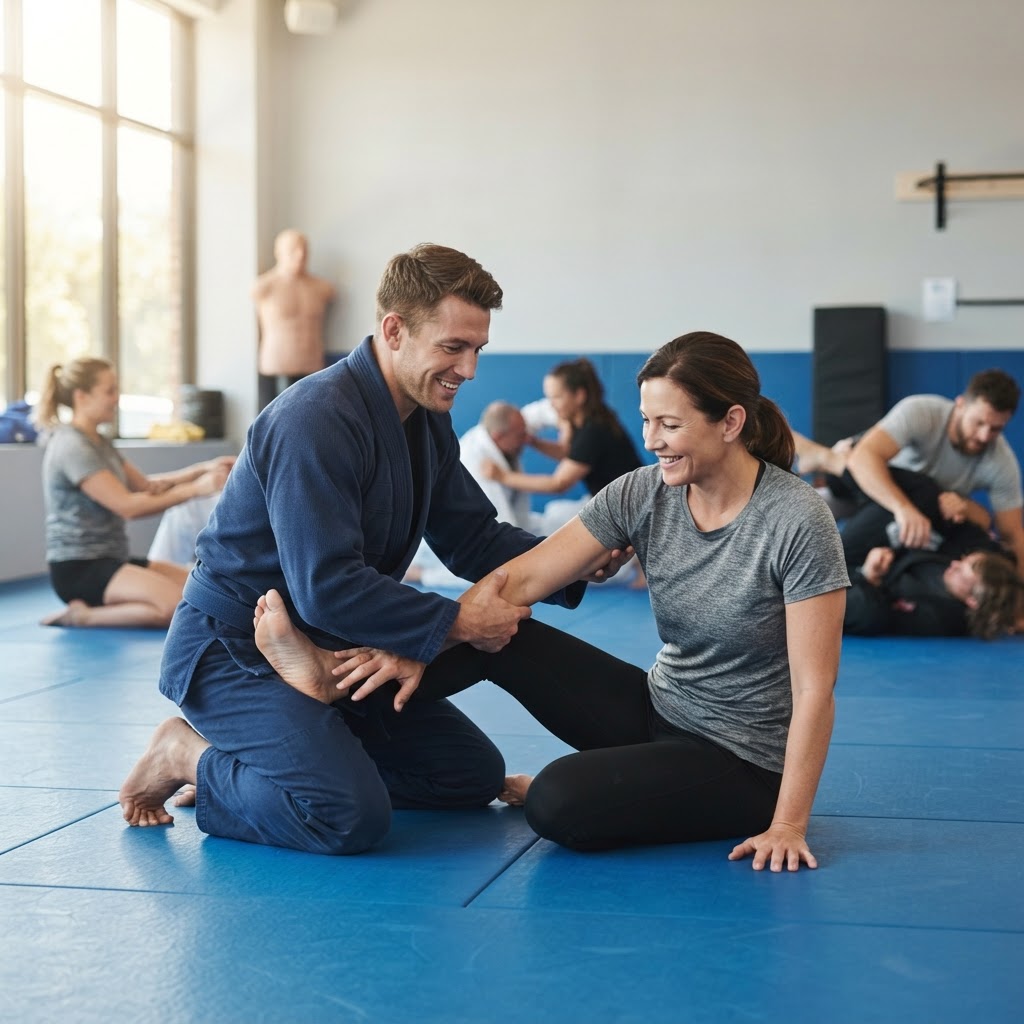
No-gi BJJ uses athletic clothing instead of the traditional cotton uniform. If you are attending a no-gi class, a fitted rash guard or athletic shirt paired with grappling shorts, board shorts, compression shorts, or athletic leggings is a practical choice.
- Rash guard or fitted athletic shirt: A snug top stays in place while you move and helps reduce friction. A clean, close-fitting T-shirt can also work for a first class.
- Athletic shorts without pockets: Grappling shorts or simple training shorts are ideal. Avoid cargo pockets, zippers, buttons, and hard decorations.
- Compression shorts or leggings: These can add comfort and coverage under shorts, especially during repeated drills and live rounds.
- Sports bra or supportive athletic top: Choose secure athletic clothing that allows you to move without constant adjustment.
Avoid loose T-shirts that ride up over your face, very short running shorts, and anything with metal. During BJJ, your clothing may be pulled, compressed, or caught between bodies. Simpler is safer and more comfortable for everyone.
What to Wear for a Gi BJJ Class
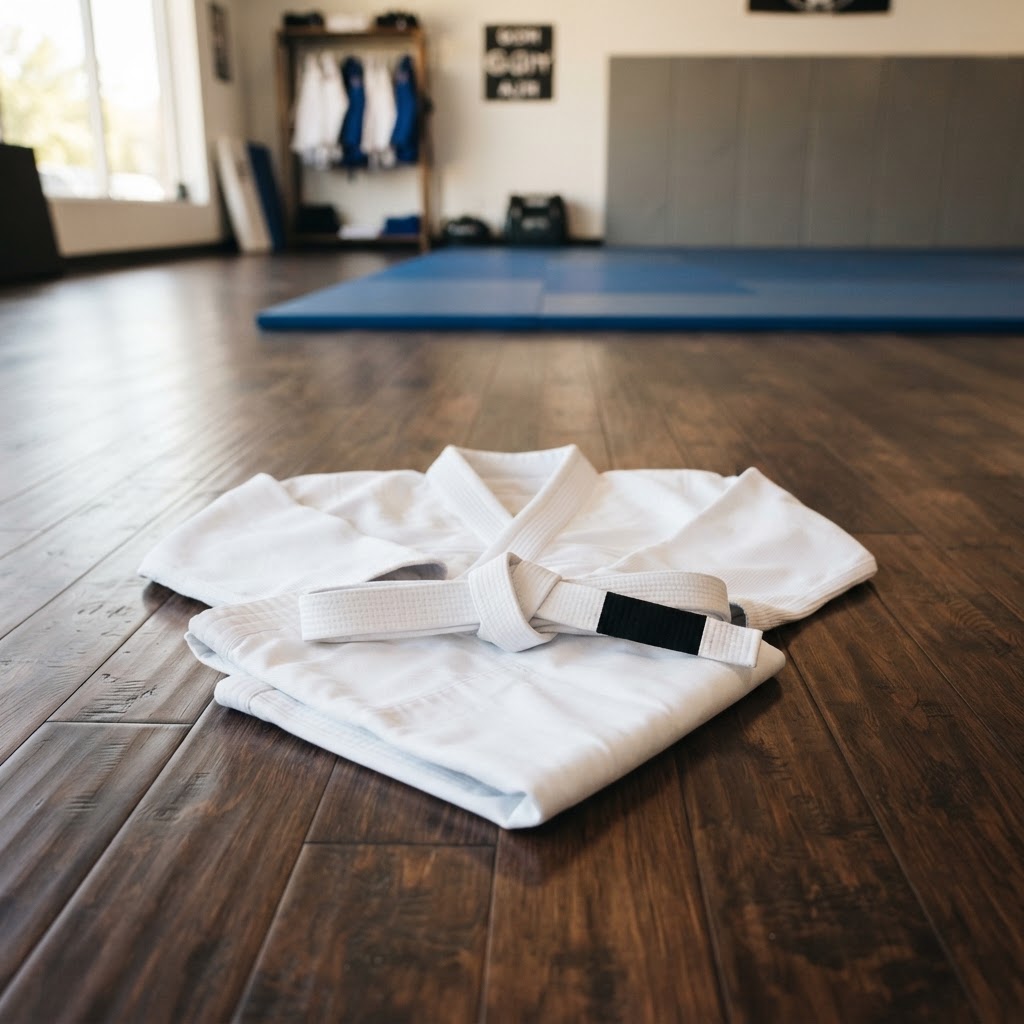
A gi, sometimes called a kimono, is the traditional uniform worn in many Brazilian Jiu-Jitsu classes. It includes a sturdy jacket, pants, and a belt. The fabric is designed to handle gripping, pulling, and repeated washing.
You do not usually need to purchase a gi before your first class. Many academies offer a loaner uniform for visitors, and Skyline Jiu-Jitsu can help new students understand the academy’s uniform expectations. Ask ahead about sizing, color, and whether you should wear athletic clothing underneath.
Under a gi, many students wear a rash guard, fitted athletic shirt, compression shorts, or leggings. Requirements can vary by academy and class, so follow the coach’s guidance. A good base layer should be comfortable, breathable, and secure during movement.
Once you begin training regularly, invest in a BJJ-specific gi rather than using a generic costume or a heavy multi-purpose uniform. A properly fitted gi should allow a full range of motion without sleeves or pant legs becoming excessively long.
What Not to Wear to BJJ
Knowing what not to wear is just as useful as choosing the right outfit. Brazilian Jiu-Jitsu is a partner sport, so clothing and personal items can affect another person’s safety.
- No jewelry: Remove rings, necklaces, bracelets, watches, earrings, and piercings that can catch or cause injury.
- No zippers, snaps, or metal: These can scratch a training partner or dig into the mat.
- No pockets: Fingers and toes can get trapped in pockets during drills.
- No outdoor shoes on the mat: Use clean feet on the training surface and wear sandals or flip-flops off the mat.
- No dirty or heavily scented clothing: Close-contact training makes hygiene especially important.
- No overly loose layers: Baggy clothes can cover your face, twist around limbs, or make techniques harder to perform safely.
Also skip clothing with hard logos, exposed buckles, or rough seams. You do not need a perfect outfit; you simply need soft, secure, clean athletic clothing without unnecessary features.
What Should Beginners Bring to Class?
A small gym bag is enough for your first class. Bring a water bottle, a towel, clean clothes for after training, and sandals or flip-flops for walking around the academy when you are off the mat. If you have long hair, pack a secure hair tie that does not contain hard clips or sharp pieces.
READY TO TRY BRAZILIAN JIU-JITSU?
Claim a FREE trial class at Skyline Jiu-Jitsu today!
Serving Waynesboro, Charlottesville, Fishersville & the Shenandoah Valley
It is smart to bring identification or any information requested when you reserve a trial class. You may also want a notebook if you enjoy recording details after class, but do not worry about memorizing every position. Your first session is about becoming comfortable with the environment.
Leave valuables at home whenever possible. Phones, wallets, and keys should be stored according to the academy’s instructions rather than placed beside the mat.
Hygiene Is Part of Your Training Gear
In a close-contact sport, personal hygiene is a form of respect. Shower before class when possible, wash your training clothes after every session, and keep fingernails and toenails trimmed. Cover cuts or skin issues and tell a coach if you are unsure whether you should train.
Arrive with clean feet. If you walk outside before class, wear sandals until you reach the mat area, then clean your feet as directed. Never step on the mat in street shoes. These small habits help keep the training environment healthy for the entire Skyline Jiu-Jitsu community.
For the same reason, a gi should be washed after every practice. Rash guards, shorts, leggings, and other no-gi clothing also need to go directly into the laundry. Do not leave sweaty gear in your bag overnight and wear it again the next day.
Do You Need a Rash Guard for Your First Class?
No. A rash guard is useful, but it is not always required for a first visit. If you already own one, it is a great option because it stays close to the skin and helps manage sweat. If you do not own one, a clean athletic T-shirt is usually a reasonable starting point for a beginner class.
After you attend a few sessions, you can ask your coach about the academy’s preferred clothing and whether a BJJ rash guard is recommended. Rash guards are available in short-sleeve and long-sleeve styles, and the best choice is the one that feels comfortable while you train.
How Should Your Clothes Fit?
Your outfit should be secure without restricting breathing or movement. Test it before class: raise your arms, bend your knees, sit on the floor, and rotate your shoulders. If the shirt immediately rides up or the waistband slides down, choose another option.
Clothing that is too tight can be distracting, while clothing that is too loose can tangle during a scramble. Aim for athletic fit rather than skin-tight perfection. Comfort matters because beginners have enough to think about while learning how to frame, shrimp, bridge, and move safely.
What to Expect at Skyline Jiu-Jitsu in Waynesboro
If you are searching for beginner BJJ in Waynesboro, the first step is simply to contact Skyline Jiu-Jitsu and choose an introductory class. The academy welcomes students from Waynesboro, Fishersville, Charlottesville, and throughout the Shenandoah Valley. You can review class information through the Skyline Jiu-Jitsu schedule and learn more about starting through the pricing and trial information.
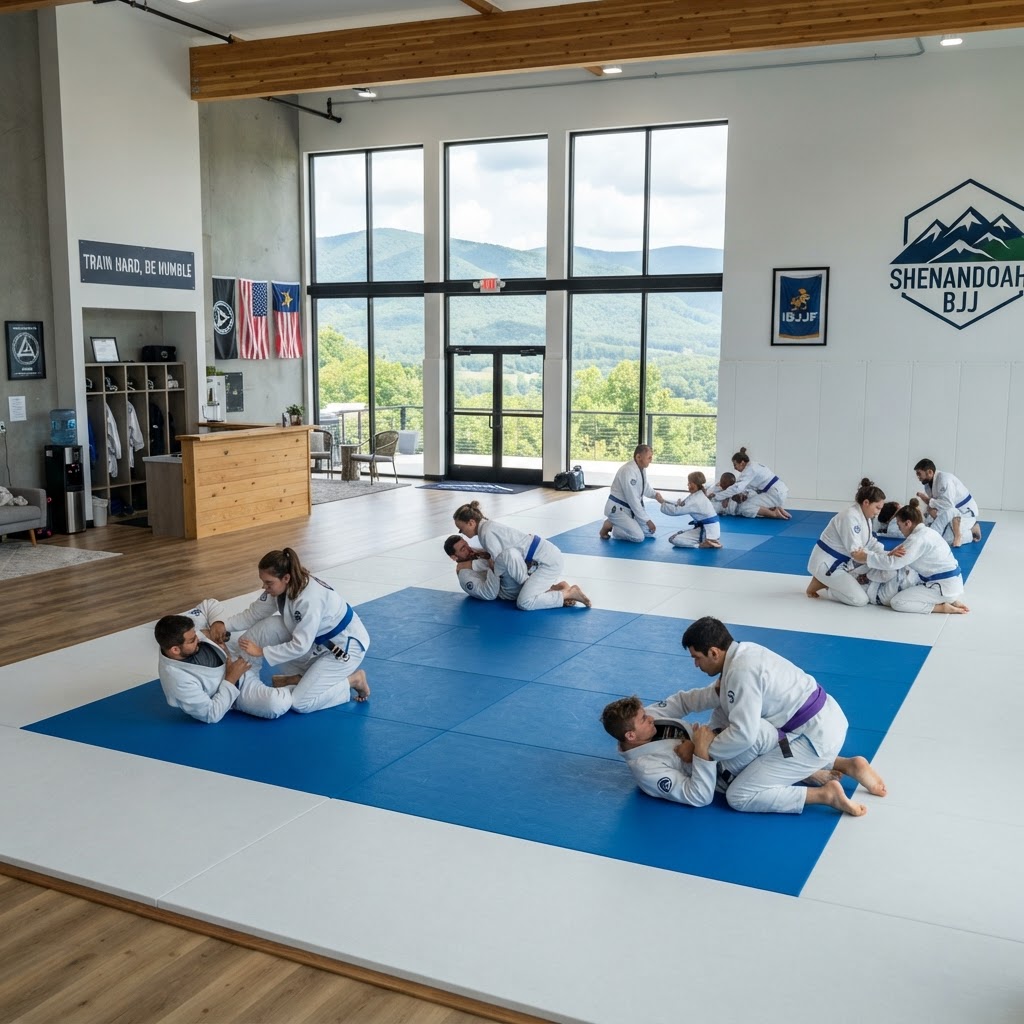
When you arrive, a coach can answer practical questions about the mat, changing area, loaner gi availability, and class format. Beginner instruction is designed to help you learn progressively. You will not be expected to know terminology, perform advanced techniques, or roll at an uncomfortable pace on day one.
Many people in the Waynesboro area discover that the hardest part is walking through the door. Once you have comfortable clothes and a willingness to learn, you have everything you need to begin.
First BJJ Class Checklist
- Clean T-shirt, rash guard, or fitted athletic top
- Athletic shorts, leggings, or joggers without zippers or pockets
- Water bottle and small towel
- Sandals or flip-flops for off-mat areas
- Trimmed nails and no jewelry
- Fresh clothes for after class
- A positive attitude and a willingness to ask questions
That checklist is enough for most first-class situations. Do not let the lack of a gi or specialized BJJ clothing delay you. Start with what you have, follow the academy’s instructions, and upgrade your gear when you know that Brazilian Jiu-Jitsu is becoming part of your routine.
Related Posts
READY TO TRY BRAZILIAN JIU-JITSU?
Claim a FREE trial class at Skyline Jiu-Jitsu today!
Serving Waynesboro, Charlottesville, Fishersville & the Shenandoah Valley