# What to Expect at Your First BJJ Class: A Complete Beginner's Guide
Walking into a Brazilian Jiu-Jitsu academy for the first time can feel intimidating. Maybe you've been thinking about starting jiu jitsu for weeks or months, and you finally decided to sign up for a trial class. Or maybe a friend dragged you along and you have no idea what you're in for. Either way, knowing what to expect at your first BJJ class can turn anxiety into excitement.
At Skyline Jiu-Jitsu in Waynesboro, Virginia, we specialize in helping beginners feel comfortable from the moment they walk through the door. This guide breaks down everything you need to know: what to wear, what to bring, how class flows, and the jiu jitsu etiquette that keeps the mat safe and respectful for everyone.
## Table of Contents
1. What Is Brazilian Jiu-Jitsu?
2. What to Wear to BJJ Class
3. What to Bring to Your First Class
4. What Happens During a BJJ Class
5. BJJ Etiquette Every Beginner Should Know
6. How to Prepare Mentally for Your First Jiu Jitsu Class
7. Common Beginner Fears (and Why You'll Be Fine)
8. Tips for After Your First Class
9. Start Your BJJ Journey in Waynesboro
## What Is Brazilian Jiu-Jitsu?
Brazilian Jiu-Jitsu (BJJ) is a grappling martial art focused on ground fighting and submission techniques. Unlike striking arts like karate or boxing, BJJ teaches you how to control an opponent using leverage, positioning, and joint locks rather than punches and kicks. It's often called the "gentle art" because it allows a smaller person to defeat a larger opponent through technique rather than brute force.
If you're wondering whether BJJ is right for you, the short answer is yes. BJJ is for everyone, regardless of age, fitness level, or athletic background. We've written a deeper dive on this topic in our post [Is Brazilian Jiu-Jitsu Hard to Learn? A Beginner's Honest Guide](/blog/is-brazilian-jiu-jitsu-hard-to-learn), but the key takeaway is this: every black belt was once a white belt who showed up for their first class feeling exactly the way you feel right now.
## What to Wear to BJJ Class
One of the most common questions beginners ask is what to wear to BJJ. The answer depends on whether your academy trains in the gi (uniform) or no-gi (rash guard and shorts) format for beginner classes.
### Gi Class
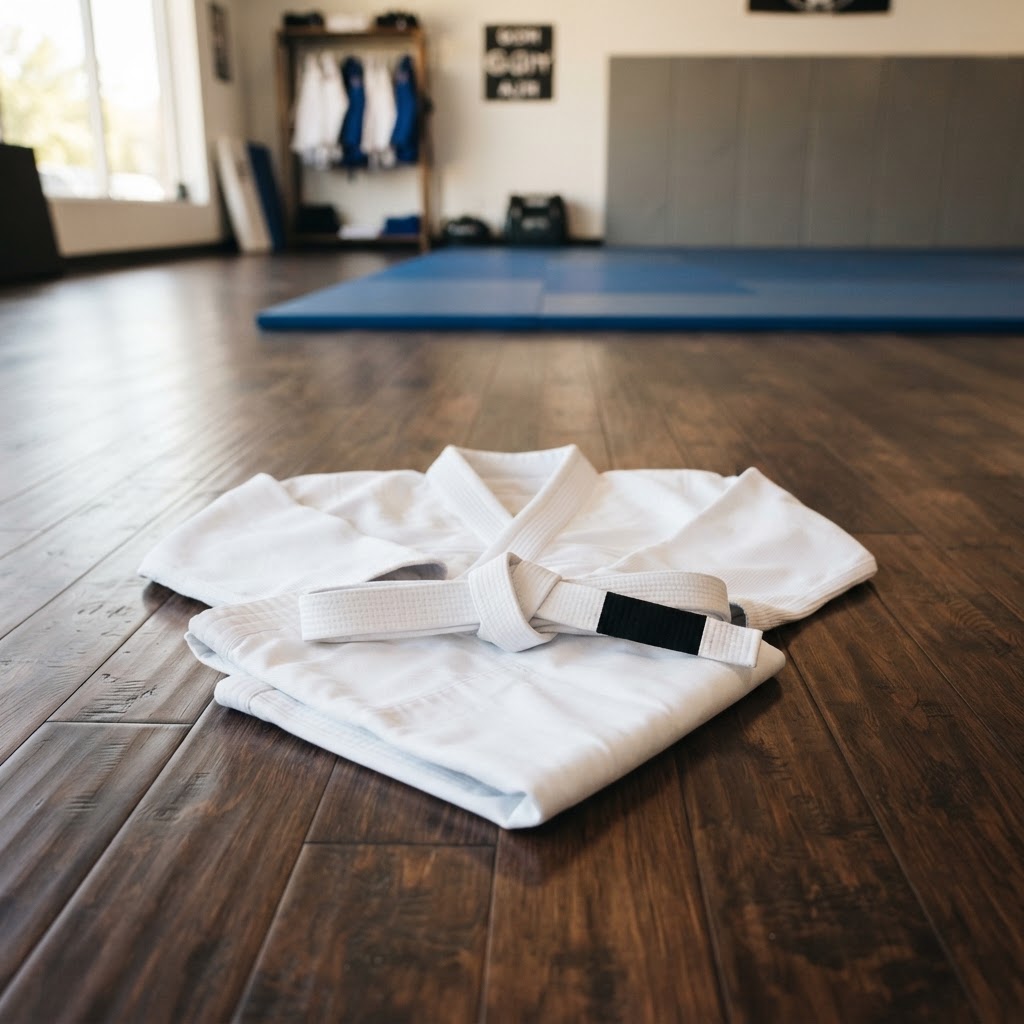
Most BJJ academies start beginners in the gi. The gi consists of three pieces:
- **Gi jacket (kimono)**: A heavy cotton jacket that you'll eventually learn to grab and use for grips and chokes.
- **Gi pants**: Reinforced cotton pants with a drawstring waist.
- **Belt**: A white belt worn around the jacket to keep it closed.
If you don't own a gi yet, that's completely fine. At Skyline Jiu-Jitsu, we have loner gis available for trial students. Just show up 10 to 15 minutes early so we can get you fitted. Wear a t-shirt and shorts underneath in case the gi doesn't fit perfectly.
### No-Gi Class
If your trial class is a no-gi session, wear:
- A **rash guard** (a tight-fitting athletic shirt) or a fitted t-shirt you don't mind getting stretched
- **Board shorts** or spats (athletic leggings) with no zippers, pockets, or metal parts
- **Clean feet**: No shoes on the mat
### What NOT to Wear
- Jewelry of any kind (rings, necklaces, earrings)
- Clothes with zippers, buttons, or metal clasps
- Loose shorts that might shift during training
- Heavy cologne or perfume
- Dirty or unwashed clothing
Hygiene matters on the mat. Brazilian Jiu-Jitsu involves close body contact, so come clean. Trim your fingernails and toenails short to avoid scratching your training partners.
## What to Bring to Your First Class
Keep it simple. Here's your checklist:
1. **Water bottle**: Hydration is important. BJJ is more physically demanding than it looks.
2. **Towel**: You'll sweat more than you expect.
3. **Change of clothes**: Most students prefer not to drive home in their training gear.
4. **Flip-flops or slides**: For walking from the locker room to the mat. You never want your bare feet touching the floor off the mat and then stepping onto the mat.
5. **Mouthguard (optional)**: BJJ is a contact sport. A mouthguard adds an extra layer of protection, especially for anyone who has dental work.
That's it. You don't need to invest in expensive gear before your first class. If you decide to continue training after your trial, we can help you find the right gi at a price point that works for you.
## What Happens During a BJJ Class
Understanding the flow of class is one of the best ways to reduce first-class nerves. Here is what to expect at your first BJJ class, step by step.
### 1. Arrival and Check-In
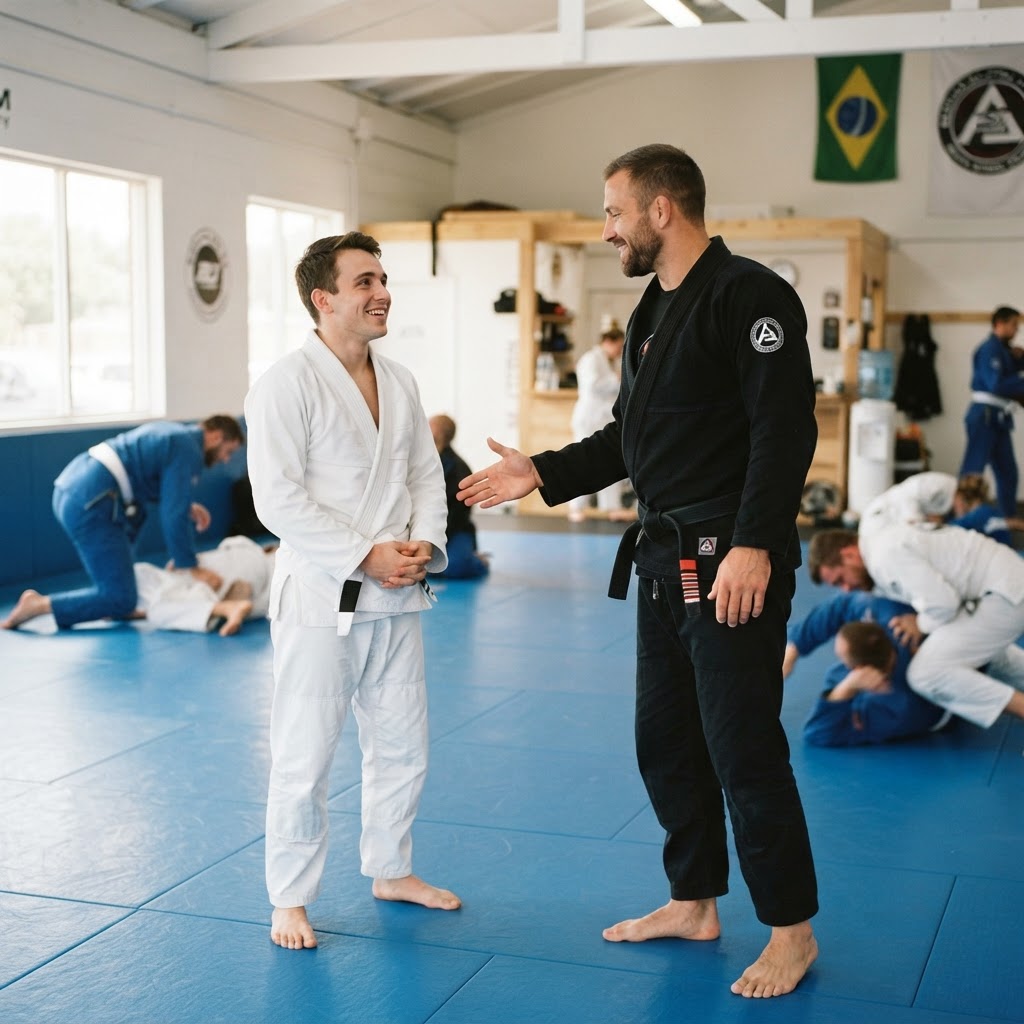
Arrive 10 to 15 minutes before the scheduled start time. You'll sign a waiver, get changed, and meet the instructor. This is a good time to let the coach know it's your first class so they can keep an eye on you and pair you with an experienced partner.
### 2. Warm-Up (15 to 20 Minutes)
Every BJJ class starts with a warm-up to prepare your body for grappling. Warm-ups typically include:
- Light jogging and stretching
- Shrimping (a foundational hip movement used constantly in BJJ)
- Forward and backward rolls
- Bridges and hip escapes
The warm-up might feel challenging if you haven't done these movements before. That's normal. Nobody expects a beginner to move perfectly on day one. Just do your best and stop if you need to.
### 3. Technique Instruction (20 to 30 Minutes)
After the warm-up, the instructor demonstrates a technique or a sequence of related techniques. For beginners, this might be a fundamental position like closed guard, an escape from mount, or a basic sweep.
You'll watch the demonstration, then practice the technique with a partner at low intensity. The instructor will walk around and correct details. Don't worry about memorizing everything. Your job as a beginner is to absorb what you can and repeat.
### 4. Positional or Live Rolling (15 to 30 Minutes)
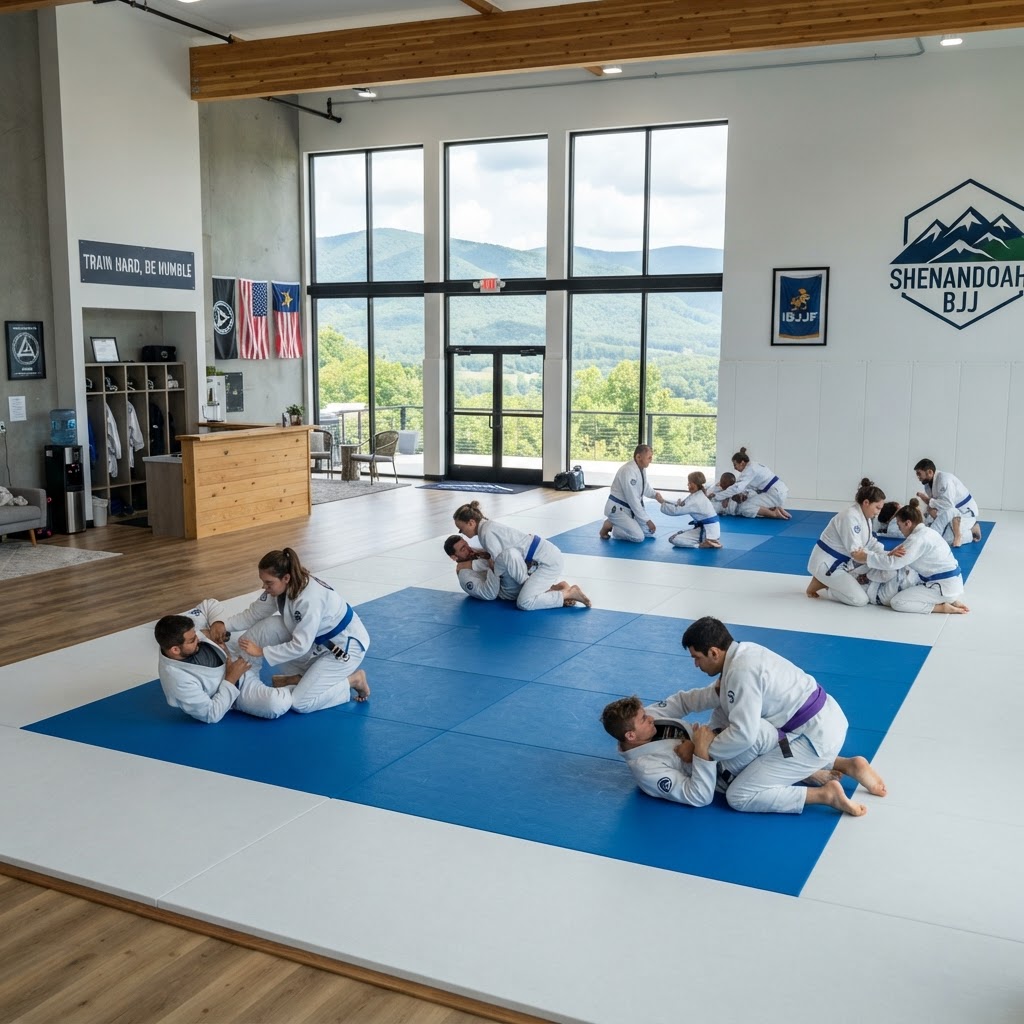
This is the part beginners fear most. Rolling (sparring) is where you apply techniques against a resisting partner. In beginner classes, rolling is usually positional, meaning you start from a specific position and work toward a submission or escape.
If live rolling is part of your first class, the instructor will likely pair you with an experienced blue belt or higher who understands how to train safely with a newcomer. Upper belts are trained to match your intensity and guide you rather than overwhelm you.
It is completely acceptable to sit out of rolling during your first class if you don't feel ready. Watching is learning too.
### 5. Cool-Down and Line-Up
Class ends with a cool-down and a formal line-up where students shake hands and thank each other. This is a tradition rooted in respect for training partners, the instructor, and the art itself.
## BJJ Etiquette Every Beginner Should Know
Jiu jitsu etiquette isn't about rigid rules. It's about creating a safe, respectful environment where everyone can learn. Here are the basics:
1. **Bow when entering and leaving the mat.** This is a sign of respect for the training space.
2. **Address the instructor respectfully.** Use their title (Professor, Coach, or their name if they prefer).
3. **Never wear shoes on the mat.** Keep them off the mat to maintain cleanliness.
4. **Wash your gi after every class.** Hygiene is non-negotiable in a close-contact sport.
5. **Tap to submit.** If a submission is locked in, tap your partner or the mat. There is no shame in tapping. Everyone does it, even black belts.
6. **Leave your ego at the door.** BJJ humbles everyone. Embrace it.
7. **Communicate with your partner.** If something hurts or you need to rest, say so. Your partner would rather know than accidentally injure you.
For more on the common pitfalls new students encounter, check out our post [10 Common BJJ Beginner Mistakes and How to Fix Them Fast](/blog/bjj-beginner-mistakes).
## How to Prepare Mentally for Your First Jiu Jitsu Class
The mental side of starting BJJ is often harder than the physical side. Here are a few mindset shifts that will help.
### Accept That You Know Nothing
As a white belt, your only job is to show up and try. You will not understand positions, grip strategies, or submissions for weeks. That's by design. BJJ has a steep learning curve, and everyone goes through the same initiation. Check out [BJJ White Belt Tips: The Ultimate Survival Guide for Your First Year](/blog/bjj-white-belt-tips-survival-guide) for a deeper look at the white belt mindset.
### Don't Worry About Being Out of Shape
Many people delay starting BJJ because they want to get in better shape first. This is backwards. BJJ is how you get in shape. You'll build cardiovascular endurance, strength, and flexibility on the mat. Your first class won't require peak fitness. It just requires you to show up.
### Embrace Being the Beginner
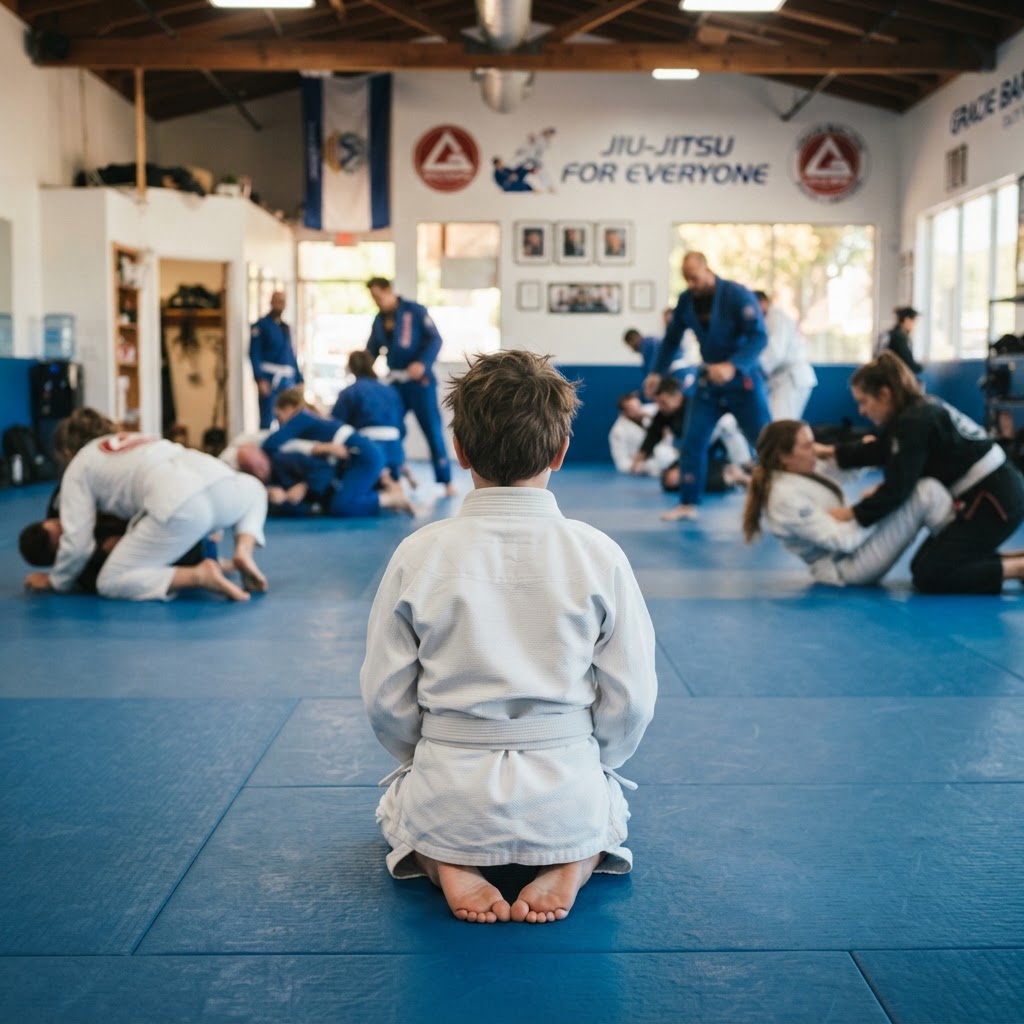
There's freedom in being the worst person in the room. You have nothing to prove and everything to learn. The upper belts you train with were all beginners once, and they remember what it felt like. The BJJ community is one of the most welcoming you'll find, especially at an academy that prioritizes beginner onboarding like Skyline Jiu-Jitsu.
## Common Beginner Fears (and Why You'll Be Fine)
### Fear: I'll Get Hurt
BJJ training is controlled and progressive. Beginners start with fundamental movements and light positional work before anything resembling full-intensity rolling. Injuries happen in every sport, but a well-run academy prioritizes safety above all else.
### Fear: I'm Too Old to Start
We have students who started BJJ in their 40s and 50s. BJJ is scalable. Your instructor will modify techniques and intensity based on your age, mobility, and goals. Read more about starting in our article [BJJ for Beginners: How to Survive Your First Month of Training](/blog/bjj-for-beginners-first-month).
### Fear: Everyone Will Be Better Than Me
They will be. And that's exactly why you should train there. Rolling with better partners makes you better faster. Nobody at a BJJ academy judges a white belt for not knowing techniques. They judge you for how you treat your training partners and whether you keep showing up.
### Fear: I Don't Know the Rituals
Nobody expects you to know gym customs on day one. The instructor will guide you through bowing, lining up, and tapping. Other students will help too. The BJJ culture is built on mentorship, and upper belts see helping beginners as part of their own growth.
## Tips for After Your First Class
1. **Hydrate and eat well.** You'll be more fatigued than you expect. Protein and water are your friends.
2. **Write down what you remember.** Even a few notes about positions or techniques will help reinforce your learning.
3. **Expect soreness.** You'll use muscles you didn't know you had. This fades after a few sessions.
4. **Come back.** The single most important factor in BJJ progress is consistency. Two classes a week beats six classes in one week followed by a month off.
5. **Don't buy a gi yet.** Wait until you know you want to continue. We can help you find the right fit when you're ready.
## Start Your BJJ Journey in Waynesboro
Starting Brazilian jiu-jitsu is one of the best decisions you can make for your physical fitness, mental resilience, and self-defense capability. The hardest part is walking through the door for your first class. Once you've done that, you'll wonder what you were so nervous about.
At Skyline Jiu-Jitsu, we serve beginners from across the Shenandoah Valley, including Waynesboro, Charlottesville, Fishersville, Staunton, and Augusta County. Our beginner program is designed specifically for people with zero martial arts experience. You'll learn at your own pace in a supportive environment with experienced coaches who care about your progress.
## Related Posts
- [BJJ for Beginners: How to Survive Your First Month of Training](/blog/bjj-for-beginners-first-month)
- [BJJ White Belt Tips: The Ultimate Survival Guide for Your First Year](/blog/bjj-white-belt-tips-survival-guide)
- [10 Common BJJ Beginner Mistakes and How to Fix Them Fast](/blog/bjj-beginner-mistakes)
- [Is Brazilian Jiu-Jitsu Hard to Learn? A Beginner's Honest Guide](/blog/is-brazilian-jiu-jitsu-hard-to-learn)
- [Waynesboro Martial Arts: Why Brazilian Jiu-Jitsu Is the Best Choice in the Shenandoah Valley](/blog/waynesboro-martial-arts-bjj-shenandoah-valley)
Ready to see our class schedule? Visit our [class schedule page](/schedule) or check out our [pricing options](/pricing) to find the plan that works for you.
START TRAINING TODAY
READY TO TRY BRAZILIAN JIU-JITSU?
Claim a FREE trial class at Skyline Jiu-Jitsu today!
Serving Waynesboro, Charlottesville, Fishersville & the Shenandoah Valley
Start Training Today
READY TO TRY BRAZILIAN JIU-JITSU?
Claim a FREE trial class at Skyline Jiu-Jitsu today!
Serving Waynesboro, Charlottesville, Fishersville & the Shenandoah Valley