Am I Too Old to Start BJJ? The Honest Answer for Adults Over 30, 40, and 50
If you've been telling yourself you're too old to start BJJ, you're not alone. It's one of the most common reasons adults give for putting off Brazilian Jiu-Jitsu, and it's the question we hear almost every week at our academy in Waynesboro, Virginia. Someone walks in, watches a class from the lobby, and says the same thing: "I wish I'd found this twenty years ago. Isn't it too late for me now?"
Here's the honest answer: no, you are almost certainly not too old to start BJJ. People begin jiu-jitsu in their 30s, 40s, 50s, and beyond all across the Shenandoah Valley, and many of them end up healthier, calmer, and more confident than they were at 25. What actually determines your success on the mat isn't the year on your birth certificate. It's how you train, how you recover, and whether you pick a gym that meets older beginners where they are.
In this guide, we'll break down what the "too old" worry really means, why starting BJJ at 40 (or 50, or 60) can genuinely be one of the best decisions of your adult life, and how to train smart so your first year is built for longevity, not burnout. If you're in Waynesboro, Fishersville, Stuarts Draft, or commuting down from Charlottesville, this one's for you.
Why So Many Adults Think They're Too Old for Jiu-Jitsu
The "too old" fear usually comes from three places. First, highlight reels. When you watch BJJ online, you see 22-year-old competitors doing explosive gymnastic guards, and you assume that's what every class looks like. It isn't. That's the professional, competition slice of the sport, maybe one percent of it.
Second, bad memories of high school sports. A lot of adults remember punishing two-a-day practices, coaches who screamed, and being thrown into the deep end before learning to swim. If that was your experience with athletics, it makes sense you'd assume jiu-jitsu is the same. It isn't. BJJ is called "the gentle art" for a reason: it's built around leverage, timing, and technique rather than speed and raw power, which is exactly why older students can be genuinely excellent at it.
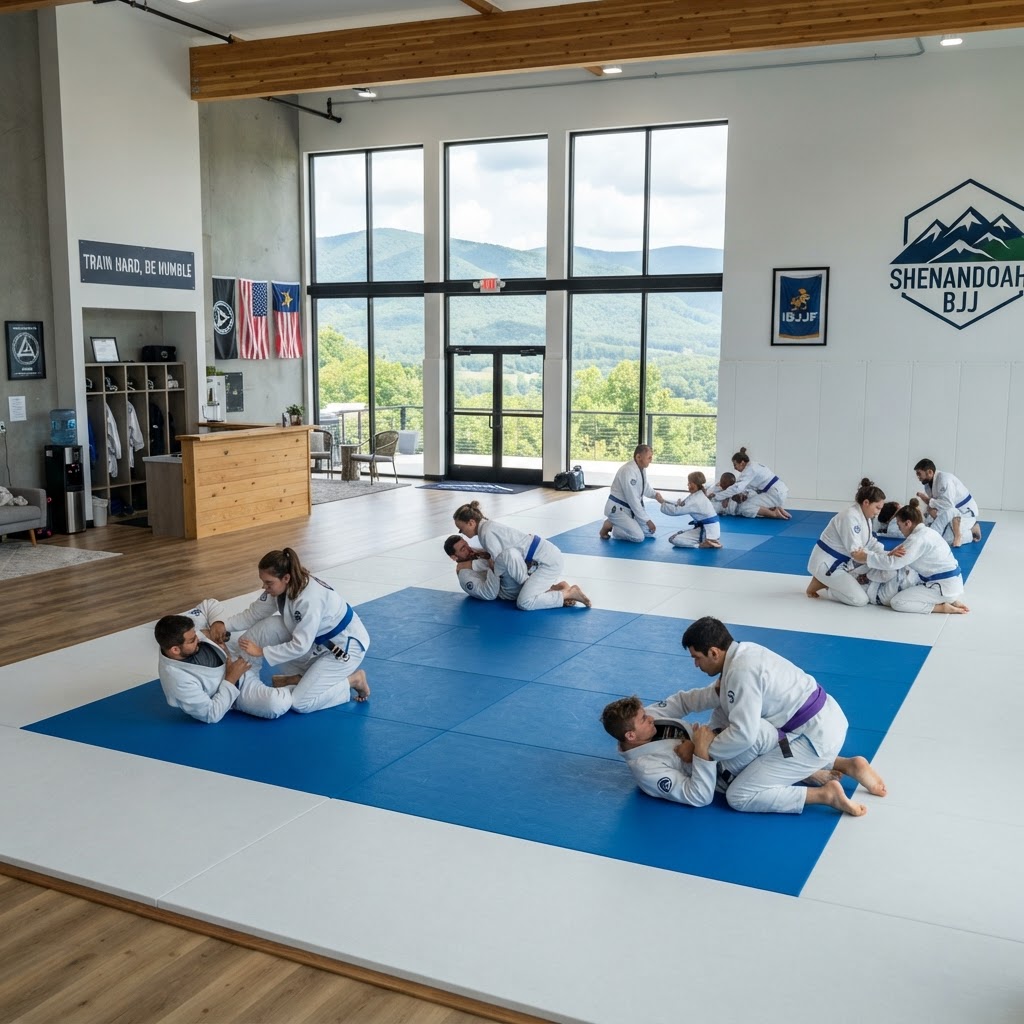
Third, the myth that martial arts are for kids. Walk past any academy window and you'll see a kids class, and it's easy to conclude that adults missed the boat. In reality, most academies, including ours in Waynesboro, run dedicated adult programs where plenty of students started in their 30s and 40s. Many of them had never done a single day of martial arts before their first class.
The Honest Answer: What Age Actually Changes
Being straight with you matters more than hype, so let's be precise about what age does and doesn't change when you start BJJ.
What age doesn't change
- Ability to learn technique. Understanding positions, remembering sequences, and building timing are cognitive skills. Adults often learn these faster than teenagers because they focus, take notes, and ask better questions.
- Ability to get in shape. One of the biggest myths we tackle in our guide on whether BJJ gets you in shape is that you need to be fit before you start. You don't. Fitness is a result of training, not a prerequisite.
- Enjoyment and community. The friendships, the stress relief, and the satisfaction of steady progress are available at any age. For a lot of BJJ for older beginners students, that's the part that keeps them on the mat for a decade.
What age actually does change
- Recovery speed. At 45, a hard roll takes more out of you than it does at 20. Recovery between sessions becomes a skill you deliberately train, through sleep, hydration, and smart intensity management.
- Injury risk tolerance. You need to be a little more selective with training partners and a little more honest about tapping early. Done right, injury rates for older students are very manageable, and we cover this in detail in our guide to jiu-jitsu safety, whose principles apply to adults too.
- Ego management. Good news: this one gets easier with age. Adults over 40 tend to tap faster, care less about "winning" a Tuesday night roll, and focus on the long game. That mindset is a genuine advantage.
So the question "is 40 too old to start BJJ?" has a clear answer: 40 is not too old. Neither is 50. The people who struggle aren't the ones who started late; they're the ones who trained like they were 20 when they weren't. Train your age and you can do this for decades.
Why Starting BJJ at 40 Might Be the Perfect Time
Here's a reframe most people never hear: for many adults, your 40s are actually the ideal window to start jiu-jitsu. Not despite your age, but because of it.
1. Your body needs this now more than ever
Muscle mass, bone density, mobility, and cardiovascular fitness all decline after 40 unless you actively fight it, and BJJ fights all four at once. It's real resistance training, real conditioning, and real mobility work wrapped in a workout so engaging you forget you're exercising. We break down the mechanics in our post on BJJ for weight loss, and the same logic applies to general adult fitness: consistent, progressive, whole-body movement beats a gym membership you abandon every March.
2. The mental benefits hit differently at midlife
Career pressure, family logistics, financial stress: adult life in your 40s is heavy, and BJJ is one of the few activities that completely unplugs it. For an hour and a half, nothing exists except the position you're in right now. Students describe it as moving meditation, and researchers studying BJJ and mental health keep finding the same patterns: reduced stress, improved mood, better sleep. Starting jiu jitsu late in life often means starting it exactly when you need an outlet most.
3. You're building a practice for the next 30 years
The black belts who started at 42 are the ones still rolling at 72. Jiu-jitsu scales down gracefully with age. Your game refines from explosive to efficient, from strength-based to timing-based. There are respected practitioners in their 70s and 80s who train regularly. Very few sports offer that kind of runway.
BJJ Over 40: Training Tips That Keep You on the Mat
The difference between a long, healthy jiu-jitsu journey and a six-month stint is almost always habits. These BJJ over 40 training tips are what we coach every adult beginner through at Skyline Jiu-Jitsu, and they work just as well whether you're 38 or 58.
READY TO TRY BRAZILIAN JIU-JITSU?
Claim a FREE trial class at Skyline Jiu-Jitsu today!
Serving Waynesboro, Charlottesville, Fishersville & the Shenandoah Valley
1. Warm up like it matters (because it does)
Show up five minutes early and move. Light hips circles, shoulder rolls, easy squats. Cold connective tissue is the older grappler's number one enemy, and a proper warm-up dramatically lowers your risk of the classic beginner strains.
2. Tap early, tap often, tap proudly
Tapping isn't losing; it's learning. Older beginners who tap quickly stay healthy, collect more reps, and progress faster than stubborn ones. Every tap is information about where your defense broke down. Our article on white belt survival tips goes deeper on this mindset.
3. Pick your rolls like you pick your investments
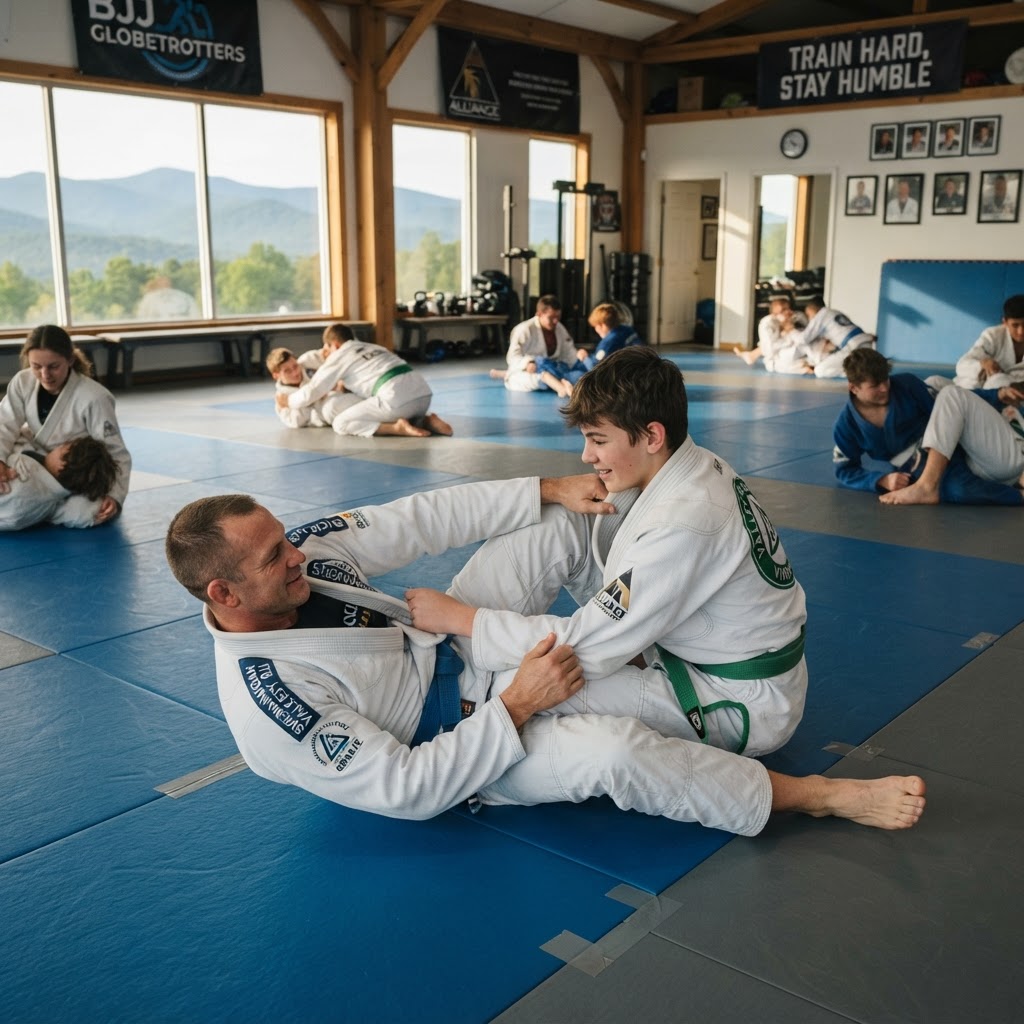
You don't have to roll with the 23-year-old competitor on day one. Choose partners who match your intensity, especially calm, experienced higher belts who enjoy helping newer students. Every good academy has them. A gym that lets beginners get smashed without guidance isn't built for longevity, which is one of the key things to look for in our checklist on how to choose a BJJ gym.
4. Manage intensity before it manages you
The "roll at 70 percent" rule will extend your training life by years. You don't need to prove anything in training. Controlled, technical rounds teach you more than panic-spaz rounds anyway, and they let you train more often.
5. Recover like a professional
Sleep is your best training partner. Hydration, protein, and a day off between hard sessions are not optional extras after 40; they're the program. Two to three sessions per week, consistently, beats six sessions for two weeks followed by a month of burnout.
6. Track progress by months, not days
Jiu-jitsu progress for adults is slow and then sudden. You'll feel lost for a few months, then one night the positions start clicking. That's normal. If you're worried about the learning curve itself, read our honest take on whether BJJ is hard to learn.
What Your First Class Actually Looks Like (Spoiler: It's Fine)
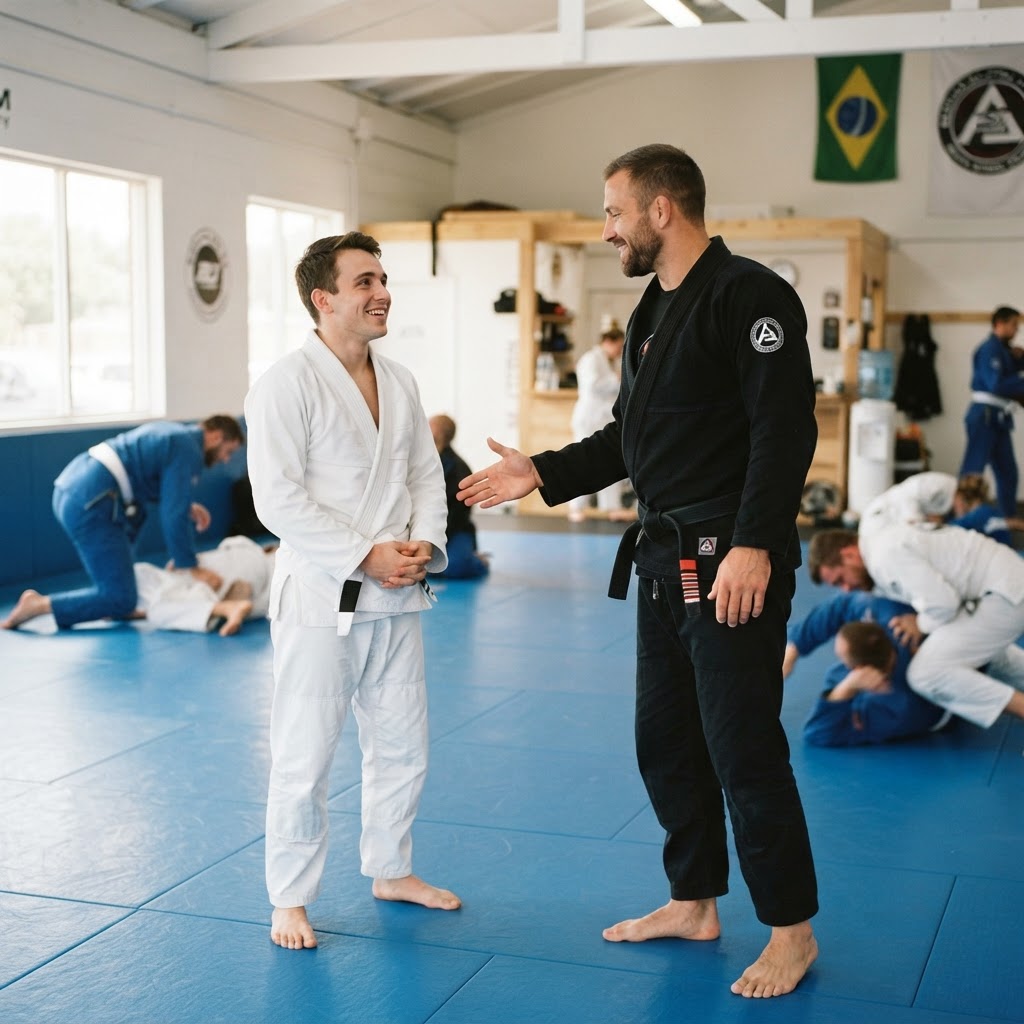
Fear of the unknown is half the "too old" anxiety, so let's kill it with specifics. Your first adult class runs like this: you arrive a little early, meet the coach, get a loaner gi or wear comfortable athletic clothes (we cover the details in what to wear to your first BJJ class), and join a group warm-up that's scaled to your level. Then the instructor teaches one technique, you drill it cooperatively with a partner, and beginners usually finish with light, controlled positional work, not an all-out fight.
Nobody gets thrown to the wolves. Nobody cares that you're 47. If you want the full walkthrough, we wrote a complete guide on what to expect at your first BJJ class.
Training in Waynesboro and the Shenandoah Valley
Adults across the Valley train with us weekly: from Waynesboro and Fishersville, from Stuarts Draft and Crozet, and yes, plenty who make the short drive from Charlottesville on weeknights because a good gym is worth the trip. The adult class mix here reflects real life: teachers, nurses, contractors, software developers, parents whose kids train in the class before theirs.
That local community piece matters more than people expect. Starting BJJ at 40 is much easier when the person across from you is 43, has a similar schedule, and wants to get better at the same pace. It's why so many Shenandoah Valley beginners stay for years: the training partners become the reason to show up. You can find class times that fit your schedule on our schedule page, and current membership options are on our pricing page.
Frequently Asked Questions
Is 40 too old to start BJJ?
No. Students who start at 40 regularly reach blue and purple belt and train for a decade or more. Success at 40 comes from training at a sustainable intensity and prioritizing recovery, not from youth.
What's the best age to start jiu-jitsu?
The best age is the age you are right now. Kids gain coordination and confidence; adults gain fitness, stress relief, and community. The only truly bad time to start is "someday."
Do I need to be in shape before starting BJJ?
No. You'll build conditioning through training itself. Pre-training fitness helps, but plenty of people start jiu-jitsu specifically to get in shape and it works, as we explain in our guide to jiu-jitsu as a workout.
How often should a beginner over 40 train?
Two to three classes per week is the sweet spot for most adults over 40. It's frequent enough to build momentum and skill, with enough recovery between sessions to keep you healthy.
Is BJJ dangerous for older adults?
BJJ has a lower injury rate than most contact sports because there's no striking and tapping ends every hold before injury. For older beginners, the main risks come from ego and skipping warm-ups, both of which are fully within your control.
The Bottom Line
"Too old to start BJJ" is a story, not a fact. Every year, adults in Waynesboro, Fishersville, and across the Shenandoah Valley step onto the mat for the first time in their 40s and 50s, and a year later they're the ones telling newer beginners how glad they are they didn't wait. The only real risk is letting another year pass on a "someday" that never comes. Your best training years aren't behind you. They're the ones that start the night you finally show up.
Related Posts You'll Find Useful
- What to Expect at Your First BJJ Class: A Complete Beginner's Guide
- BJJ White Belt Tips: The Ultimate Survival Guide for Your First Year
- How to Choose a BJJ Gym: The Complete Beginner's Guide
- Does BJJ Get You in Shape? The Complete Guide to BJJ Fitness Results
- What to Wear to Your First BJJ Class: A Beginner's Guide
READY TO TRY BRAZILIAN JIU-JITSU?
Claim a FREE trial class at Skyline Jiu-Jitsu today!
Serving Waynesboro, Charlottesville, Fishersville & the Shenandoah Valley