Is BJJ Safe for Kids? A Parent's Complete Guide to Kids Jiu-Jitsu Safety in Waynesboro, VA
If you're a parent in Waynesboro, Fishersville, or anywhere in the Shenandoah Valley researching martial arts for your child, you've probably asked the question: is BJJ safe for kids? It's the first question most parents ask before enrolling their child in Brazilian Jiu-Jitsu, and honestly, it's the right question to ask. Any physical activity carries some risk, and you deserve a straight, evidence-based answer before your child steps on the mat.
The short answer is yes — Brazilian Jiu-Jitsu is widely considered one of the safest martial arts for kids, when it's taught in a structured kids program with qualified instructors. Youth soccer, football, gymnastics, and even playground time produce far more emergency room visits than kids jiu-jitsu classes. But "safe" isn't automatic. Safety depends on how a gym runs its kids program: the curriculum, the coaching, the class structure, and the culture on the mat.
In this guide, we'll give you the honest, complete picture of BJJ safety for kids — what the injury research actually says, what a safe kids jiu-jitsu class looks like, which safety practices matter most, and the questions you should ask any academy in Waynesboro, Charlottesville, or Staunton before you sign your child up. Let's dig in.
What the Research Actually Says About Kids Jiu-Jitsu Injuries
Let's start with data, not marketing copy. When researchers compare youth sports by injury rate, contact sports like football, hockey, and soccer consistently top the list. Youth martial arts as a whole — including jiu jitsu for children — fall near the bottom, and Brazilian Jiu-Jitsu specifically has a favorable profile for three reasons:
- No strikes to the head. Unlike boxing, karate sparring, or taekwondo competition, BJJ has no punching or kicking. The sport that causes the most severe youth injuries — brain trauma from repeated blows — simply isn't part of the art. This is why many pediatricians and parents view grappling arts more favorably than striking arts for long-term training.
- No intentional falls from height. While kids learn to fall safely (a skill that protects them off the mat, too), takedowns in kids classes are taught progressively and controlled. Children aren't thrown at full force the way they might be in judo competition.
- Tapping out is the core safety mechanism. BJJ's entire culture is built around the "tap." Before any joint lock or choke is applied to a dangerous degree, the training partner taps, and everything stops immediately. Kids learn this on day one, and it's rehearsed every single class. It's a built-in circuit breaker that most youth sports don't have.
Now, the honest caveats. A large 2023 study of youth martial arts injuries found that injury risk rises significantly with unsupervised live wrestling, mismatched partners, and competition settings. Translation: kids jiu-jitsu injuries are rare in a well-run class, and most incidents come from poorly matched sparring or inadequate supervision — not from the art itself. That's a gym-selection problem, and it's one you can solve by choosing the right academy.
Why BJJ Is Built Differently: The Tap-Out Culture Kids Learn on Day One
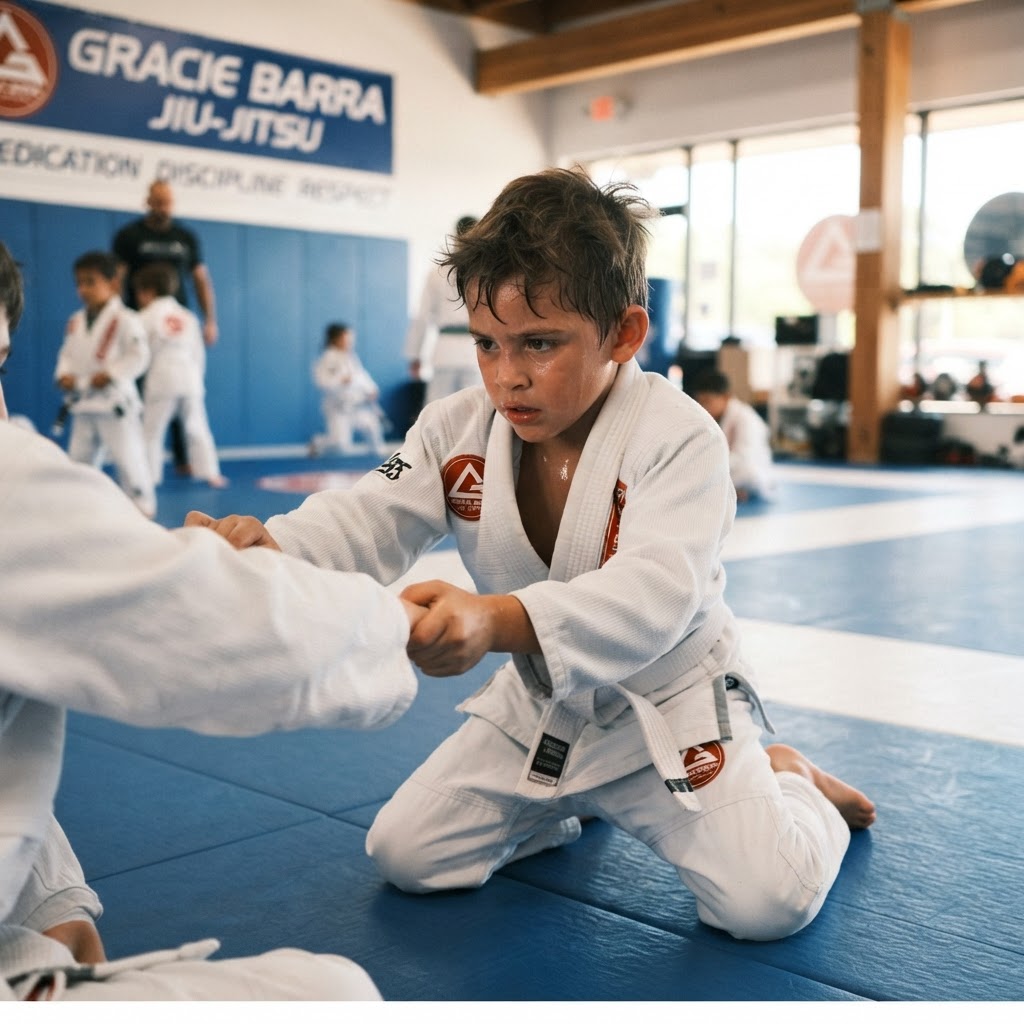
What makes Brazilian Jiu-Jitsu unique among youth sports isn't just what kids can't do (strike each other) — it's what they're actively taught to do: communicate. From their very first class, children in a good kids BJJ program learn three habits that keep everyone safe:
- Tap early, tap often. Kids are taught to tap the moment a position feels uncomfortable, before anything hurts. There's zero stigma attached to tapping — it's celebrated as smart training, not "losing."
- Control before speed. Kids are coached to slow down and control their movements rather than muscling. Fast, wild scrambles are paused and corrected, not rewarded.
- Respect your partner. Every drill emphasizes that your training partner is your teammate, not your opponent. Bullying your partner on the mat doesn't fly in a well-run academy.
These habits don't just prevent kids jiu-jitsu injuries — they reshape how children handle frustration, discomfort, and conflict off the mat. Parents in our Waynesboro kids program regularly tell us the tap-out mindset carries over to the classroom and the playground: kids learn to recognize when a situation is too much, ask for help, and reset calmly. That's a life skill disguised as a martial arts rule.
What a Safe Kids Jiu-Jitsu Class Actually Looks Like
When you tour an academy in Waynesboro, Fishersville, or Charlottesville, you should see specific safety structures in place. Here's your checklist — the same standards we hold ourselves to at Skyline Jiu-Jitsu:
1. Age- and Size-Appropriate Groupings
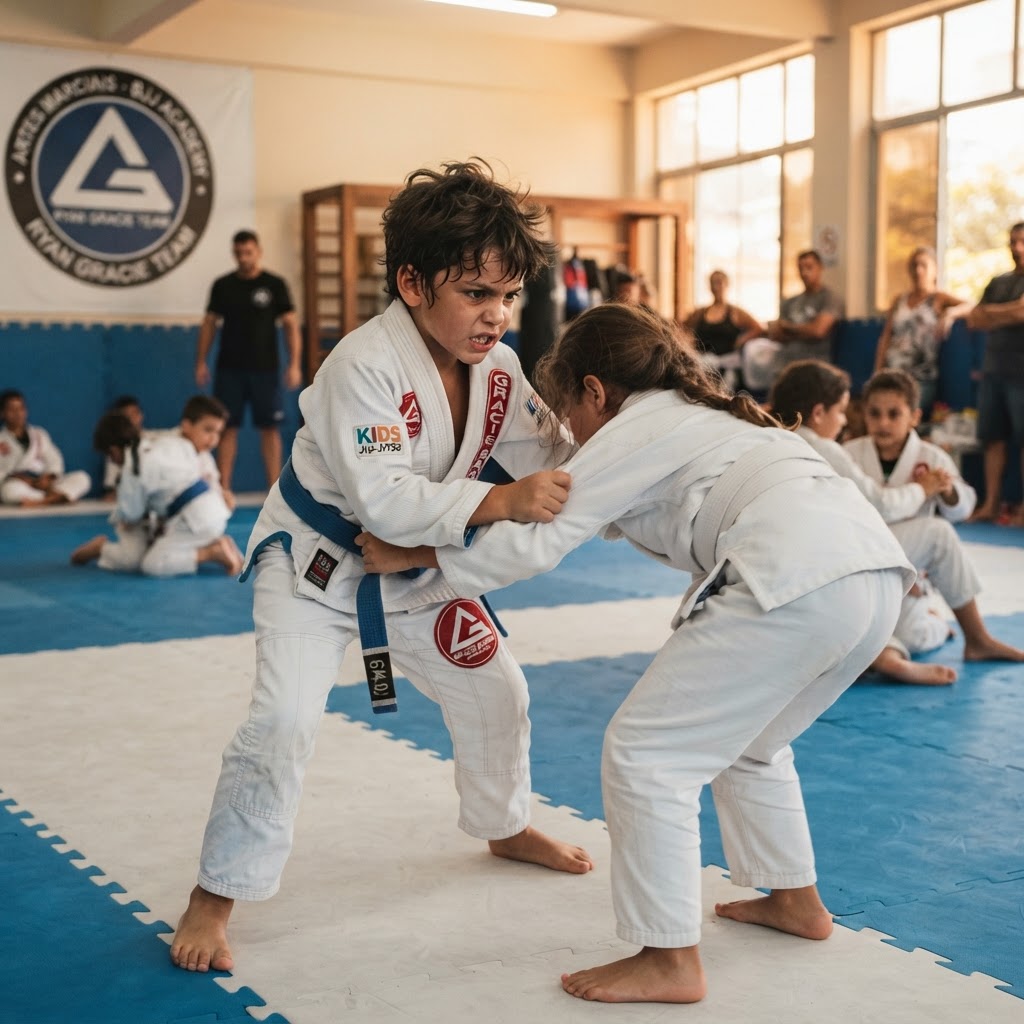
A five-year-old and a twelve-year-old should never be drilling together in the same live round. Safe academies split kids into age bands and, within those bands, match live training by size and experience. A seven-year-old rolling with another seven-year-old of similar build is a controlled environment — the same child rolling with a much bigger, older kid is not.
2. A Structured, Progressive Curriculum
Kids shouldn't be thrown into live sparring on day one. A responsible kids BJJ program follows a progression: warm-ups and falling skills, then positional games, then supervised grappling with tight rules (no neck attacks, no leg locks, no takedowns at full speed until technique is proven). Ask how many classes a new student completes before live rolling is introduced. There should be a clear answer.
3. Supervision Ratios That Make Sense
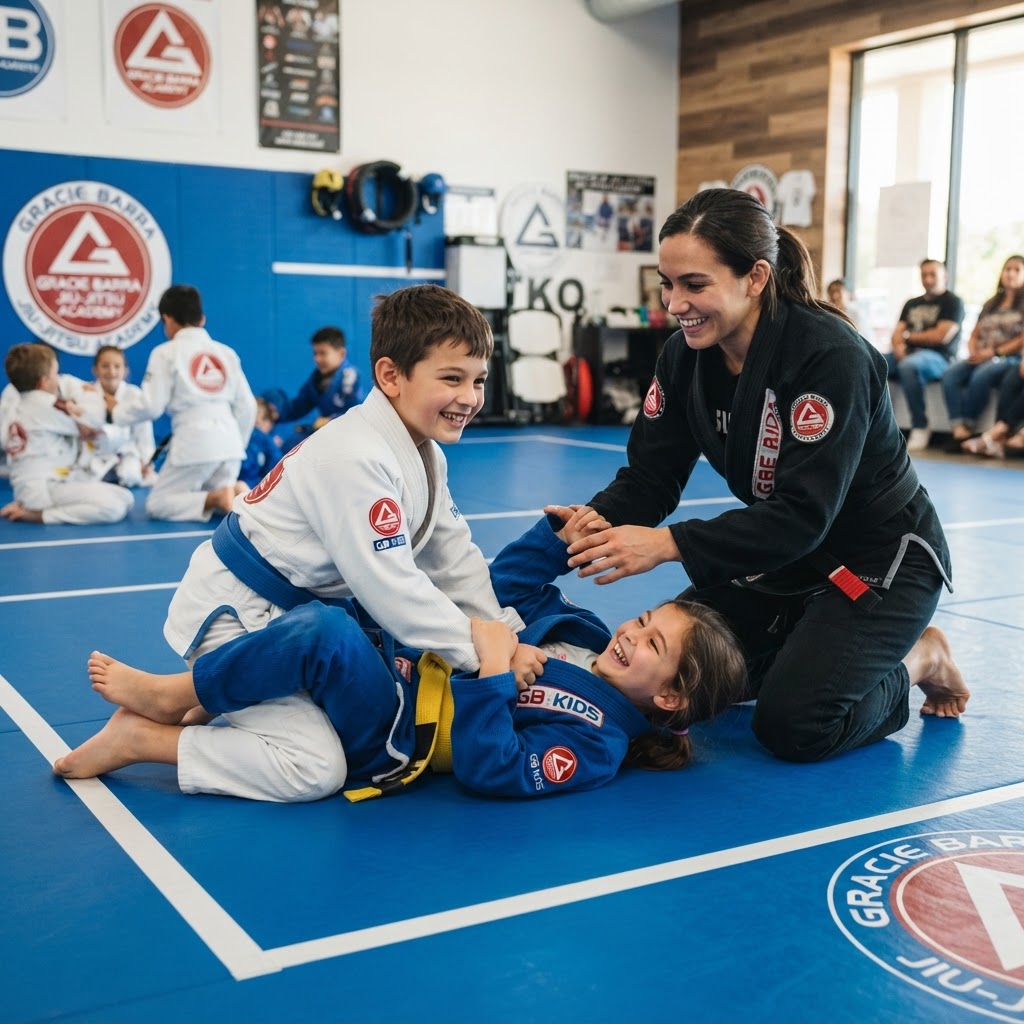
One instructor cannot safely run thirty kids in a live grappling session. Look for classes small enough that a coach can see every pairing at once, with assistant coaches or senior student helpers floating the mat during live rounds. If a gym can't tell you its student-to-instructor ratio for kids classes, that's a red flag.
4. Clean Mats and Clean Gis
Skin infections like ringworm are the true everyday health risk in grappling sports — not injuries. A safe academy mop mats daily with hospital-grade disinfectant, require gis and rash guards to be washed after every class, and have a stay-home-if-infected policy. On your tour, ask directly: "How often are the mats cleaned?" The answer should be immediate.
5. Coaches Who Are Background-Checked and Certified
Ask about instructor background checks, CPR/first-aid certification, and continuing education in youth coaching. Great kids coaches aren't just skilled black belts — they're trained teachers who understand child development stages, attention spans, and how to correct behavior without shaming.
Common Parent Concerns About BJJ Safety — Answered Honestly
"What about chokes? My child is being taught chokes?"
Choke techniques (properly called "blood chokes") are introduced to kids slowly and only in controlled drilling against willing, cooperative partners, often in a game format. In kids live sparring, neck attacks are normally restricted or banned entirely — many academies don't allow them in kids rounds until students demonstrate years of control. And remember: the tap comes first. The technique your child is taught on day one isn't a submission — it's tapping and stopping.
"Won't my kid get hurt rolling around on the ground?"
Grappling is actually one of the safest ways for kids to be physical. The mat is padded, distance is closed, and contact is controlled. Compare that to youth soccer (collisions, headers, ankle sprains) or football (a well-documented concussion crisis). Most kids jiu-jitsu injuries are minor: fingertip scrapes, mat burns, the occasional jammed toe — the same scrapes kids collect on any playground in Waynesboro.
READY TO TRY BRAZILIAN JIU-JITSU?
Claim a FREE trial class at Skyline Jiu-Jitsu today!
Serving Waynesboro, Charlottesville, Fishersville & the Shenandoah Valley
"My child is small for their age. Is that a problem?"
It's one of BJJ's biggest advantages. Brazilian Jiu-Jitsu was literally built around the idea that a smaller person can control a bigger one with technique and leverage instead of size and strength. Small kids thrive in BJJ because they learn to use their hips, their frames, and their brains. For a small child, BJJ is often the first sport where being little is a puzzle to solve, not a disadvantage. (For more, see our guide on what age kids should start martial arts.)
"Does training make kids more aggressive at school?"
The research and our experience point the opposite direction. Structured martial arts training is associated with improved impulse control and emotional regulation — which is why it's so often recommended for children with ADHD and kids who struggle with focus. Kids burn energy, learn to lose calmly, and gain a real sense of competence that reduces the need to prove themselves elsewhere. We covered this deeper in our post on martial arts for kids with ADHD, and in how martial arts helps kids focus in school.
BJJ Safety vs. Other Kids Sports and Activities
Parents comparing after-school options often ask how BJJ stacks up against the alternatives. Here's the quick view based on typical youth injury patterns:
| Activity | Head/brain trauma risk | Typical injuries | Closed environment |
|---|---|---|---|
| Youth football | High (repeated collisions) | Concussions, sprains, fractures | No |
| Soccer | Moderate (headers, collisions) | Ankle sprains, knee injuries | No |
| Karate/TKD sparring | Moderate (striking to head/body) | Contusions, head-contact risk | Partial |
| Kids BJJ (structured program) | Very low (no strikes) | Minor scrapes, mat burns | Yes — matted, coached, rules-based |
No transferable comparison is perfect, but the pattern is consistent: kids Brazilian jiu-jitsu removes the highest-severity risk in youth sports — blows to the head — while giving children all the movement, fitness, and character benefits of a team sport.
Safety Skills That Transfer Off the Mat
Here's the part most injury statistics miss: BJJ training doesn't just avoid harm — it actively protects your child elsewhere. In every class, kids drill breakfalls (how to fall without injuring yourself), body awareness, and boundary-setting. That means:
- Falling safely from bikes, scooters, playground equipment, and winter ice — a genuinely protective skill throughout childhood.
- Staying calm under pressure — a child who has practiced being pinned and escaping with a level head is far less likely to panic in a real emergency or confrontation.
- Fully-vetted self-protection skills — BJJ's leverage-based control gives children to neutralize a bully's grab or pin without throwing a single strike. Our guide on kids self-defense classes in Waynesboro covers exactly how this works.
Questions to Ask Before Enrolling Your Child Anywhere
Whether you're looking at an academy in Waynesboro, Staunton, Charlottesville, or anywhere in the Valley, bring this list to your tour:
- How are live rounds matched for size, age, and experience?
- What's your student-to-instructor ratio in kids classes?
- Which techniques are restricted for kids in live rolling?
- How and when are mats cleaned? What's your skin-infection policy?
- Are instructors background-checked and first-aid certified?
- Can I watch a class — or better, can my child try one for free?
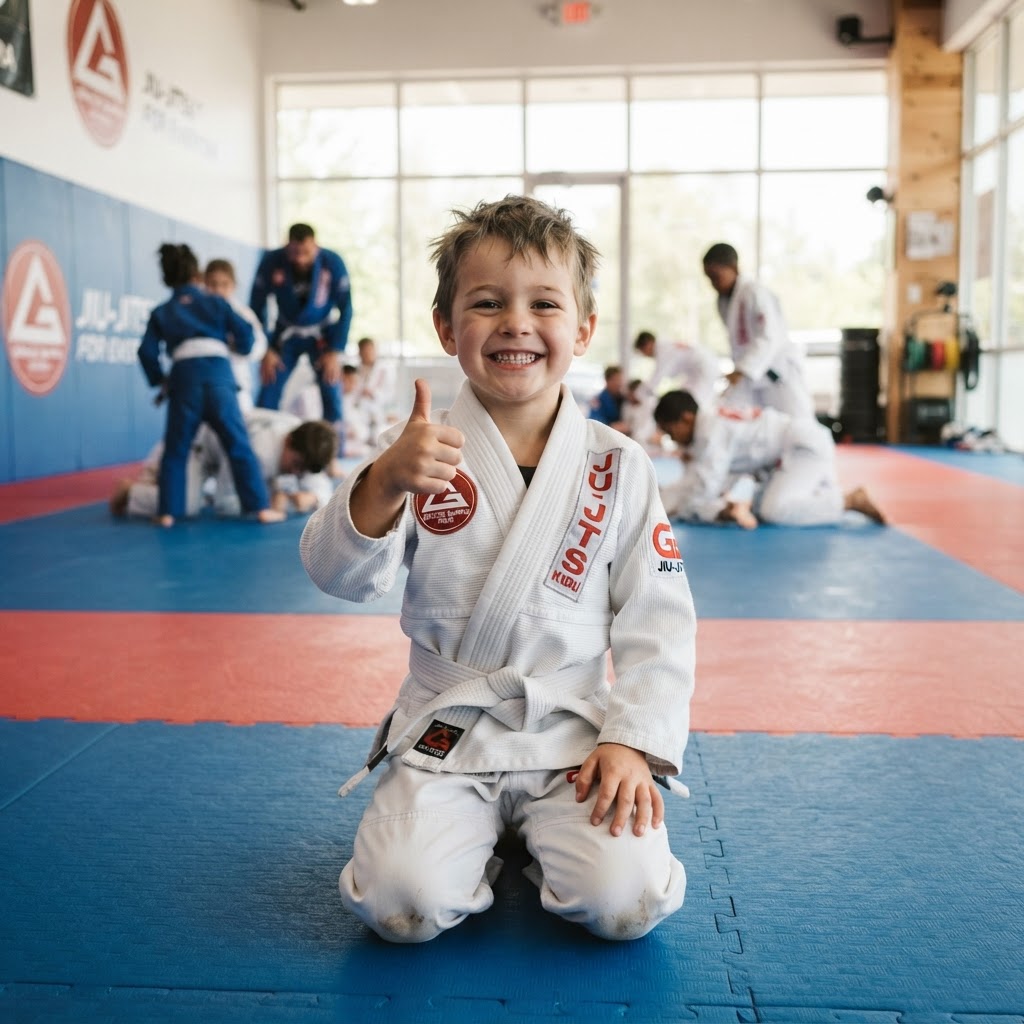
A safe, well-run academy welcomes every one of those questions. We do — because we ask them of ourselves. Watching a class tells you more than any website: see whether kids are smiling, whether coaches correct gently, whether the structure is obvious. If you're not sure what to watch for, our article on what parents should know before the first kids BJJ class walks you through it in detail.
Kids Jiu-Jitsu Safety at Skyline Jiu-Jitsu in Waynesboro
At Skyline Jiu-Jitsu, we serve families from across the Shenandoah Valley — Waynesboro, Fishersville, Stuarts Draft, Crozet, and the greater Charlottesville area. Safety in our kids program is a daily discipline, not a one-time policy:
- Structured age-banded classes so kids train with peers of similar size and maturity.
- Progressive curriculum — technique, falling skills, and control come first; live grappling is layered in gradually with strict rulesets.
- Tap-first culture taught from the very first lesson.
- Cleaned mats and hygiene standards that parents are welcome to inspect any time.
- Free trial class so your child can experience a safe, positive first class before you commit to anything — check our class schedule or kids program pricing for details.
The Bottom Line for Parents
So — is BJJ safe for kids? Yes. In a structured, well-supervised kids program, Brazilian Jiu-Jitsu is among the safest physical activities your child can do, with a far lower risk of serious injury than most team sports and none of the repeated head contact that concerns parents most. The variable that matters most is the gym itself: its structure, its coaches, and its culture. Choose a program built deliberately for children — not an adult class with kids in it — and your child gets all the fitness, focus, self-defense skill, and confidence of martial arts with a safety profile you can feel good about.
The best way to answer the safety question for your family is to see it for yourself. Come watch a class in Waynesboro — or better, let your child try one for free.
Related Posts
- Kids Self Defense Classes: Why BJJ Is the Best Choice for Your Child in Waynesboro, VA
- What Age Should Kids Start Martial Arts? A Parent's Guide
- Kids BJJ Classes: What Parents Should Know Before the First Class
- Martial Arts for Kids with ADHD: How BJJ Improves Focus and Behavior
- How Martial Arts Helps Kids Focus in School
READY TO TRY BRAZILIAN JIU-JITSU?
Claim a FREE trial class at Skyline Jiu-Jitsu today!
Serving Waynesboro, Charlottesville, Fishersville & the Shenandoah Valley